

The Nature of Rural-Urban Migration Networks and their Socio-economic Effects in Afgoye, Lower Shabel

Abstract
This study examines the nature of rural-urban migration networks and their socio-economic effects in Afgoye, Somalia. Using a mixed-methods approach with a sample of 384 individuals, the research reveals that networks, particularly those based on family and kinship, play a vital role in shaping migration outcomes. Quantitative analysis showed that both rural and urban networks positively impact socio-economic conditions, with rural networks exhibiting a slightly stronger influence due to enhanced community cohesion. However, a significant gender disparity was identified, with women experiencing slightly lower socio-economic benefits from these networks. Qualitative findings complemented this, highlighting the increased responsibilities faced by those left behind and the critical role of remittances in mitigating financial pressures. The study concludes that migration networks are central to the socio-economic dynamics of this region, but their benefits are not equally distributed, underscoring the need for targeted policies that promote equitable access to migration-related opportunities.
Introduction
Rural-urban migration is a key demographic trend with profound implications globally (UN DESA, 2018). The causes behind this migration are multifaceted, involving socio-economic pressures, environmental challenges, and personal circumstances. As Boswell, Geddes, and Scholten (2011) emphasize, a comprehensive understanding of these drivers is essential for policymakers, researchers, and development practitioners to formulate effective strategies that address migration challenges and promote sustainable development living standards. Globally, rural-urban migration manifests differently depending on regional contexts. Historically, countries like the United States and the United Kingdom experienced waves of internal migration during industrialization era, contributing significantly to economic growth at their destinations (OECD, 2020). In Asia, rapid urbanization has transformed both rural and urban landscapes, while in Africa, factors like climate change, population growth, and limited rural employment continue driving migration trends (Chen, 2012; OECD, 2020). These patterns underline the importance of localized analyses to shape responsive development policies (Leal et al., 2019).
In the Horn of Africa, including Somalia, migration trends are shaped by conflict, environmental stress, and socio-political instability (IOM, 2018). Somalia's internal migration patterns are further influenced by clan affiliations, economic hardship, and displacement due to violence (Gebre-Egziabher et al., 2009; UNHCR, 2020). Afgoye are of Lower Shabelle, strategically located near Mogadishu is popular for its high agricultural productivity. The region attracts seasonal labor and migrants hoping to transition to urban livelihoods. Consequently, rural-urban migration is a growing phenomenon in the region.That said, the area faces a range of adversities including political instability, resource scarcity, and environmental degradation, all of which push individuals to migrate toward urban centers like Mogadishu in search of safety and opportunity (UNDP, 2019). Environmental pressures, insecurity, and lack of access to basic services remain key push factors in Afgoye and broader Lower Shabelle.
Rural-urban migration often leads to significant population shifts and socio-economic transformations, particularly in agricultural communities. The outflow of young and economically active individuals reduces the rural workforce, leading to decreased agricultural productivity and weakening local economies (FAO, 2020; UNDP, 2019). This demographic change also disrupts household structures, as older family members especially women are left to shoulder both domestic and economic responsibilities. Although traditional social networks offer support and help maintain social cohesion, they also shape migration decisions by linking rural residents to urban opportunities through remittance flows and personal connections (World Bank, 2021).
Migration networks play a vital role in enabling mobility and preserving ties between migrants and their home communities. These networks, which often span national borders, provide migrants with critical resources like employment leads, housing assistance, and emotional support. They also facilitate the exchange of ideas, skills, and cultural practices between rural and urban areas, contributing to both community development and social change (Levitt & Lamba-Nieves, 2011; Graham et al., 2016). At the same time, too much reliance on remittances can generate dependency and economic vulnerability in rural areas. Persistent expectations for financial support may place pressure on migrants and cause social friction at home (Levitt, 2001). Additionally, as De Haas (2005) and Graham et al.(2016) suggest, any disruption to remittance flows could severely impact rural livelihoods. While return migrants can introduce innovation, their influence may also clash with traditional norms. Understanding the dynamics of migration networks including family structures, social ties, and technological access, evaluating their long-term impact on rural communities is a critical subject in the rural-urban migration discourse.
Methods
Study Design
This study employed a mixed-method, descriptive, and non-experimental research design to examine the study subject in Afgoye, located in Southwest State, Somalia. A quantitative approach was considered appropriate for analyzing measurable variables and identifying statistical patterns using structured tools like surveys and questionnaires (Creswell, 2014). The survey tool was administered to a representative sample of local residents, focusing on key variables including migration push-pull factors, socio-economic conditions, and household coping mechanisms. The study design was aligned with the study’s objectives by ensuring methodological consistency, replicability, and the ability to detect statistically significant trends (Bryman, 2016). The structured nature of the questionnaires facilitated uniform data collection, improving the reliability and comparability of responses. Moreover, quantitative methods support the generalizability of findings, allowing broader conclusions that can inform policy and development strategies beyond the immediate study area (Fraenkel et al., 2012). While the study primarily utilized quantitative techniques, it recognizes the value of incorporating qualitative insights in future research. As Yin (2014) suggests, qualitative data could provide deeper context into individual motivations and lived migration experiences, enriching the overall understanding of migration dynamics.
Study Location
This study focused on the Afgoye area, of the Lower Shabelle region of Southwest State, Somalia, a location marked by significant levels of rural-urban migration, largely driven by economic hardship and conflict-related displacement (World Bank, 2018). Home to tens of thousands of residents, with approximately 59% living below the poverty line, Afgoye represents a critical context for examining the complex relationship between poverty, displacement, and migration. The area's socio-economic vulnerabilities, combined with its pronounced migration trends, make it a pertinent case for understanding migration dynamics in conflict-affected rural environments. Insights derived from this study contribute to a deeper understanding of migration drivers and can inform the design of targeted development strategies and humanitarian responses in similar fragile contexts.
Population
The study examined the entire population of Afgoye, estimated at around 18,000 across all villages (Somalia Ministry of Planning, 2022). Two groups were targeted: individuals directly involved in migration (migrants themselves or migrant family members) and key informants like community leaders, local officials, and representatives from NGOs and community-based organizations who were in direct touch with migration issues. Migrants provided first-hand data via structured questionnaires, while key informants offered expert insights into migration trends and community impacts. This dual-sample strategy allowed for a well-rounded and in-depth analysis of rural-urban migration dynamics within the Afgoye area.
Sample Size Determination
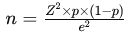
The sample size n was determined using the formula below [1]:
Where:
Z = Z-score corresponding to the desired level of confidence (e.g., 1.96 for a 95% confidence level)
p= Estimated proportion of the population exhibiting the phenomenon of interest (assumed as 0.5 for maximum variability)
e = Margin of error (desired precision level, assumed as 0.05
Considering the total sample size n=385, the study considered cluster sampling (clustering was by village).
Given:
Total Population (N) = 18,000
Confidence Level (Z) = 1.96 (for a 95% confidence level)
Estimated Proportion (p) = 0.5
Margin of Error (e) = 0.05
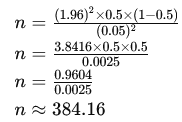
Therefore, a sample size of approximately 385 individuals would be needed to achieve a 95% confidence level with a 5% margin of error for a population of 18,000 in Afgoye. The sample size was rounded up to the nearest whole number ensure adequate statistical power and representation of the study population.
Sampling Procedure
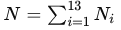
For adequate representation of different migration experiences across the community, stratified random sampling method was used to assign the sample size to each village. The sample sizes (ni) for each village are determined using proportional allocation based on the estimated population that it carried as shown below: [2].
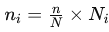
Where:
ni= Sample size for each cluster
n = Total sample size determined earlier
N = Total population of Afgoye
Ni = Population size of the specific cluster (village)
Assuming the researcher identified 10 clusters (villages) within Afgoye with varying population sizes. The study used proportional allocation to determine the sample size for each cluster based on the total sample size (385 individuals). Suppose the total population N of Afgoye is 18,000 and the populations of the 10 clusters (Ni) are known:
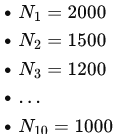
Substituting the values:
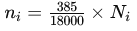
The researcher performed this calculation for every cluster to determine the precise sample size assigned to each village in Afgoye. Randomly choose villages based on the calculated sample sizes to guarantee a fair and impartial sample for the research. Now, rounding the calculated sample sizes (ni) to the nearest whole number.
| Village | Population Size (Ni) | Sample Size (ni) (Approx.) |
|---|---|---|
| Merca | 1367 | 31 |
| Afgooye | 1098 | 25 |
| Qoryoley | 987 | 23 |
| Barawa | 1456 | 33 |
| Awdheegle | 890 | 20 |
| Wanlaweyn | 668 | 15 |
| Sablale | 1504 | 34 |
| Jannaale | 1389 | 32 |
| Mubaarak | 1209 | 28 |
| BuuloMareer | 1343 | 31 |
| Gobanle | 1589 | 36 |
| JilibMerca | 1149 | 26 |
| Kunyo Barrow | 1456 | 33 |
Choosing cluster sampling for this study was guided by both methodological and practical considerations. Given that Afgoye comprises multiple villages, cluster sampling allowed for increasingly efficient data collection by organizing the population into manageable groups. Also, clustering significantly reduced logistical challenges and costs associated with surveying a large population of approximately 18,000 individuals. Additionally, due to the socio-economic and demographic diversity within the villages, cluster sampling ensured that selected clusters reflected the broader population, capturing key migration trends and characteristics. This method also improved the feasibility of conducting fieldwork in a complex environment while maintaining statistical robustness. Ultimately, cluster sampling provided a balanced approach that addressed the study’s need for comprehensive, representative data while remaining aligned with resource and operational constraints.
Data collection Instrument
To collect both quantitative a structured survey using pre-designed questionnaires was deployed. The questionnaire was thoughtfully developed to gather comprehensive information on demographics, migration trends, socio-economic conditions, and primary migration drivers. Its structure captured key thematic sections like demographics, and socio-economic effects of migration. Questions addressed the timing, frequency, and duration of migration, together with its socio-economic impacts on both origin and destination communities. Particular attention was given to how migration contributes to rural-urban linkages through remittances, knowledge exchange, and social networks. Trained enumerators administered the survey to 318 respondents across selected clusters, along with key informants like community leaders and organization representatives who consented to participate in the study.
Findings
Descriptive Findings
Table 2 presents the distribution of respondents by age group, indicating the number and proportion of respondents within the total sample. The largest proportion of respondents falls within the 30-39 age group, accounting for 24.7% of the total sample, followed by the 18-29 age group at 22.1%. The 50-59 age group comprises 19.5%, while the 40-49 age group accounts for 17.7%. The smallest proportion is the 60 and above age group, making up 15.9% of the respondents.
Table.2: Distribution of Respondents Age group
| Age group | Number | Proportion |
|---|---|---|
| 18-29 | 85 | 22.1 |
| 30-39 | 95 | 24.7 |
| 40-49 | 68 | 17.7 |
| 50-59 | 75 | 19.5 |
| 60 and above | 61 | 15.9 |
| Total | 384 | 100.0 |
The findings indicated that younger individuals, particularly those aged 18–39, were more actively engaged in the study, suggesting a higher involvement in rural-urban migration driven by employment and educational opportunities. The strong presence of economically active age groups (18–59) highlighted economic motivations as a key factor behind migration. In contrast, the relatively lower participation of individuals aged 60 and above underscored the need for targeted support systems for the elderly who remained in rural areas. These results emphasized the importance of age-specific analysis in understanding migration patterns and shaping responsive policies for rural communities in Afgoye, Lower Shabelle, and the wider Southwest State of Somalia. In terms of gender, out of 384 respondents, 191 were male (49.7%) and 193 were female (50.3%), indicating a balanced gender distribution. Regarding marital status, 39.1% of respondents were married, followed by 32.2% who were single. Widowed and divorced individuals accounted for 16.9% and 11.8%, respectively. The high number of married respondents suggested that family responsibilities influenced migration decisions, while the substantial proportion of single individuals pointed to motivations related to career or education.
| Educational Background | Number | Proportion (%) |
|---|---|---|
| No Formal Education | 45 | 11.8 |
| Primary | 80 | 20.8 |
| Secondary | 95 | 24.7 |
| Diploma | 55 | 14.3 |
| Bachelor’s Degree | 75 | 19.5 |
| Master’s Degree | 34 | 8.9 |
| Total | 384 | 100.0 |
Among the 384 participants surveyed, 95 individuals (24.7%) had completed secondary education, making it the most common level of educational attainment. This was followed by 80 respondents (20.8%) who had attained primary education, and 75 individuals (19.5%) who held a bachelor’s degree. Diploma holders accounted for 14.3% (55 respondents), while 45 participants (11.8%) reported having no formal education. The smallest group included 34 respondents (8.9%) who held a master’s degree. This distribution highlighted that secondary education was the most prevalent among respondents, while the presence of both primary and secondary education levels indicated high attainment of basic education. Additionally, the notable proportion of individuals with bachelor’s and master’s degrees indicated a pursuit of higher education among some community members. These educational variations implied that migration decisions could be influenced by educational attainment, with those possessing advanced qualifications likely seeking better employment or academic opportunities in urban centers.
For policymakers, these findings emphasized the need to address educational inequalities and to expand access to quality education in rural areas, reducing migration driven solely by educational aspirations. Moreover, understanding the educational composition of the population offered valuable insights for tailoring interventions to meet the specific needs of different educational groups. In terms of occupation, the largest group of respondents 115 individuals (29.9%) were employed, followed by 85 participants (22.1%) engaged in business activities. Farming was the primary occupation for 60 respondents (15.6%), while 124 individuals (32.3%) reported being unemployed. This occupational breakdown revealed a diverse economic landscape, with employment and entrepreneurial activities forming the backbone of local livelihoods. The significant number of unemployed respondents underscored the economic challenges in the area and the urgent need for targeted employment programs. The continued role of agriculture, reflected in the farming group, further highlighted the sector’s relevance in the rural economy.For development planners, these insights underscored the importance of promoting job creation, supporting small businesses, and strengthening agricultural systems to address the economic drivers of migration and support sustainable development in Afgoye and the broader Southwest State of Somalia.
Table 4 presents the distribution of respondents' monthly income, highlighting the number of individuals within each income range and their respective proportions within the total sample of 384 respondents.
| Income Range (USD) | Number | Proportion (%) |
|---|---|---|
| Less than $50 | 55 | 14.3 |
| $51-$100 | 80 | 20.8 |
| $101-$200 | 95 | 24.7 |
| $201-$300 | 85 | 22.1 |
| Above $300 | 69 | 17.9 |
| Total | 384 | 100.0 |
The income distribution data showed that the largest portion of respondents (24.7%) earned between $101 and $200 per month. This was closely followed by those with monthly earnings of $201 to $300, accounting for 22.1%. Approximately 20.8% of participants reported incomes ranging from $51 to $100, while 14.3% earned less than $50. A smaller segment, 17.9%, earned over $300 per month. These figures revealed a wide income disparity among respondents, with the majority falling into lower-income brackets. The relatively modest earnings suggested that limited access to goods and services could be a contributing factor influencing rural-urban migration in search of improved economic opportunities.
In rural areas, economic and trade partnerships were the most frequently reported network type, accounting for 32.3% (124 respondents). Social and cultural associations comprised 25.3% (97 respondents), underscoring the significance of community and cultural cohesion. Family and kinship ties were noted by 24.2% (93 respondents), reflecting their foundational role in rural life. Educational networks were less common, at 15.1% (58 respondents), while political and advocacy groups were the least represented, at just 3.1% (12 respondents), indicating minimal political engagement. Conversely, in urban settings, economic and trade networks dominated, with 52.3% (201 respondents) identifying such ties. Educational collaborations followed at 27.9% (107 respondents), highlighting the significance of academic and professional growth. Family and kinship, along with social and cultural networks, each accounted for only 5.5% (21 respondents), indicating a reduced emphasis on traditional social structures in urban contexts. Political and advocacy networks were reported by 8.9% (34 respondents), showing a moderate level of civic engagement. Overall, the findings suggested that while rural networks were more socially and culturally rooted, urban networks were largely shaped by economic and educational interests, reflecting the differing priorities and social dynamics of rural and urban communities.
Respondents were also asked to mention social-economic effects that is triggered by the network formed upon migration. Table 5 presented the effects that applies both in rural and urban settings.
| Number | Proportion (%) | |
|---|---|---|
| Cultural exchange bolstered | 3 | 0.8 |
| Job referrals and linkage enhanced | 138 | 35.9 |
| Resource sharing | 97 | 25.3 |
| Family and kinship ties improve emotional support and stability in rural communities. | 9 | 2.3 |
| Economic and trade partnerships increase household income in rural areas. | 61 | 15.9 |
| Educational collaborations enhance educational outcomes in rural communities. | 54 | 14.1 |
| Social and cultural associations strengthen cultural identity and social cohesion in rural areas. | 7 | 1.8 |
| Political and advocacy groups improve local governance and community rights in rural regions. | 6 | 1.6 |
| Family and kinship ties improve emotional support and stability in rural communities. | 9 | 2.3 |
| Total | 384 | 100 |
The most significant impact identified was the improvement in job referrals and employment linkages, reported by 35.9% (138 respondents). This finding underscored the vital role urban networks played in creating access to job opportunities and fostering professional connections essential for economic advancement. Resource sharing was also highlighted as a major benefit, with 25.3% (97 respondents) noting that urban networks facilitated the distribution and collective use of resources. Educational collaborations accounted for 14.1% (54 respondents), reflecting their importance in enhancing academic outcomes, providing community support, and expanding learning opportunities. Economic and trade partnerships, reported by 15.9% (61 respondents), were seen to contribute to increased household income in rural areas. Family and kinship ties, although mentioned by only 2.3% (9 respondents), remained important for emotional support and social cohesion. Cultural exchanges (0.8%), social and cultural associations (1.8%), and political or advocacy groups (1.6%) were less frequently cited, but still reflected the diverse impacts of urban-rural linkages.
Having established the descriptive beneath nature of networks formed across rural and urban communities of the research study area, this paper completed a follow-up inferential analysis using linear regression method. In particular, for analysing the impact of network aspects and gender on socio-economic outcomes due to its effectiveness in examining the relationship between a dependent variable (like household income or educational outcomes) and multiple independent variables (like nature of network formed based on gender). This approach is particularly suitable because it enables the assessment of how changes in these predictors are associated with variations in the dependent variable (Field, 2018).
Empirical Findings
A multiple linear regression model was utilized in this analysis to examine the combined influence of various network aspects such as cultural exchange and job referrals and gender on socio-economic outcomes. This model was deemed appropriate, as it accommodated multiple predictors and assessed their individual contributions to the dependent variable, providing a comprehensive understanding of how migration-related networks affected socio-economic conditions (Hair et al., 2019). During the data preparation phase, the study compiled and organized information related to network dimensions, gender (coded as a dummy variable), and socio-economic outcomes. A multiple linear regression model was then constructed to analyze the relationship between these independent variables and socio-economic outcomes. Statistical software was employed to estimate the model, generating coefficients, standard errors, and p-values for each predictor. As presented in Table 6, the results showed that rural network aspects, especially cultural exchange and family ties, had a significant positive impact on socio-economic outcomes, with coefficients ranging from 0.21 to 0.30. Urban networks also demonstrated positive effects, though generally with slightly lower coefficients; for instance, urban cultural exchange scored 0.27 compared to 0.28 in rural areas, and job referrals 0.23 versus 0.25, respectively.
| Variable | SE | β | t | p |
|---|---|---|---|---|
| Rural Network Aspects | ||||
| Cultural Exchange Bolstered | 0.09 | 0.28 | 3.56 | <0.001 |
| Job Referrals and Linkage Enhanced | 0.08 | 0.25 | 3.63 | <0.001 |
| Resource Sharing | 0.10 | 0.21 | 2.40 | 0.017 |
| Family and Kinship Ties | 0.09 | 0.30 | 3.89 | <0.001 |
| Economic and Trade Partnerships | 0.08 | 0.24 | 3.38 | 0.001 |
| Educational Collaborations | 0.09 | 0.18 | 2.22 | 0.027 |
| Social and Cultural Associations | 0.08 | 0.29 | 3.89 | <0.001 |
| Political and Advocacy Groups | 0.09 | 0.23 | 2.89 | 0.005 |
| Urban Network Aspects | ||||
| Cultural Exchange Bolstered | 0.08 | 0.27 | 3.75 | <0.001 |
| Job Referrals and Linkage Enhanced | 0.07 | 0.23 | 3.55 | <0.001 |
| Resource Sharing | 0.09 | 0.20 | 2.44 | 0.015 |
| Family and Kinship Ties | 0.08 | 0.26 | 3.50 | <0.001 |
| Economic and Trade Partnerships | 0.07 | 0.22 | 3.42 | 0.001 |
| Educational Collaborations | 0.08 | 0.17 | 2.22 | 0.028 |
| Social and Cultural Associations | 0.07 | 0.25 | 3.86 | <0.001 |
| Political and Advocacy Groups | 0.08 | 0.21 | 2.85 | 0.005 |
| Gender (Female) | 0.05 | -0.10 | -2.40 | 0.017 |
Note: B = Unstandardized Coefficient, SE = Standard Error, β = Standardized Coefficient, t = t-value, p = p-value.
Regarding gender effects, the regression analysis indicated that the coefficient for gender (female) was -0.10 with a p-value of 0.017, signifying a statistically significant but modest negative impact. This suggested that, on average, women experienced slightly lower socio-economic outcomes compared to men, even when controlling for various network factors. The findings further demonstrated that both rural and urban network aspects had positive effects on socio-economic outcomes, with rural networks generally exerting a slightly stronger influence. Specifically, elements such as cultural exchange, job referrals, and family ties showed significant positive impacts in both contexts, though their coefficients were marginally higher in rural areas likely due to stronger community cohesion and support systems in rural settings. Qualitative insights complemented the quantitative results.
Although migration could place financial pressure on those left behind, remittances were seen as a critical source of support. This shift was viewed as having both economic and social implications, including depopulation and reduced local labor force, which affected rural economic productivity. Families frequently relied on extended kinship networks and community structures to manage the absence of migrating members. Both data sources highlighted the central role of family and kinship ties in shaping the impacts of migration. Quantitatively, the regression model showed that family and kinship ties had a significant positive effect on socio-economic outcomes (β = 0.30 in rural areas, β = 0.26 in urban areas, with p-values < 0.001). Qualitatively, respondents emphasized how migration increased responsibilities for remaining family members, primarily women and children, and underscored the importance of familial support networks. These findings aligned to reveal that kinship structures were essential in managing the social and economic effects of rural-urban migration.
Discussion
The analysis presented in Table 6 underscores the significant influence of migration networks on socio-economic outcomes across both rural and urban contexts. The regression model indicates that rural network components such as cultural exchange and family ties, exhibited positive coefficients ranging from 0.21 to 0.30, reflecting their substantial contribution to improving socio-economic conditions. Urban network aspects also demonstrated positive impacts, although with slightly lower coefficients. For example, cultural exchange in urban areas had a coefficient of 0.27 compared to 0.28 in rural areas, while job referrals showed 0.23 in urban settings versus 0.25 in rural areas. This pattern suggests that rural networks may offer more robust support, likely due to stronger community cohesion and localized support structures.
While both types of networks contribute meaningfully to socio-economic advancement, rural networks appear to yield marginally greater benefits. This can be attributed to the proximity and strength of interpersonal relationships in rural environments. Furthermore, the negative coefficient for gender (female), valued at -0.10 with a p-value of 0.017, indicates a statistically significant but modest disparity, with women experiencing slightly lower socio-economic outcomes than men even when accounting for network influences. This highlights an existing gender gap in the benefits accrued from migration-related networks.
Qualitative data supported these quantitative findings. One key informant observed that rural households often endure increased responsibilities and economic pressure when members migrate. However, remittances frequently serve as a critical financial buffer. The alignment of qualitative perspectives with quantitative results particularly the significant role of family and kinship ties (β = 0.30 in rural areas, β = 0.26 in urban areas, p < 0.001) reinforces the central importance of extended family networks in mitigating the challenges posed by migration. Thus, the study confirms that while both rural and urban networks are beneficial, rural networks exert a slightly stronger positive influence. The gender disparity observed also calls for more inclusive policy interventions to ensure equitable access to the benefits of migration networks.
Conclusion
This study examined the impact of rural-urban migration on rural communities in Afgoye, located in the Lower Shabelle region of Southwest State, Somalia. The research aimed to investigate the key social, environmental, and economic factors driving migration; explore both seasonal and long-term migration patterns; analyse migration-related networks; and assess how households adapt to changes caused by migration. By addressing these areas, the study sought to provide a holistic understanding of migration’s influence on rural livelihoods. A mixed-methods approach was used, combining quantitative data from 384 survey respondents, selected through stratified random sampling, with qualitative insights from key informant interviews involving local leaders and stakeholders. Structured questionnaires gathered data on socio-economic status, migration drivers, and household coping strategies. Quantitative findings were analysed using descriptive and inferential statistics, while qualitative responses were examined through thematic analysis. The results revealed that migration contributes to the formation of rural-urban networks that enable the exchange of remittances, knowledge, and resources. These networks supported both migrants and their families, leading to improved access to education, healthcare, and livelihood opportunities. However, the study also found that migration increased household responsibilities, particularly for women and elderly family members, indicating that while economic benefits exist, they are accompanied by notable social and gender-related challenges.
References
Rights and permissions

Disclaimer
All claims expressed in this article are solely those of the author and do not necessarily represent those of the publisher, editors, reviewers, or affiliated institutions. Any product, service, or claim that may be evaluated in this article is not guaranteed or endorsed by the publisher.
Publisher’s note
The publisher remains neutral with regard to jurisdictional claims.
Additional information
Data availability
Acknowledgements
Funding
Conflict of interest
Peer review
Article Timeline
 Publication record
Cite this article
- Received
- August 17, 2025
- Revised
- September 1, 2025
- Accepted
- September 9, 2025
- Published
- September 14, 2025
- Version of record
- September 14, 2025
Share this article
Share the article record with colleagues and readers worldwide.
Explore research across our journalsDiscover more research

Recent Publications

Most Read

Recommended
Save this article as a bookmark
Use your browser’s secure bookmark shortcut. Both desktop options are shown below.
Press Ctrl+D
In Chrome, Edge or Firefox, choose a folder if needed, then select Done.
Press ⌘ Command+D
In Safari, Chrome or Firefox, choose the bookmark location and confirm.
Cite this article
Copy a formatted citation or download a reference file.
Cited by
Crossref citation count for this DOI.