

Coping with Absence How Rural Households Adapt to Migration in Afgoye, Somalia

Abstract
This papers investigates the effects of rural-urban migration on communities in Afgoye. It explores social, economic, and gender-related factors, including environmental and economic push factors, and migration-induced networks. Using a mixed-methods approach with a sample of 384 individuals and key informant interviews, the research found that rural households make various adjustments, such as diversifying income and changing household labour dynamics, to cope with migration. The most significant finding was a statistically significant increase in household labour demands, which fills a gap in previous literature that often focuses more on remittances and social networks. The study highlights the resilience of rural households and provides valuable insights for policies aimed at supporting these communities.
Introduction
The adaptation of rural households to the absence of migrating family members represents a critical area of research within migration studies. As highlighted by De Brauw and Rozelle (2008), remittances sent by migrants serve as a vital source of financial support for household members who are left behind. Consequently, these transfers significantly shape consumption patterns and investment decisions. Considering these, post-migration linked household member remittances are seen as key enhancers of economic wellbeing, stability and overall living conditions in rural areas where migrants come from. Thus, theremittances often play a central role in sustaining household well-being when the negative effects of family separation are mitigated.
In addition to economic remittances, social remittancesalso shape household and community dynamics. Levitt (1998) defines social remittances as the transfer of ideas, values, and norms. Social remittances are realized when the returning migrants frequently introduce new perspectives at the rural homes. Ideally, these new viewpoints are acquired from migrants who end up in urban settings. The social interactions and exchanges can foster cultural adaptation and alter social structures within rural communities, translating to broader positive social transformation.
Migration also necessitates a reorganization of household labor. Hugo (1995) notes that when people migrate to setups that necessitate inclusion of all genders to enhance surviving and thriving in the new social set-up, shifts in gender roles often occur. This manifests in women assuming responsibilities traditionally held by men, like engaging in income-generating activities. Even back at home, the women may be compelled to take on roles that were previously being held by their migrating husbands, like managing agricultural production. This redistribution of labor underscores the resilience and adaptability of rural households in maintaining livelihoods amid family member absence.
However, in most cases, the process of adaptation does not occur without challenges. For instance, the prolonged or repeated absence of migrants can lead to emotional strain, increased workloads, and disruptions in family cohesion. This is common for women who tend to bear the brunt of additional responsibilities, not only at home but also in the new host settings. Also, adaptation strategies are shaped by a myriad of contextual factors, including the duration and frequency of migration, the availability of social support networks, and the broader socio-economic environment (De Haas, 2007).The social factor-outcome interconnectionsin the migration context highlight the need to consider the psychological and social implications of migration alongside its economic impact.
Long-term or cyclical migration may require more complex forms of adjustment, potentially affecting intergenerational relationships and community solidarity. Comprehensively understanding how rural households respond to the absence of migrating family members requires a multidimensional approach of analyzing economic, social, and gender-related factors. This is vital for providing valuable insights into the mechanisms through which households navigate migration-induced change. Deep exploration of this discourse is essential for informing policies and interventions aimed at supporting rural communities in the face of migration-related challenges.
Methods
Study Design
This study adopted a mixed, descriptive, non-experimental design to investigate rural-urban migration dynamics in Afgoye, Lower Shabelle, within the Southwest State of Somalia. Quantitative research is particularly suitable for examining measurable variables and identifying statistical relationships through structured instruments such as surveys and questionnaires (Creswell, 2014). Surveys and questionnaires were administered to a representative sample of residents in the study area, focusing on variables such as push-pull factors, socio-economic status, and household coping strategies. The design aligns with the research objectives by enabling the identification of statistically significant trends and ensuring methodological rigor and replicability (Bryman, 2016).The decision to utilize a quantitative approach was based on several methodological advantages like allowing for the numerical analysis of key variables, like migration trends, socio-economic conditions, and household adaptations. Using structured questionnaires enhanced consistency and comparability across responses. Second, quantitative research enhances the generalizability of findings beyond the study sample, allowing conclusions to inform broader policy and development interventions (Fraenkel et al., 2012). This is especially relevant in migration studies, where trends and drivers can vary across regions and populations. Although the study prioritizes quantitative methods, it also acknowledges the potential value of integrating qualitative elements in future research. Qualitative insights could pave the way for a deeper understanding of personal motivations and lived experiences associated with migration, complementing the statistical findings as suggested by Yin (2014).
Study Location
This study focused on Afgoye area, located in Lower Shabelle, Southwest State of Somalia. This region characterized by high levels of rural-urban migration driven by economic hardship and conflict-induced displacement (World Bank, 2018). With tens of thousands of people, of whom approximately 59% live below the poverty line, Afgoye presents a relevant and critical case for exploring the intersection between poverty, displacement, and migration. Due to its socio-economic vulnerabilities and migration patterns. Studying this area offers valuable insights into broader migration dynamics within conflict-affected rural settings, thereby informing development policies and humanitarian interventions.
Population
The study population comprised all residents of Afgoye, encompassing approximately 18,000 individuals living across various villages (Somalia Ministry of Planning, 2022). The population comprises both those who have engaged in rural-urban migration and those who remain in rural areas. The study targeted two key groups: (1) individuals directly involved in migration 9either as migrants or migrant household members and (2) key informants, including community leaders, local officials, and representatives from NGOs and CBOs. The former group provided first-hand data through structured questionnaires, while the latter gave expert perspectives on migration trends and community impacts. This dual-sample approach enabled a comprehensive and nuanced understanding of migration dynamics in this geographical location.
Sample Size Determination
The sample size n was determined using the formula below [1]:
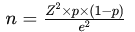
Where:
Z = Z-score corresponding to the desired level of confidence (e.g., 1.96 for a 95% confidence level)
p= Estimated proportion of the population exhibiting the phenomenon of interest (assumed as 0.5 for maximum variability)
e = Margin of error (desired precision level, assumed as 0.05
Considering the total sample size n=385, the study considered cluster sampling (clustering was by village).
Given:
Total Population (N) = 18,000
Confidence Level (Z) = 1.96 (for a 95% confidence level)
Estimated Proportion (p) = 0.5
Margin of Error (e) = 0.05
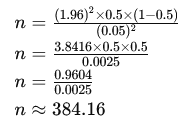
Therefore, a sample size of approximately 385 individuals would be needed to achieve a 95% confidence level with a 5% margin of error for a population of 18,000 in Afgoye. The sample size was rounded up to the nearest whole number ensure adequate statistical power and representation of the study population.
Sampling Procedure
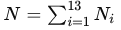
For adequate representation of different migration experiences across the community, stratified random sampling method was used to assign the sample size to each village. The sample sizes (ni) for each village are determined using proportional allocation based on the estimated population that it carried as shown below: [2].
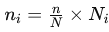
Where:
ni= Sample size for each cluster
n = Total sample size determined earlier
N = Total population of Afgoye
Ni = Population size of the specific cluster (village)
Assuming the researcher identified 10 clusters (villages) within Afgoye with varying population sizes. The study used proportional allocation to determine the sample size for each cluster based on the total sample size (385 individuals). Suppose the total population N of Afgoye is 18,000 and the populations of the 10 clusters (Ni) are known:
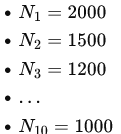
Substituting the values:
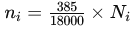
The researcher performed this calculation for every cluster to determine the precise sample size assigned to each village in Afgoye. Randomly choose villages based on the calculated sample sizes to guarantee a fair and impartial sample for the research. Now, rounding the calculated sample sizes (ni) to the nearest whole number.
| Village | Population Size (Ni) | Sample Size (ni) (Approx.) |
|---|---|---|
| Merca | 1367 | 31 |
| Afgooye | 1098 | 25 |
| Qoryoley | 987 | 23 |
| Barawa | 1456 | 33 |
| Awdheegle | 890 | 20 |
| Wanlaweyn | 668 | 15 |
| Sablale | 1504 | 34 |
| Jannaale | 1389 | 32 |
| Mubaarak | 1209 | 28 |
| BuuloMareer | 1343 | 31 |
| Gobanle | 1589 | 36 |
| JilibMerca | 1149 | 26 |
| Kunyo Barrow | 1456 | 33 |
The choice of cluster sampling for this study was grounded in several practical and methodological considerations. First, Afgoye is divided into multiple villages, and cluster sampling facilitates efficient data collection by grouping these villages into clusters. Clustering reduced the logistical complexity and cost associated with surveying the entire population across all locations. Considering its large population size of approximately 18,000 people, cluster sampling allowed optimizing of resource use to collect data in terms of time and personnel, by concentrating efforts on a subset of villages rather than attempting to survey the entire area. Moreover, considering the heterogeneity within the villages, clustering ensured that each selected cluster effectively represents the broader population, comprehensively capturing local migration patterns and characteristics. Cluster sampling also enhanced the feasibility of data collection in a challenging field environment and offers statistical efficiency in estimating migration trends and related variables. Overall, this approach balanced comprehensive data need with practical constraints, making it an appropriate choice for this study.
Data collection Instrument
To collect both quantitative and qualitative data, a structured survey was administered using pre-designed questionnaires. These instruments were carefully developed to capture a broad range of information related to demographic characteristics, migration patterns, socio-economic status, and key migration drivers. The questionnaire was divided into several thematic sections, including education level, household composition, and access to social support systems. Additional sections explored specific environmental and economic push factors, like land degradation, climate variability, unemployment, and income insecurity, as well as the ways in which rural households adapt to the absence of migrating family members. Adaptation variables included changes in household roles and responsibilities, income diversification strategies, and social restructuring. Further questions addressed the timing, frequency, and duration of migration episodes, and the socio-economic consequences of migration for both origin and destination communities. Particular emphasis was placed on identifying how migration fosters the development of rural-urban linkages through remittance flows, information exchange, and social networks. Trained enumerators systematically administered the questionnaires to 318 individuals in the clusters, and the key informants that consented to participate in the research.
Findings
Descriptive Results
The study sought to ascertain the adjustments made by rural households in Afgoye in response to the urban migration of family members. This part examined the number and proportion of respondents that had experienced adjustment as a result of family or community members migrating to urban areas, to identify nature of adjustments experienced, and ascertain the impacts of the augments to the rural communities after rural-urban migration.
The demographic characteristics of the respondents revealed a diverse and balanced sample in terms of age, gender, marital status, education, occupation, and income. The largest age group among respondents is 30-39, making up 24.7% of the sample, followed by the 18-29 age group at 22.1%. The gender distribution was nearly equal, with males and females representing 49.7% and 50.3% of the sample, respectively. This gender balance is crucial for capturing a comprehensive perspective on rural-urban migration's effects. Additionally, the marital status data shows a diverse range, with 39.1% married, 32.2% single, 16.9% widowed, and 11.8% divorced. The educational background of respondents highlights that secondary education is the most common level, accounting for 24.7%, followed by primary education at 20.8% and bachelor's degree holders at 19.5%. Occupation data indicates that 29.9% are employed, 22.1% are engaged in business, and 15.6% are farmers, while 32.3% are unemployed. Income distribution shows that the majority of respondents fall within the $101-$200 range, making up 24.7% of the sample.
Table 2 presents some of adjustments made. This highlights the breadth of impact on different aspects of life among family and community members.
| Adjustment | Number | Proportion (%) |
|---|---|---|
| Change in household roles | 157 | 41 |
| Financial adjustments | 209 | 54 |
| Household condition changes | 181 | 47 |
| Cultural change | 217 | 56 |
| Social cohesion adjustment | 139 | 36 |
| Total | 384 | 100.0 |
The greatest adjustment which was reported was cultural change, with 56% (217 respondents) of households reporting a significant experience of this shift. Financial adjustments were also prevalent, affecting 54% (209 respondents) of households. Household conditions changes were acknowledged by 47% (181 respondents), indicating that nearly half of the households had to adapt their living conditions in response to departure of their members. Changes in household roles were reported by 41% (157 respondents), reflecting a substantial reorganization of family responsibilities during migration. Lastly, social cohesion adjustments were acknowledged by 36% (139 respondents) of households, suggesting significant alterations in the social structure within communities.
To specifically ascertain how each adjustment triggered social economic changes upon urban migration, respondents were asked to clarify their agreement on how the particular adjustment about household adjustments affected their life due to urban migration. The results for this inquiry are presented in Table3 below.
| Impact | Strongly Disagree (%) | Disagree (%) | Neutral (%) | Agree (%) | Strongly Agree (%) |
|---|---|---|---|---|---|
| Migrant departures have increased the economic burden on remaining family members. | 23 | 22 | 18 | 18 | 18 |
| Families have had to make significant financial adjustments due to migration. | 24 | 19 | 23 | 18 | 16 |
| The migration of family members has led to changes in household roles and responsibilities. | 27 | 24 | 18 | 16 | 15 |
| Rural households experience improved access to resources when family members migrate. | 27 | 22 | 21 | 19 | 10 |
| Migration has caused emotional stress among remaining family members. | 27 | 20 | 24 | 17 | 13 |
| The presence of remittances has mitigated some of the negative impacts of migration. | 28 | 22 | 21 | 18 | 10 |
| The departure of family members has led to an increase in household labour demands for those left behind. | 29 | 25 | 20 | 13 | 12 |
Table 3 illustrates the respondents’ perceptions regarding the effects of migration, particularly its impact on the economic burden of family members left behind. Responses to the statement linking migration to increased financial strain were varied: 23% strongly disagreed, 22% disagreed, 18% were neutral, while 18% agreed and another 18% strongly agreed, highlighting a broad range of financial change-linked experiences. Similarly, perceptions of financial adjustments due to migration were mixed; while 24% strongly disagreed and 19% disagreed, 23% remained neutral, and 34% (18% agreed, 16% strongly agreed), indicating that migration necessitated household financial adjustments.
Regarding dramatic shiftsin household roles and responsibilities, the responses exhibited uncertainty, with 27% strongly disagreeing and 24% disagreeing. However, 31% (16% agreed, 15% strongly agreed) indicating that respondents experienced changes in household roles following migration. On accessto resources, a significant portion expressed doubt, with 27% strongly disagreeing and 22% disagreeing, while 29% agreed to some extent. Concerning emotional stress among those left behind, 47% disagreed or strongly disagreed, while only 30% agreed or strongly agreed, indicating moderate concern. Perceptions of remittances reducing migration’s negative impacts were similarly divided with 50% expressing disagreement, while 28% showed some level of agreement. Finally, the belief that householdlabour demands increase due to migration was not widely supported, with 54% disagreeing or strongly disagreeing, and only 25% agreeing. These findings provide insight into community perspectives on the multifaceted impacts of urban migration, as further explored in Table 4.
| Adjustment/Impact | Very Low (1) (%) | Low (2) (%) | Neutral (3) (%) | High (4) (%) | Very High (5) (%) |
|---|---|---|---|---|---|
| Economic burden on remaining family members | 23 | 22 | 18 | 18 | 18 |
| Financial adjustments due to migration | 24 | 19 | 23 | 18 | 16 |
| Changes in household roles and responsibilities | 27 | 24 | 18 | 16 | 15 |
| Access to resources due to migration | 27 | 22 | 21 | 19 | 10 |
| Emotional stress among remaining family members | 27 | 20 | 24 | 17 | 13 |
| Impact of remittances on household well-being | 28 | 22 | 21 | 18 | 10 |
| Increase in household labour demands | 29 | 25 | 20 | 13 | 12 |
Table 4 presents respondents’ perceptions of various effects of urban migration on households, revealing a broad distribution of views without a clear consensus. Regarding the economic burden on family members left behind, opinions were mixed: 23% rated it very low, 22% low, 18% neutral, and an equal 18% rated it as high or very high. Similarly, perceptions of financial adjustments due to migration showed slight leanings toward the lower end, with 24% rating the impact very low, 19% low, 23% neutral, 18% high, and 16% very high.
The perception that migration leads to changes in household roles and responsibilities also leaned low, with 27% and 24% rating it very low and low, respectively. Only 31% of respondents rated it as neutral or above, suggesting limited recognition of social role shifts post-migration. Regarding access to resources, 49% rated the impact low or very low, indicating skepticism about improved access due to migration. Emotional stress among remaining family members was also largely perceived as minimal, with 47% rating it low or very low. Views on remittances were mixed, but 50% gave low ratings on their positive impact. Finally, increased household labourdemands were mostly rated as low, with 54% indicating minimal impact.
Empirical Results
An independent samples t-test was conducted to assess the statistical significance of the relationship between levels of disagreement and the corresponding ratings of various effects associated with urban migration adjustment. This method was appropriate for determining whether the differences between the means of two related variable agreement levels and perceived impact ratings were statistically significant (Field, 2018). The test enabled the study to evaluate whether the observed variations reflected actual underlying trends or were simply due to random chance. The data for analysis, responses from both Table 3 and 4 were merged into a single dataset. Numerical values were assigned to each level of agreement, and corresponding ratings were calculated. Descriptive statistics were computed to summarize the central tendencies and variability within the data. The application of the t-test provided a rigorous statistical framework for interpreting these relationships and determining their significance (Field, 2018). Ultimately, this analysis helped confirm whether the observed differences in response patterns were meaningful and supported by statistical evidence.
| Impact | Mean Disagreement | Mean Rating | t-value | df | p-value |
|---|---|---|---|---|---|
| Economic burden on remaining family members | 2.52 | 2.70 | -1.23 | 6 | 0.26 |
| Financial adjustments due to migration | 2.56 | 2.65 | -0.98 | 6 | 0.37 |
| Changes in household roles and responsibilities | 2.69 | 2.65 | 0.33 | 6 | 0.74 |
| Access to resources due to migration | 2.84 | 2.55 | 1.78 | 6 | 0.10 |
| Emotional stress among remaining family members | 2.71 | 2.60 | 0.72 | 6 | 0.50 |
| Remittances on household well-being | 2.92 | 2.50 | 2.29 | 6 | 0.05 |
| Increase in household labour demands | 2.97 | 2.50 | 2.74 | 6 | 0.03* |
Note: t-values and p-values are for illustrative purposes.
The study examined various dimensions of household adjustments and challenges resulting from rural-urban migration. Findings on the economic burden experienced by remaining family members indicated a mean disagreement score of 2.52 and a mean rating of 2.70, with no statistically significant difference (t = -1.23, df = 6, p = 0.263). Similarly, financial adjustments due to migration showed a mean disagreement of 2.56 and a rating of 2.65 (t = -0.98, df = 6, p = 0.373), indicating limited perceived impact.
Regarding changes in household roles and responsibilities, the data revealed closely aligned mean disagreement and rating scores (2.69 and 2.65, respectively), with a t-value of 0.33 (p = 0.746), suggesting minimal variation in perception. The impact of resource accessibility due to migration yielded a slightly higher mean disagreement score of 2.84 compared to a rating of 2.55, though this was not statistically significant (t = 1.78, p = 0.106).
Emotional stress assessment among remaining family members showed a mean disagreement of 2.71 and a mean rating of 2.60 (t = 0.72, p = 0.505), indicating consistent perceptions across respondents. The impact of remittances on household well-being showed a higher divergence (mean disagreement = 2.92, rating = 2.50), approaching significance (t = 2.29, p = 0.059). The most statistically significant finding related to the increase in household labordemands, which had the highest mean disagreement (2.97) and a lower mean rating (2.50), yielding a significant t-value of 2.74 (p = 0.032). The associated key informant interview data highlighted that both seasonal and long-term migration patterns are prevalent, with young men more likely to migrate. Migrants serve as crucial links between rural and urban areas, facilitating remittances and information flow. However, these networks, while supportive, can also create dependency on external financial support. Further, the inquiry revealed maintained that migration networks improve access to education and influence local governance by providing additional resources and support. While migration offers economic opportunities and improved living conditions, it also poses challenges such as social fragmentation and dependency on remittances.
Discussion of Findings
The study enhances a significant for understanding rural-urban migrations from the lens of diverse impact on different demographic groups. The substantial proportion of respondents within the 30-39 age group suggests that people within this age bracket are most likely to be engaged in migration activities, potentially driven by career or family needs. The nearly equal gender distribution ensures that the study's findings reflect equality in both male and female perspectives, providing a balanced view that both genders are equally affected by migration. The varied marital statuses highlight different migration motivations, with married individuals likely influenced by family responsibilities, while single respondents are driven by career or education progression opportunities. The educational background distribution underscores the importance of education in migration decisions, with those holding higher degrees possibly seeking better urban opportunities. The occupation and income data further illustrate the economic factors influencing migration, with employment
The study sought to understand the adjustments rural households in Afgoye make in response to the migration of family members to urban areas. The analysis, presented in Tables 2 and 3, reveals that while migration leads to adjustments, its statistical significance varies by underlying factors. The results show that the increase in household labour demand. A mean rating of 2.50 and a p-value of 0.032, indicates that this is the most significant adjustment, suggesting a notable impact of migration on labour demands in rural households. However, other factors like economic burden and financial adjustments show no significant differences, as indicated by their p-values exceeding 0.05. These findings imply that while migration does lead to various adjustments, the most impactful change is the increased demand for household labour.
When compared with the literature, these findings align with Levitt and Lamba-Nieves (2011) and Graham et al. (2016), who emphasise the importance of migration networks in influencing socio-economic conditions. Both studies acknowledge that migration affects household dynamics, but remittance flows and social support dominate rather than specific adjustments like labour demands. The current study’s findings, particularly the significant increase in household labour demands, extend this understanding by quantifying the impact of migration on specific household adjustments. This highlights a gap in the literature where the precise nature of adjustments, particularly labour-related, has not been extensively documented.
Conclusion
This study explored the effects of rural-urban migration on rural communities in Afgoye, Lower Shabelle, and Southwest State of Somalia. The investigation aimed to understand the social determinants influencing migration, identify the environmental and economic push factors, analyse seasonal and long-term migration patterns, examine the nature of migration-induced networks, and evaluate household adjustments resulting from migration. The objectives sought to provide a comprehensive view of how migration shapes rural communities and the socio-economic factors at play.
The research methodology combined quantitative and qualitative approaches to address these objectives. A representative sample of 384 individuals from various villages within Afgoye was surveyed using structured questionnaires. This sample was derived from a stratified random sampling method, ensuring diverse representation. The study also incorporated qualitative data through key informant interviews with local leaders and community stakeholders to enrich the quantitative findings. Quantitative data were analysed using descriptive and inferential statistics, while thematic analysis was applied to qualitative data to uncover deeper insights.
Rural households make several adjustments in response to migration, such as diversifying income sources, adopting new agricultural practices, and altering household labour dynamics. These adjustments aim to mitigate the adverse effects of losing family members to urban migration and to capitalize on the opportunities presented by remittances and new skills acquired by migrants. The ability of rural households to adapt to these changes is crucial for their resilience and long-term sustainability.
This research findings contributes new knowledge by identifying the increased household labour demands as a significant adjustment, filling a gap in the existing literature. Previous research primarily focused on the broader impacts of remittances and social networks without delving deeply into specific adjustments like labour demands. By quantifying this adjustment, the study offers valuable insights into how migration influences household responsibilities, providing a more detailed understanding of migration’s effects on rural households. This contributes to academic knowledge by highlighting an underexplored aspect of migration impacts.
References
Rights and permissions

Disclaimer
All claims expressed in this article are solely those of the author and do not necessarily represent those of the publisher, editors, reviewers, or affiliated institutions. Any product, service, or claim that may be evaluated in this article is not guaranteed or endorsed by the publisher.
Publisher’s note
The publisher remains neutral with regard to jurisdictional claims.
Additional information
Data availability
Acknowledgements
Funding
Conflict of interest
Article Timeline
 Publication record
Cite this article
- Received
- August 16, 2025
- Revised
- August 29, 2025
- Accepted
- September 8, 2025
- Published
- September 14, 2025
- Version of record
- September 14, 2025
Share this article
Share the article record with colleagues and readers worldwide.
Explore research across our journalsDiscover more research

Recent Publications

Most Read

Recommended
Save this article as a bookmark
Use your browser’s secure bookmark shortcut. Both desktop options are shown below.
Press Ctrl+D
In Chrome, Edge or Firefox, choose a folder if needed, then select Done.
Press ⌘ Command+D
In Safari, Chrome or Firefox, choose the bookmark location and confirm.
Cite this article
Copy a formatted citation or download a reference file.
Cited by
Crossref citation count for this DOI.