

Socio-demographic Dimensions of Sexual Assault Offenders and Victims


Abstract
This study examines the sociodemographic characteristics of rape offenders and victims using judicial and forensic data from Kenya. Findings indicate that most offenders are young adult males, while victims are predominantly adolescent females. The results further show that sexual violence frequently occurs within familiar relationships rather than through random attacks, highlighting the social complexity of these crimes. Urban areas record higher reporting rates, although rural cases remain underreported due to stigma and access barriers. The study confirms that age and gender are critical determinants of both offending and victimisation patterns. It concludes that comprehensive interventions combining legal reform, community sensitisation, and youth-focused prevention are necessary to curb the growing prevalence of sexual violence. The research adds valuable empirical evidence for policymakers and practitioners working in justice and public health sectors.
Introduction
Sexual violence remains one of the most pervasive and complex forms of criminal behaviour, cutting across social, economic, and cultural boundaries. Globally, research indicates that rape is both underreported and under-prosecuted, with significant implications for justice systems and victim protection (Devries et al., 2013; García-Moreno et al., 2013). Within the Kenyan context, despite the enactment of the Sexual Offences Act of 2006, rape and defilement continue to constitute a large proportion of gender-based crimes reported to law enforcement agencies (Kenya Law, 2006; Kenya Crime Research Centre, 2018). This persistence underscores the need to understand not only the legal responses but also the socio-demographic profiles of both offenders and victims as a means of improving preventive and rehabilitative interventions.
Scholars have long established that sexual offending is influenced by a combination of social, psychological, and situational factors (Wilson & Herrnstein, 2017; Reiss, 2018). Studies by Beauregard and Martineau (2014) and Gannon et al. (2019) highlight that offenders often display behavioural traits linked to dominance, power assertion, and forensic awareness, rather than mere sexual gratification. Meanwhile, social theories of crime point to structural determinants such as unemployment, age, and educational background as contributing factors to deviant behaviour (Farrington et al., 2017; Paternoster & Bachman, 2017). Empirical evidence consistently demonstrates that younger adults are more likely to be involved in sexual offences, both as offenders and victims (Sinclair et al., 2013; Wormith, Hogg, & Guzzo, 2012). The interaction between age, gender, and social context thus remains central to understanding the dynamics of rape in contemporary societies.
The gendered nature of sexual violence further complicates judicial outcomes and societal perceptions. Numerous studies affirm that men are overwhelmingly the perpetrators of rape, while women and adolescent girls constitute the majority of victims (Temmerman et al., 2019; Walby, 2016). However, feminist criminologists have emphasised that this dynamic is not purely biological but socially constructed through cultural norms that reinforce male dominance and female subordination (Scott & Yarwood, 2014; Stanko, 2016). Moreover, recent findings acknowledging female offenders challenge the traditional dichotomy of male perpetrator versus female victim, suggesting that sexual violence is a more nuanced and multidimensional social phenomenon (Beauregard & Martineau, 2014; Young, 2014).
From a judicial and forensic perspective, case progression and sentencing outcomes in sexual assault trials have also been shaped by extralegal factors, including gender stereotypes, victim behaviour, and the availability of forensic evidence (Alderden & Ullman, 2012; Hilinski-Rosick, Freiburger, & Verheek, 2014). Studies by Magaletta, Paterson, and Mathewson (2020) and Van der Hoven (2017) demonstrate that forensic evidence often strengthens prosecutorial confidence and influences judicial discretion. Yet, despite the presence of such evidence, inconsistencies in sentencing remain prevalent, often reflecting broader biases within the justice system (Weiss & Hastings, 2016; Mills, 2021). In Kenya, this disparity is amplified by social stigma, limited access to forensic facilities, and inconsistent enforcement of existing legal frameworks (Aura, 2017; Nyamu & Torri, 2018).
Spatial and socio-economic dimensions also shape the incidence and reporting of rape. Research indicates that urban areas tend to record higher reporting rates due to better access to law enforcement and healthcare services, while rural areas suffer from underreporting linked to stigma and limited institutional support (Alderden & Ullman, 2012; Beichner & Spohn, 2012). Onyango-Ouma et al. (2009) and Richter et al. (2014) further note that rural victims face logistical and cultural barriers in accessing justice, resulting in systemic underestimation of sexual violence prevalence. Consequently, understanding the geographic and social distribution of rape incidents provides critical insights for designing targeted prevention and support strategies.
Overall, the socio-demographic profiling of rape offenders and victims remains essential for deepening understanding of the causes, contexts, and judicial responses to sexual violence in Kenya. By situating this inquiry within both global and local frameworks, this study contributes to existing literature by revealing how factors such as age, gender, social background, and location interact within the criminal justice system. The findings aim to inform policy, judicial reform, and community-based interventions to improve the management of sexual offences and enhance victim protection. Thus, the objective of this study is to examine the socio-demographic characteristics of rape offenders and victims in Kenya using judicial and forensic case data, with a view to informing evidence-based policy and justice intervention.To analyse the age, gender, and social profiles of rape offenders and victims.
Literature Review
Sexual violence remains a persistent and deeply gendered issue across societies. In Kenya, the Kenya Crime Research Centre (2018) found that approximately one in five women (18.3%) and one in seventy-one men (1.4%) have experienced rape in their lifetime, encompassing forced penetration, attempted penetration, or acts facilitated by intoxication. While such figures reveal the extent of the problem, they risk simplifying a complex social reality by presenting victimisation as a purely individual experience detached from its structural roots. Instead, the patterns of sexual assault must be understood within broader frameworks of gender inequality, power relations, and cultural norms that sustain violence and silence victims.
A consistent finding across empirical studies is that most sexual assaults are committed by individuals known to the victim. Temmerman et al. (2019) and Sinclair et al. (2013) observed that over half (54 per cent) of female rape victims were assaulted before the age of 18, with 21.4 per cent before age 12 and 32 per cent between ages 12 and 17. Only 16.7 per cent of women were raped by strangers, while intimate partners defined as current or former husbands, boyfriends, or cohabitants accounted for about 40 per cent of perpetrators. These findings challenge the myth of the “unknown predator” and underscore that sexual violence frequently arises within familiar and trusted relationships. The data also reinforce feminist arguments that power and control, rather than sexual desire, are central to understanding the dynamics of rape.
The Kenya Crime Research Centre (2018) further revealed that 51.1 per cent of female victims were assaulted by intimate partners, while 40.8 per cent identified their perpetrator as an acquaintance. Notably, 79.6 per cent of first assaults occurred before the age of 25, and 42.2 per cent before 18, indicating early onset of vulnerability. Moreover, 18 per cent of women who were raped before adulthood experienced rape again later in life, compared to 9 per cent of those without such early experiences. This doubling of risk supports the theory of revictimisation where psychological trauma, social stigma, and reduced self-efficacy perpetuate vulnerability (Temmerman et al., 2019; Sinclair et al., 2013). However, structural conditions such as weak law enforcement, entrenched patriarchy, and limited access to justice arguably intensify this recurrence, suggesting that early experiences interact with systemic barriers rather than predetermine them.
Beyond Kenya, studies such as Chen et al. (2020) have explored how cultural and definitional factors shape reporting patterns. In their U.S. study, out of 254 women reporting sexual violence, 144 experienced multiple incidents, but only six cases met the legal threshold for rape. The majority involved sexual harassment or coercion. This distinction demonstrates that the social meaning of sexual violence extends beyond criminal definitions to encompass a spectrum of gendered aggression. It also implies that prevalence rates may be influenced as much by social willingness to disclose as by actual incidence, complicating cross-national comparisons.
The importance of adopting a gender-sensitive lens became apparent only after 2007, when national “Gender Violence” surveys began to incorporate distinctions between violence against women and men (Thomas & Kopel Male, 2023). Earlier research, while extensive in addressing economic and psychological impacts (Willis, Malinen, & Johnston, 2013), lacked analytical attention to gender power dynamics. This shift toward a gendered approach has deepened understanding of how socialisation, patriarchy, and institutional response shape both offending and victimisation patterns. Nonetheless, it has also been criticised for occasionally reinforcing binary assumptions, overlooking the experiences of male victims and the intersectionality of gender with race and class.
Judicial responses to sexual offences are similarly shaped by the offender’s social profile. Wormith, Hogg, and Guzzo (2012) analysed 60,000 U.S. sentencing decisions and found that younger offenders received two to three times harsher sentences than older offenders with comparable records. Magistrates appeared to perceive older offenders as less dangerous and therefore more deserving of leniency. However, other studies have challenged this finding, suggesting that age may not systematically influence sentencing outcomes. Hilinski-Rosick, Freiburger, and Verheek (2014) and Malinen et al. (2014) found no significant relationship between offender age and likelihood or duration of incarceration. These inconsistencies expose a key limitation in judicial discretion: while sentencing guidelines are intended to ensure proportionality, personal biases and cultural perceptions of “risk” often mediate outcomes.
Race introduces further complexity into the social profiling of offenders. Numerous studies demonstrate that racialised disparities persist in sexual offence sentencing. DiBennardo (2018) and LaFree (1980) found that Black men accused of raping white women were punished more severely than offenders in other racial pairings. LaFree’s seminal study linked this pattern to a “sexual stratification system” that reflects broader racial hierarchies, with harsher punishment reserved for men from marginalised groups accused of violating women from privileged ones. Spohn, Gruhl, and Welch (1981), however, attributed racial disparities largely to differences in charges and prior criminal histories rather than explicit racial bias. Later work by Shaw and Lee (2019) reaffirmed that interracial cases involving white female victims continue to attract longer sentences, though they also found that prior relationships between victim and offender moderated sentencing outcomes. These findings suggest that racial bias operates not through overt discrimination but through intersecting perceptions of respectability, threat, and social deviance.
The magnitude of sentencing disparities is illustrated in Doerner’s (2012) study, which found that Black and Hispanic offenders received sentences averaging 91.1 and 60.1 months respectively, compared to 54.1 months for Caucasian offenders. Although some analyses (Shaw & Lee, 2019) found no statistically significant differences when legal variables were controlled, the persistent trend towards harsher punishment for ethnic minorities raises concerns about systemic bias embedded in judicial processes. Moreover, Steffensmeier et al. (1998) showed that even when controlling for offence severity, Hispanic and Black defendants tended to receive longer custodial sentences, highlighting the endurance of racial inequality in judicial practice.
Employment status also emerges as a salient social marker in sentencing outcomes. Professionally active defendants are often perceived as socially integrated and therefore less dangerous, whereas unemployed offenders are viewed as higher-risk and less rehabilitable (Bowers et al., 2006; Goethals, Maes, & Klinckhamers, 1997). Empirical evidence supports this perception: unemployed defendants experience slower case processing and a higher likelihood of incarceration (Bickle & Peterson, 1991; Spohn & Holleran, 2001). Gathings and Parrotta (2013) found that race and unemployment interacted to amplify punitive outcomes, particularly for young Black men charged with violent offences. Conversely, Farrington et al. (2017) observed that such effects may vary geographically, suggesting that local judicial cultures mediate these biases.
Ulmer (2012) extended this analysis, showing that unemployed offenders generally receive longer sentences, with unemployed white offenders receiving, on average, 5.28 months more than their employed counterparts. For Black and Hispanic offenders, employment status had less visible impact, possibly because racial stigma already predisposed harsher treatment. Similarly, Van et al. (2014) found that unemployed sexual offenders were more likely to be sentenced to prison, concluding that employment serves as a symbolic proxy for moral character. Yet, equating employment with virtue risks reproducing class-based hierarchies in judicial reasoning and overlooks structural inequalities that lImit access to stable work.
Taken together, these studies demonstrate that sexual violence cannot be understood merely as an individual act of deviance. It is embedded in intersecting systems of gender, race, and class that shape both patterns of victimisation and responses to offending. The evidence highlights deep social inequalities influencing who becomes a victim, how justice is administered, and whose harm is recognised. Future research must therefore move beyond descriptive prevalence and sentencing disparities to interrogate how institutional bias, social identity, and power structures interact to construct the profiles of both victims and offenders in sexual assault cases.
Methods
Description of the Study Site
This study was conducted at the Milimani Chief Magistrates Family Court in Nairobi, Kenya. The court was established under Article 169(1)(a) of the 2010 Constitution and operates under the Magistrates’ Courts Act of 2015, which significantly expanded the jurisdiction of magistrates’ courts to include criminal and civil matters, such as child abuse, divorce, and sexual offences (Kenya Law, 2015). As one of the busiest courts in the country, Milimani serves the broader Nairobi County and houses several divisions, including the Family, Criminal, Civil, and Commercial divisions.
The research was focused on the Family Division, which primarily handles family law and sexual offence cases. The division is presided over by a Chief Magistrate supported by Senior Principal Magistrates, Senior Resident Magistrates, Resident Magistrates, prosecutors, legal researchers, and court clerks. It also has administrative staff who facilitate case management and record-keeping. The Milimani Chief Magistrates Family Court plays a central role in the adjudication of sexual offences, especially rape cases, as it handles a high volume of cases that reflect diverse socio-legal dynamics in Kenya’s capital. Given its jurisdictional scope and caseload, the court provides an ideal setting for examining how evidentiary strength, particularly forensic and medical evidence, influences judicial verdicts in rape trials.
Target Population and Sample
Study population refers to the entire group of elements or individuals to whom the results of a study are intended to apply, whereas the accessible or observed population represents the subset that can feasibly be studied (Fricker, 2012). Study population comprised all rape case files handled at the Milimani Chief Magistrates Family Court in Nairobi, together with judicial officers, prosecutors, and criminal defence lawyers who had participated in these trials. This dual focus on documentary and professional sources allowed the study to triangulate between recorded evidence and lived judicial experience, thereby strengthening the credibility of its findings. The observed population therefore included completed rape case files and key informants directly involved in adjudicating rape cases. These participants provided both documentary and experiential insights into evidentiary practices and verdict formation. The study’s inclusion of both types of sources aligns with Mugenda and Mugenda’s (2003) emphasis on methodological complementarity combining quantitative and qualitative data to achieve depth and reliability.
In total, forty-seven (47) completed rape case files were reviewed. These files covered cases adjudicated between January 2015 and December 2022, ensuring that the analysis captured a sufficiently contemporary period to reflect current judicial trends. In addition, eight (8) key informants were purposively selected, comprising four prosecutors, two judicial officers, and two defence lawyers. The inclusion of diverse professional roles enriched the analysis by presenting balanced perspectives on evidentiary evaluation and court decision-making.
| Category | Sub-Category | Number of Samples | Data Source |
|---|---|---|---|
| Documentary Data (Rape Case Files) | Prosecution Evidence (2015–2022) | 5 | Kenya Law, court archives |
| Victims (Exclusively Female, Legal Age) | 42 | Kenya Law, court archives | |
| Total | 47 | ||
| Key Informant Interviews | Prosecutors | 4 | Milimani Chief Magistrates Family Court |
| Judicial Officers | 2 | Milimani Chief Magistrates Family Court | |
| Defence Lawyers | 2 | Milimani Chief Magistrates Family Court | |
| Total Key Informants | 8 |
As shown in Table 3.1, the majority of data were drawn from documentary sources forty-seven rape case files complemented by eight expert interviews. The documentary data offered quantitative insights into patterns of evidence presentation, offender–victim relationships, and verdicts. The qualitative interviews, by contrast, provided professional reflections on how forensic and incriminating evidence were weighed during judicial deliberations.
The purposive selection of these cases and participants was informed by their relevance and completeness. Cases were only included if they contained comprehensive documentation of forensic and medical evidence, judicial reasoning, and verdict outcomes. Similarly, key informants were required to have demonstrable experience handling rape cases, either as prosecutors or defence counsel. This targeted sampling approach ensured that the data collected were rich, credible, and directly aligned with the study objectives (Fricker, 2012; Mugenda & Mugenda, 2003). Overall, the combination of documentary and interview data yielded a sample that was both analytically robust and practically grounded. The design allowed for comparison between recorded evidence and professional interpretation, enhancing the validity of the study’s conclusions regarding the role of forensic and incriminating evidence in shaping rape trial verdicts.
Data Collection Methods
The study relied on a combination of secondary and primary qualitative data collection methods. Secondary data were derived from documentary reviews of completed rape case files, while primary qualitative data were obtained through key informant interviews. The documentary analysis focused on court proceedings, evidentiary submissions, and judicial reasoning across various phases of the cases, including prosecution statements, pre-trial hearings, trials, and sentencing. This approach enabled the identification of patterns regarding the presentation and evaluation of forensic and incriminating evidence in rape trials (Mugenda & Mugenda, 2003). The key informant interviews, on the other hand, were instrumental in generating experiential insights from legal practitioners directly involved in rape adjudication. These interviews provided qualitative depth, highlighting the perceived challenges and opportunities in the use of forensic evidence and how it is interpreted within courtroom contexts.
Data Collection Instruments
Data were gathered using two complementary tools: a structured Case File Review Form and a Key Informant Interview Guide. The Case File Review Form was designed to capture quantitative data from documentary sources in a systematic manner. Adapted from previous judicial research templates (Kenya Law, 2023), the form extracted information on case details, offender and victim demographics, nature of offences, and types and strength of evidence presented. This structured format ensured consistency across the 47 reviewed case files and allowed for statistical analysis of patterns influencing judicial outcomes.
The Key Informant Interview Guide, by contrast, was semi-structured and designed to elicit detailed qualitative information. It featured open-ended questions targeting prosecutors, judicial officers, and defence lawyers, with a focus on themes such as evidentiary evaluation, sentencing decisions, and challenges in prosecuting rape cases. According to Fricker (2012), such semi-structured instruments are well suited for exploring professional perspectives while maintaining flexibility for follow-up questions based on participant responses.
Data Collection Process
The data collection process commenced with obtaining official permission from the University of Nairobi. Following authorisation, a comprehensive list of concluded cases was acquired from the court registry. Documentary reviews were carried out using the Case File Review Form, while key informant interviews were conducted through secure online sessions and in-person meetings. All procedures adhered to ethical standards governing judicial research, including confidentiality and respect for sensitive information.
Both instruments the Case File Review Form and the Key Informant Interview Guide ensured structured and systematic data collection. This combined approach facilitated methodological triangulation, strengthening the validity and reliability of the findings through the integration of quantitative trends and qualitative perspectives (Mugenda & Mugenda, 2003).
Data Analysis
The analysis process adopted a mixed-method approach to integrate both quantitative and qualitative findings. Quantitative data obtained from case files were coded, entered, and cleaned using Microsoft Excel before being exported to SPSS version 20 for statistical analysis. Descriptive statistics such as frequencies and percentages were first used to summarise the characteristics of offenders, victims, and evidence types. Inferential statistical tests, including chi-square and logistic regression, were then employed to assess the relationship between the nature and strength of evidence and court verdicts. These methods allowed for the identification of patterns and associations relevant to judicial decision-making (Kenya Law, 2023).
Qualitative data from interviews and documentary sources were analysed thematically using NVivo version 12 (QSR International, 2020). The software facilitated systematic coding of recurring concepts, such as forensic reliability, victim credibility, and judicial discretion. Thematic frequencies were then calculated and presented as percentages to quantify the prominence of particular ideas. This approach, consistent with qualitative research traditions, allowed for an in-depth understanding of both the statistical and narrative dimensions of judicial reasoning.
Findings
A total of 47 case files related to rape cases at the Milimani Family Court were reviewed. In addition, 10 key informants were interviewed, comprising of 2 judicial officers, 3 prosecutors, and 5 criminal defense lawyers. The following tables provide detailed demographic information based on the quantitative data from the case files reviewed, which include the age of the offender, gender of the offender, relationship between victim and offender, age of the victim, and location of the incident. Table 4.1 presents the age distribution of offenders involved in rape cases. The majority of offenders fall within the 18–25 age group, accounting for 29.8% of the total cases. This is followed by offenders aged 26–35, who make up 25.5%, and those aged 36–45, comprising 19.1%. Offenders under the age of 18 represent 17.0%, while the lowest percentage is observed among offenders aged 46 and above, at 8.5%.
| Frequency (n) | Percentage (%) | |
|---|---|---|
| Under 18 | 8 | 17.0 |
| 18–25 | 14 | 29.8 |
| 26–35 | 12 | 25.5 |
| 36–45 | 9 | 19.1 |
| 46 and above | 4 | 8.5 |
| Total | 47 | 100.0 |
Findings in table 4.1 suggest that rape offenses are more commonly committed by younger individuals, specifically those in their late teens and twenties. This age-related trend could be indicative of behavioural, social, and psychological factors that make younger offenders more likely to engage in such criminal activities. The high prevalence of offenses among this age group has significant implications for preventive and rehabilitative strategies.
Figure 4: 1 outlines the gender distribution of offenders in rape cases, revealing that an overwhelming majority, 87.2% (n=41), of offenders are male. In contrast, female offenders constitute only 12.8% (n=6) of the total cases.
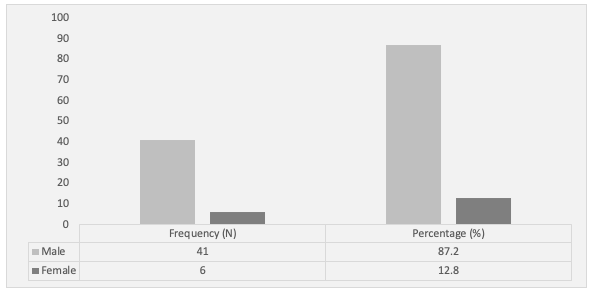
The gender disparity observed in these results emphasizes the need to consider gender dynamics when addressing sexual violence and developing policies aimed at prevention and offender rehabilitation.
Table 4: 2 presents the age distribution of victims in rape cases. The data reveals that the largest group of victims are aged between 12 and 17 years, making up 38.3% (n=18) of the rape/defilement cases. This is followed by victims aged 18 to 25 years, who account for 27.7% (n=13). Defilement victims under the age of 12 constitute 21.3% (n=10), while those aged 26 and above form the smallest group, representing 12.8% (n=6). These figures highlight a concerning trend where the majority proportion of victims are minors, with the 12–17 age range being the most affected by defilement.
| Frequency (n) | Percentage (%) | |
|---|---|---|
| Under 12 | 10 | 21.3 |
| 12–17 | 18 | 38.3 |
| 18–25 | 13 | 27.7 |
| 26 and above | 6 | 12.8 |
| Total | 47 | 100.0 |
The predominance of defilement victims aged 12 to 17 has serious implications for public health, child protection, and legal systems. It underscores the urgent need for targeted interventions aimed at protecting adolescents, who appear to be particularly vulnerable to defilement. This vulnerability could be attributed to various factors, including limited awareness of personal safety, increased exposure to risky environments, or the exploitation of naivety by offenders. Further, the data showing that 21.3% of victims are under 12 years old is alarming and points to a need for heightened surveillance, education, and policy measures to safeguard younger children from sexual predators.
The comparison for results in figure 4.4 indicates that while adolescent victims are more prevalent, efforts should also address the continuum of risk faced by adult survivors, as discussed in the broader literature on sexual violence victimisation. This is because adult survivors often face unique barriers to reporting and accessing justice, including societal stigma, fear of retaliation, and challenges in proving non-consent in cases involving intimate partners or acquaintances. Furthermore, research suggests that adult victims may experience long-term psychological trauma, economic hardships, and difficulties in securing legal redress, which underscores the need for a justice system that adequately considers their experiences and vulnerabilities.
Figure 4: 2 illustrates the distribution of rape incidents based on their location, indicating that a higher percentage of cases, 57.4% (n=27), occurred in urban settings, while 42.6% (n=20) took place in rural areas. This distribution demonstrates a notable prevalence of incidents in urban locations, although the number of cases in rural areas is also substantial, highlighting that sexual violence is a critical issue across different geographical contexts.
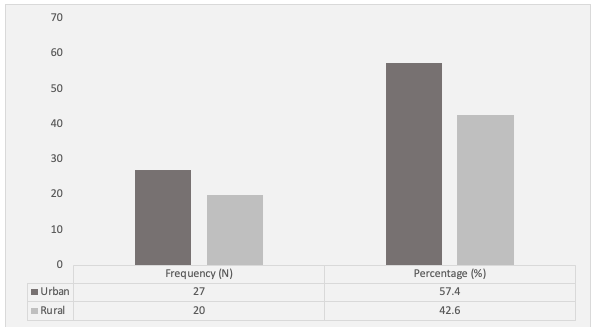
The higher frequency of rape incidents in urban areas has significant implications for resource allocation and intervention strategies. Urban environments may present unique risk factors, such as population density, social anonymity, and heightened exposure to nightlife and public spaces. Consequently, prevention measures in urban areas might need to focus on increasing safety in public places, enhancing street lighting, and raising awareness among city residents. However, the significant proportion of cases in rural areas, 42.6%, also underscores the need for rural-specific interventions, which could include community education, improving access to support services, and addressing the limited law enforcement presence that often characterises rural settings. Table 4.3 summarises the relationship between victims and offenders.
| Relationship Type | Frequency (n) | Percentage (%) |
|---|---|---|
| Intimate Partner (current/ex) | 20 | 42.6 |
| Family Member | 12 | 25.5 |
| Neighbour | 9 | 19.1 |
| Stranger | 6 | 12.8 |
| Total | 47 | 100.0 |
The largest proportion of offenders (42.6%) were intimate partners or close acquaintances, followed by family members (25.5%), and neighbours (19.1%). Strangers accounted for only 12.8% of cases. Table 4.4 provides additional insight into the socio-economic background of offenders.
| Education Level | Frequency (n) | Percentage (%) | Occupation | Frequency (n) | Percentage (%) |
|---|---|---|---|---|---|
| No formal education | 6 | 12.8 | Unemployed | 19 | 40.4 |
| Primary | 18 | 38.3 | Casual labourer | 16 | 34.0 |
| Secondary | 14 | 29.8 | Formally employed | 12 | 25.5 |
| Post-secondary | 9 | 19.1 | — | — | — |
| Total | 47 | 100.0 | Total | 47 | 100.0 |
The majority (38.3%) had attained only primary education, while 29.8% had secondary education. A smaller proportion (19.1%) had post-secondary qualifications, and 12.8% had no formal education. In terms of occupation, 40.4% were unemployed, 34.0% engaged in casual labour, and only 25.5% held formal employment.
To complement the quantitative findings, interviews with judicial officers, prosecutors, and defence lawyers provided contextual understanding of systemic challenges in rape adjudication, societal attitudes, and offender behaviour. Thematic analysis generated three major themes summarised below.
| Theme | Keywords | Representative Verbatim Excerpts |
|---|---|---|
| 1. Power, Control, and Gender Norms | Patriarchy, entitlement, male dominance, socialisation | “Many offenders feel entitled to women’s bodies; they do not see consent as necessary in relationships.” — Prosecutor, Nairobi |
| 2. Barriers to Justice and Reporting | Stigma, victim-blaming, fear, weak evidence | “Victims withdraw cases because of family pressure or fear of shame… The system does not protect them enough.” — Judicial Officer, Milimani |
| 3. Socio-economic Marginalisation | Poverty, unemployment, peer influence, alcohol | “Most young offenders come from unstable backgrounds; they are idle, poor, and easily influenced by peers.” — Defence Lawyer, Nairobi |
The qualitative data enriches the quantitative findings by revealing underlying themes that contextualise the lived experiences of victims and the professional perceptions of justice actors. Three dominant themes emerged: 1) Power and Gender Dynamics – Judicial officers and prosecutors consistently linked sexual violence to male dominance, entitlement, and cultural tolerance of gender inequality. As one prosecutor noted, “Many offenders believe they have a right to access a woman’s body if she refuses them.” 2) Barriers to Reporting – Defence lawyers and prosecutors cited fear of stigma, mistrust in the justice system, and prolonged trial processes as key deterrents to reporting. A judicial officer explained, “Victims withdraw cases when community members start shaming them for bringing dishonour.” 3) Systemic and Institutional Gaps – Respondents identified slow court processes, lack of forensic evidence, and insufficient victim support as major obstacles to conviction. A defence lawyer observed, “Without medical evidence or witnesses, most cases collapse even when the assault clearly happened.”
Discussion
The analysis of 47 rape case files from the Milimani Family Court and 10 key informant interviews provides critical insights into the socio-demographic dynamics of both offenders and victims. The discussion below interprets these findings in light of existing scholarship, identifying areas of convergence, contradiction, and implication for policy and practice.
Age of Offenders
The results in Table 4.1 revealed that rape offences were predominantly committed by younger individuals, particularly those aged between 18 and 25 years. This finding is consistent with previous research, which similarly identifies younger adults as the most represented age group among sexual offenders (Sinclair et al., 2013). The present study further observed a notable proportion (17%) of offenders under 18, underscoring the emerging concern of youth involvement in sexual crimes.
These results align with Wormith, Hogg, and Guzzo (2012), who reported that younger offenders tend to face harsher judicial treatment, largely due to perceptions of higher recidivism risk and moral culpability. However, Hilinski-Rosick, Freiburger, and Verheek (2014) observed that age does not always significantly influence sentencing outcomes, implying that while youth may predict involvement, it does not necessarily determine judicial response.
The prominence of younger offenders may be linked to psychosocial immaturity, peer influence, exposure to aggressive masculinities, and lack of sexual education. This corresponds with criminological theories suggesting that impulsivity and identity formation during adolescence can increase susceptibility to deviant behaviour. The current findings extend the literature by emphasising that while offenders in their twenties dominate case records, minors also constitute a considerable proportion, highlighting the need for preventive interventions focused on schools, community mentorship, and early behaviour correction programmes.
Gender of Offenders
The gender pattern illustrated in Figure 4.1, where 87.2 per cent of offenders were male, corresponds with extensive evidence confirming the dominance of men as perpetrators of sexual violence (Temmerman et al., 2019; Sinclair et al., 2013). These trends are commonly attributed to social and psychological constructs of masculinity, power assertion, and patriarchal control. Beauregard and Martineau (2014) argue that many sexual assaults are motivated less by sexual gratification than by the exertion of dominance and control over victims.Nonetheless, the small but notable presence of female offenders (12.8%) challenges the conventional gendered narrative of sexual violence. Though female perpetration remains statistically rare, it requires acknowledgement, as it disrupts gender stereotypes and calls for a more inclusive approach to prevention, assessment, and treatment. This finding resonates with emerging feminist criminology that recognises women’s potential for agency in offending behaviour within broader structures of inequality.
Age of Victims
Table 4: 2 demonstrated that the majority of victims (38.3%) were aged between 12 and 17 years, followed by young adults aged 18 to 25 (27.7%). These findings mirror the results of Temmerman et al. (2019) and Sinclair et al. (2013), who similarly identified adolescent girls as the most vulnerable demographic. The heightened vulnerability of this group may derive from limited self-protection knowledge, trust in authority figures, and exposure to coercive relationships. Chen et al. (2020) reinforced this pattern, noting that adolescents are often targeted due to perceived naivety or incapacity to resist. The fact that 21.3 per cent of victims in the present study were under 12 years old intensifies concern, suggesting systemic failures in child protection and community vigilance. Importantly, the presence of adult victims (12.8%) demonstrates that sexual violence extends beyond adolescence. This aligns with Sinclair et al. (2013), who found that women assaulted as minors were at greater risk of revictimisation in adulthood a cycle linked to trauma and social disempowerment. Thus, interventions must address both immediate child protection and long-term survivor support. For minors, strategies should focus on early education, parental guidance, and secure reporting mechanisms, while adult survivors require accessible psychological, legal, and economic support systems to mitigate secondary victimisation.
Victim–Offender Relationship
The findings presented in Table 4.3 reaffirm the dominant trend identified in the literature (Temmerman et al., 2019; Sinclair et al., 2013): the majority of sexual assaults occur within familiar social networks. In this study, 55.3 per cent of offenders were acquaintances of their victims, while intimate partners accounted for 27.7 per cent. These patterns reveal that sexual violence is largely relational rather than random, challenging public discourses that frame rape primarily as a stranger-driven act.
This insight has vital implications for prevention strategies. It underscores the need for community-based education and awareness campaigns that confront the realities of domestic and acquaintance rape. Moreover, the justice system must recognise the unique complexities of prosecuting relational sexual violence, where emotional ties and social pressure often deter victims from reporting.
Location of Incidents
The geographical distribution of incidents (Figure 4.2) revealed a higher proportion of cases in urban areas (57.4%) than in rural settings (42.6%). These results correspond with findings by Alderden and Ullman (2012), who noted that urban areas tend to exhibit higher reporting rates due to greater anonymity, mobility, and access to formal justice mechanisms. Nonetheless, the significant number of rural cases in the current study (42.6%) suggests that sexual violence is a pervasive issue across both contexts.
Beichner and Spohn (2012) cautioned that rural underreporting remains a serious limitation, often arising from social stigma, victim-blaming attitudes, and limited trust in law enforcement. Onyango-Ouma et al. (2009) and Richter et al. (2014) similarly observed that rural victims face logistical challenges in accessing forensic, medical, and psychosocial services. Consequently, while urban interventions may prioritise environmental safety such as improving street lighting and surveillance—rural contexts demand culturally embedded community interventions and improved access to legal and health services.
Conclusion
The study revealed that rape offenders are predominantly young adult males, while victims are mainly adolescent and young adult females. The findings affirm that sexual violence is largely perpetrated within familiar social contexts rather than by strangers, underscoring the need for community-centred prevention strategies. Age and gender dynamics remain crucial in understanding patterns of offending and victimisation, while urban–rural variations highlight systemic inequalities in reporting and access to justice. The results contribute to the existing body of knowledge by linking sociodemographic factors with judicial outcomes and by emphasising the need for age- and gender-responsive interventions. Strengthening forensic and legal capacities, enhancing community awareness, and reforming justice mechanisms are essential to ensure effective prevention and fair adjudication of sexual offences in Kenya.
References
Rights and permissions

Disclaimer
All claims expressed in this article are solely those of the author and do not necessarily represent those of the publisher, editors, reviewers, or affiliated institutions. Any product, service, or claim that may be evaluated in this article is not guaranteed or endorsed by the publisher.
Publisher’s note
The publisher remains neutral with regard to jurisdictional claims.
Additional information
Data availability
The data supporting the findings of this study are available from the corresponding author upon reasonable request.
Funding
This research received no specific grant from any funding agency in the public, commercial, or not-for-profit sectors.
Ethics declarations
Ethics approval was not required for this study.
Article Timeline
 Publication record
Cite this article
- Received
- July 10, 2025
- Revised
- August 20, 2025
- Accepted
- September 20, 2025
- Published
- October 16, 2025
- Version of record
- October 18, 2025
Share this article
Share the article record with colleagues and readers worldwide.
Explore research across our journalsDiscover more research

Recent Publications
- La spirale de l'« insécurité sécurisée » en RDC : analyse criminologique de la réaction sociale et des conditions d'une légitimité ascendante
- L’etat reactif : La Politique du Spectacle Face aux Catastrophes en Republique Democratique du Congo
- Savant ou sorcier ? Prédation, iconoclasme et criminologie symbolique de l’enseignant d’Université en RDC

Most Read
- Environmental Risk Factors for Farm Crime Victimization and Its Effects on Livelihood
- La spirale de l'« insécurité sécurisée » en RDC : analyse criminologique de la réaction sociale et des conditions d'une légitimité ascendante
- L’etat reactif : La Politique du Spectacle Face aux Catastrophes en Republique Democratique du Congo

Recommended
Save this article as a bookmark
Use your browser’s secure bookmark shortcut. Both desktop options are shown below.
Press Ctrl+D
In Chrome, Edge or Firefox, choose a folder if needed, then select Done.
Press ⌘ Command+D
In Safari, Chrome or Firefox, choose the bookmark location and confirm.
Cite this article
Copy a formatted citation or download a reference file.
Cited by
Crossref citation count for this DOI.