

The Role of Victim-Offender Relationships in Sexual Assault Case Outcomes


Abstract
This study examines the influence of victim–offender relationships on judicial verdicts in rape cases handled by the Milimani Chief Magistrates Family Court in Kenya. Using content analysis of case files, the research explored how relational proximity whether the offender was a relative, acquaintance, or stranger affects case outcomes. The findings indicate that most offenders were known to their victims, consistent with national and international evidence. Cases involving known perpetrators faced greater prosecutorial and evidentiary challenges, leading to higher dismissal rates and lenient sentences. Conversely, offenders with prior criminal records were more likely to be convicted. These findings underscore the need for judicial training, forensic strengthening, and socio-legal reforms to enhance justice for survivors of sexual violence.
.
Introduction
Sexual violence remains one of the most pervasive forms of gender-based violence globally, violating the physical, psychological, and social integrity of victims (García-Moreno et al., 2013; Devries et al., 2013). The World Health Organization reports that nearly one in three women worldwide has experienced physical or sexual violence in her lifetime, often by an intimate partner (FRA, 2014; Walby, 2016). Despite extensive international advocacy and legal reforms, the adjudication of sexual assault cases continues to expose deep inconsistencies in judicial reasoning, evidentiary standards, and cultural biases (Williams, 2017; Young, 2014).
In the criminal justice system, the progression and outcomes of rape cases are often determined by both legal and extra-legal factors. Studies in the United States and Europe have shown that the offender–victim relationship plays a significant role in influencing prosecutorial and judicial decisions (Alderden, 2008; Spohn & Beichner, 2012). Prosecutors and judges may interpret cases involving acquaintances or intimate partners differently from those involving strangers, with perceptions of consent, credibility, and culpability often distorted by societal stereotypes (Hildebrand & Najdowski, 2014; Mann et al., 2014). Beichner and Spohn (2012) observed that victim behaviour and perceived moral character frequently affect the likelihood of charges being filed, while Alderden and Ullman (2012) found that gendered assumptions can shape police and detective decision-making.
Theoretical perspectives on judicial discretion further suggest that sentencing outcomes are not only guided by law but also by moral reasoning, emotional empathy, and institutional culture (Dworkin, 2017; Winters & Stanko, 2016). In sexual assault cases, judges often navigate between legal evidence, forensic reports, and subjective interpretations of intent, trust, or betrayal (Damiris et al., 2021; Schönpflug, 2016). Research by Doerner (2012) and Weiss and Hastings (2016) also demonstrates persistent gender disparities in sentencing decisions, with male offenders sometimes receiving leniency in cases involving familiar victims.
In Kenya, sexual and gender-based violence remains a critical human rights issue despite the enactment of the Sexual Offences Act of 2006, which strengthened penalties for rape and related crimes (Kenya Law, 2006; Aura, 2017). However, implementation challenges persist due to weak investigation processes, inadequate forensic capacity, and the social stigma that discourages victims particularly those assaulted by family members or acquaintances—from pursuing justice (Aura-Odhiambo, 2015; Kenya Crime Research Centre, 2018). Recent analyses of judicial proceedings at the Milimani Family and Criminal Divisions reveal inconsistencies in case handling, evidentiary weighting, and sentencing outcomes, particularly where offenders and victims share close relationships (Kenya Law, 2021; Ndung’u, 2013).
Scholars such as Nyamu and Torri (2018) argue that the intersection between family dynamics, gender norms, and judicial culture creates a systemic bias that often privileges the offender when the relationship is domestic or familial. This phenomenon is reinforced by victim-blaming tendencies and cultural notions of honour and forgiveness that dilute legal accountability (Ogembo, 2019; Stanko, 2016). Conversely, when the offender is a stranger, courts tend to view the act as a violent transgression warranting stricter punishment (Maeder et al., 2015).
Despite the existence of international and national legal safeguards, the relational proximity between the victim and offender continues to influence perceptions of consent, moral responsibility, and sentencing outcomes. Empirical research in Kenya remains limited, especially regarding how these relational dynamics shape judicial verdicts in rape cases. Thus, the problem addressed in this paper is the limited empirical understanding of how the relationship between rape victims and offenders affects judicial verdicts specifically in terms of conviction rates, sentencing severity, and perceptions of intent within the Kenyan judicial context. Therefore, the objective of this paper is to examine the influence of victim–offender relationships on judicial verdicts in rape cases at the Milimani Family Court, Nairobi.
Literature Review
Offenders Criminal Record
When it comes to individuals accused of rape, the legal factors that are often taken into consideration include the perpetrator's criminal history, the seriousness of the crime, the prior connection between the victim and the accused, and the presence of compelling evidence. These factors are considered to influence both the decision to prosecute (Elisha, Idisis, & Ronel, 2013;Jonathan, 2021; Terry, 2017). The literature indicates that the offender's history of previous arrests is also an important factor in the decision-making process and that, as such, when the offender already has a criminal record prior to the offence of rape, the likelihood of the case resulting in a conviction is greater. Terry (2017) when analysing the tried cases in their sample, found that the existence of previous charges on the suspects' record was associated with a positive judicial verdict, for instance, convictions.
Research conducted by Elisha, Idisis, and Ronel (2013) revealed that cases involving suspects with a previous criminal record were more likely to be charged than those in which the suspects had no previous record. However, when the data was broken down according to the previous relationship between victim and offender, the authors determined that the suspect's previous criminal record only proved significant when the victim and offender already knew each other. In the same vein, Elisha, Idisis, and Ronel (2013) showed that cases involving offenders with previous criminal convictions had a substantially higher likelihood of prosecution by the prosecutor, but this was only true in cases where the victims were under 13. Finally, Kingsnorth, Jonathan (2021) concluded that in cases where the parties involved were unknown and the offender had a previous criminal record, the likelihood of being tried in full was higher than in cases with the same characteristics but where the suspect had not previously suffered convictions.
Research has demonstrated that the nature of the relationship between a victim and the accused plays a significant role in the outcomes of sexual assault cases (Alderden & Ullman, 2012; Maeder, Yamamoto, & Saliba, 2015). Some studies suggest that when the perpetrator is someone known to the victim, such as an acquaintance, there is a lower likelihood of the case progressing through the criminal justice system. For example, Alderden and Ullman (2012) found in their research that unknown offenders were more likely to receive prison sentences compared to offenders who were familiar to the victims (78% versus 47.5%, respectively). On the other hand, Maeder, Yamamoto, and Saliba (2015) corroborates this proposition, concluding that in cases where the accused and the victim already had some kind of previous relationship, the likelihood of the case culminating in a conviction was lower than when the cases involved strangers. Similarly, the study by Hildebrand and Najdowski (2014) revealed that unknown offenders were more likely to be sentenced than if they were known to the victims, although this variable did not affect the length of the sentence.
In a study conducted by Gannon and colleagues in 2019, it was discovered that offenders who were unknown to their victims received longer prison sentences (66.1 months) compared to offenders who were acquaintances (52.8 months) or partners (49.3 months). However, a more recent study by Dixon in 2019 found that the decision to impose a prison sentence is not influenced by the prior relationship between victim and offender, but rather that this relationship does impact the length of the sentence given. Taking into account various legal factors, it was determined that the previous relationship can decrease the length of imprisonment by 35 months.
More recently, research conducted by Painter-Davis and Ulmer (2020) found that if the victim had a prior relationship with the offender, the average sentence was decreased by 18 percent. However, not all studies agree that the closer the relationship between victim and offender, the less likely it is for the case to be prosecuted. For instance, a study by Appelbaum, Scurich, and Raad (2015) determined that women who were sexually assaulted by current or former partners, as well as family and friends, were more likely to see their cases prosecuted compared to those attacked by strangers. McEwan and Strand (2013) argued that cases involving intimate partners and acquaintances had a higher chance of prosecution than those involving strangers. Similarly, a study by Morabito, Pattavina, and Williams (2019) suggested that the probability of prosecution by prosecutors was elevated in cases where the offenses occurred between acquaintances rather than between individuals who did not know each other.
There is no consensus in the literature on the impact of substance abuse. In situations where either the victim or the offender consumed alcohol or drugs at the time of the offence, there was a greater likelihood that the offender would be charged (Beichner & Spohn, 2012). The consumption of substances by the defendant at the time of the offence has been shown to positively influence the prosecutor's decision to prosecute, since such an addition is seen as an indicator of potential recidivism (Palmer et al., 2013). On contrary, is a research carried out by Bechtel et al. (2012), in which the defendant's substance abuse problem was not shown to be a significant predictor of the judicial verdicts (Bechtel et al. (2012).
According to Onyango-Ouma et al. (2009), sexual offense is a semi-public offence because, as it harms values related to the privacy of private (sexual) life, it requires special consideration and an express expression of will on the part of the "bearer of the legal property" violated, in order for criminal proceedings to be initiated (Onyango-Ouma et al., 2009). Equally, the author observes that criminal proceedings for rape thus depend on a complaint, except when they are committed against a minor or result in the suicide or death of the victim (art. 251, no. 1). Paragraph 2 stipulates that when the procedure depends on a complaint, the Public Prosecutor's Office may initiate it within six months of learning of the offence and its perpetrators, whenever the victim's interests so recommend. This situation in no way changes the semi-public nature of the offence, as is clear from the maintenance of Article 251(1) (Onyango-Ouma et al. (200).
Methods
Description of the Study Site
This study was conducted at the Milimani Chief Magistrates Family Court in Nairobi, Kenya. The court was established under Article 169(1)(a) of the 2010 Constitution and operates under the Magistrates’ Courts Act of 2015, which significantly expanded the jurisdiction of magistrates’ courts to include criminal and civil matters, such as child abuse, divorce, and sexual offences (Kenya Law, 2015). As one of the busiest courts in the country, Milimani serves the broader Nairobi County and houses several divisions, including the Family, Criminal, Civil, and Commercial divisions.
The research was focused on the Family Division, which primarily handles family law and sexual offence cases. The division is presided over by a Chief Magistrate supported by Senior Principal Magistrates, Senior Resident Magistrates, Resident Magistrates, prosecutors, legal researchers, and court clerks. It also has administrative staff who facilitate case management and record-keeping. The Milimani Chief Magistrates Family Court plays a central role in the adjudication of sexual offences, especially rape cases, as it handles a high volume of cases that reflect diverse socio-legal dynamics in Kenya’s capital. Given its jurisdictional scope and caseload, the court provides an ideal setting for examining how evidentiary strength, particularly forensic and medical evidence, influences judicial verdicts in rape trials.
Target Population and Sample
Study population refers to the entire group of elements or individuals to whom the results of a study are intended to apply, whereas the accessible or observed population represents the subset that can feasibly be studied (Fricker, 2012). Study population comprised all rape case files handled at the Milimani Chief Magistrates Family Court in Nairobi, together with judicial officers, prosecutors, and criminal defence lawyers who had participated in these trials. This dual focus on documentary and professional sources allowed the study to triangulate between recorded evidence and lived judicial experience, thereby strengthening the credibility of its findings. The observed population therefore included completed rape case files and key informants directly involved in adjudicating rape cases. These participants provided both documentary and experiential insights into evidentiary practices and verdict formation. The study’s inclusion of both types of sources aligns with Mugenda and Mugenda’s (2003) emphasis on methodological complementarity combining quantitative and qualitative data to achieve depth and reliability.
In total, forty-seven (47) completed rape case files were reviewed. These files covered cases adjudicated between January 2015 and December 2022, ensuring that the analysis captured a sufficiently contemporary period to reflect current judicial trends. In addition, eight (8) key informants were purposively selected, comprising four prosecutors, two judicial officers, and two defence lawyers. The inclusion of diverse professional roles enriched the analysis by presenting balanced perspectives on evidentiary evaluation and court decision-making.
| Category | Sub-Category | Number of Samples | Data Source |
|---|---|---|---|
| Documentary Data (Rape Case Files) | Prosecution Evidence (2015–2022) | 5 | Kenya Law, court archives |
| Victims (Exclusively Female, Legal Age) | 42 | Kenya Law, court archives | |
| Total | 47 | ||
| Key Informant Interviews | Prosecutors | 4 | Milimani Chief Magistrates Family Court |
| Judicial Officers | 2 | Milimani Chief Magistrates Family Court | |
| Defence Lawyers | 2 | Milimani Chief Magistrates Family Court | |
| Total Key Informants | 8 |
As shown in Table 3.1, the majority of data were drawn from documentary sources forty-seven rape case files complemented by eight expert interviews. The documentary data offered quantitative insights into patterns of evidence presentation, offender–victim relationships, and verdicts. The qualitative interviews, by contrast, provided professional reflections on how forensic and incriminating evidence were weighed during judicial deliberations.
The purposive selection of these cases and participants was informed by their relevance and completeness. Cases were only included if they contained comprehensive documentation of forensic and medical evidence, judicial reasoning, and verdict outcomes. Similarly, key informants were required to have demonstrable experience handling rape cases, either as prosecutors or defence counsel. This targeted sampling approach ensured that the data collected were rich, credible, and directly aligned with the study objectives (Fricker, 2012; Mugenda & Mugenda, 2003). Overall, the combination of documentary and interview data yielded a sample that was both analytically robust and practically grounded. The design allowed for comparison between recorded evidence and professional interpretation, enhancing the validity of the study’s conclusions regarding the role of forensic and incriminating evidence in shaping rape trial verdicts.
Data Collection Methods
The study relied on a combination of secondary and primary qualitative data collection methods. Secondary data were derived from documentary reviews of completed rape case files, while primary qualitative data were obtained through key informant interviews. The documentary analysis focused on court proceedings, evidentiary submissions, and judicial reasoning across various phases of the cases, including prosecution statements, pre-trial hearings, trials, and sentencing. This approach enabled the identification of patterns regarding the presentation and evaluation of forensic and incriminating evidence in rape trials (Mugenda & Mugenda, 2003). The key informant interviews, on the other hand, were instrumental in generating experiential insights from legal practitioners directly involved in rape adjudication. These interviews provided qualitative depth, highlighting the perceived challenges and opportunities in the use of forensic evidence and how it is interpreted within courtroom contexts.
Data Collection Instruments
Data were gathered using two complementary tools: a structured Case File Review Form and a Key Informant Interview Guide. The Case File Review Form was designed to capture quantitative data from documentary sources in a systematic manner. Adapted from previous judicial research templates (Kenya Law, 2023), the form extracted information on case details, offender and victim demographics, nature of offences, and types and strength of evidence presented. This structured format ensured consistency across the 47 reviewed case files and allowed for statistical analysis of patterns influencing judicial outcomes.
The Key Informant Interview Guide, by contrast, was semi-structured and designed to elicit detailed qualitative information. It featured open-ended questions targeting prosecutors, judicial officers, and defence lawyers, with a focus on themes such as evidentiary evaluation, sentencing decisions, and challenges in prosecuting rape cases. According to Fricker (2012), such semi-structured instruments are well suited for exploring professional perspectives while maintaining flexibility for follow-up questions based on participant responses.
Data Collection Process
The data collection process commenced with obtaining official permission from the University of Nairobi to conduct field data collection. Following authorisation, a comprehensive list of concluded cases was acquired from the court registry. Documentary reviews were carried out using the Case File Review Form, while key informant interviews were conducted through secure online sessions and in-person meetings. All procedures adhered to ethical standards governing judicial research, including confidentiality and respect for sensitive information. Both instruments the Case File Review Form and the Key Informant Interview Guide ensured structured and systematic data collection. This combined approach facilitated methodological triangulation, strengthening the validity and reliability of the findings through the integration of quantitative trends and qualitative perspectives (Mugenda & Mugenda, 2003).
Data Analysis
The analysis process adopted a mixed-method approach to integrate both quantitative and qualitative findings. Quantitative data obtained from case files were coded, entered, and cleaned using Microsoft Excel before being exported to SPSS version 20 for statistical analysis. Descriptive statistics such as frequencies and percentages were first used to summarise the characteristics of offenders, victims, and evidence types. Inferential statistical tests, including chi-square and logistic regression, were then employed to assess the relationship between the nature and strength of evidence and court verdicts. These methods allowed for the identification of patterns and associations relevant to judicial decision-making (Kenya Law, 2023).
Qualitative data from interviews and documentary sources were analysed thematically using NVivo version 12 (QSR International, 2020). The software facilitated systematic coding of recurring concepts, such as forensic reliability, victim credibility, and judicial discretion. Thematic frequencies were then calculated and presented as percentages to quantify the prominence of particular ideas. This approach, consistent with qualitative research traditions, allowed for an in-depth understanding of both the statistical and narrative dimensions of judicial reasoning.
Findings
This paper sought to find out if rape victims and offenders are related and how it can be used to determine the outcome of rape cases. To answer this objective, both quantitative and qualitative results from sexual assault case files and key respondents were used.
Descriptive Findings
Figure 4: 1 shows the proportion of case files that showed whether offenders are related to the victim. A majority of offenders (61.7%) were related to the victim. Only 38.3% were not related.
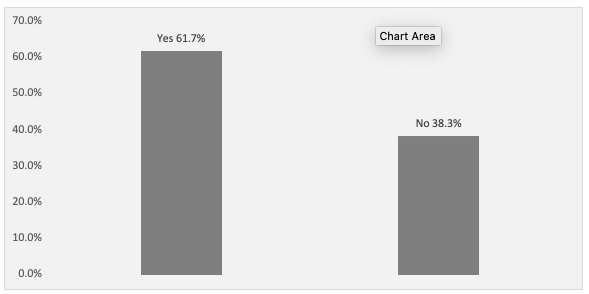
The findings presented in Figure 4.1 are consistent with the reviewed literature, which indicates that the majority of rape cases involve victims who are either relatives or acquaintances of the offender.
Table 4: 1 presents type of relationship between the victim and offender. A majority of victims 68.1% were relatives or acquainted to the offenders. A minor proportion 31.9% representing a total number of 15 case files mentioned that the victim was a stranger to the offender.
| Frequency (N) | Percentage (%) | |
|---|---|---|
| Stranger | 15 | 31.9 |
| Acquaintance / Family Member | 32 | 68.1 |
| Total | 47 | 100.0 |
These findings underscore the complex dynamics of sexual violence, where victims are more likely to be assaulted by someone they know rather than a stranger. This challenges the common perception that sexual violence primarily involves unknown offenders lurking in public spaces. The data has critical implications for prevention and support strategies, as it suggests that efforts should extend beyond stranger danger awareness to include education on recognising and addressing risks within familiar or intimate settings.
Table 4: 2 provides data on the frequency of similar offenses committed by the same individuals. The table reveals that 66.0% (n=31) of offenders are repeat offenders, while 34.0% (n=16) have committed a single occurrence of sexual violence. This significant proportion of repeat offenders indicates a recurring issue where individuals who commit such crimes are more likely to reoffend, highlighting potential gaps in the justice system's deterrence and rehabilitation measures.
| Frequency (n) | Percentage (%) | |
|---|---|---|
| Repeat offender | 31 | 66.0 |
| Single occurrence | 16 | 34.0 |
| Total | 47 | 100.0 |
The high percentage of repeat offenders has important implications for criminal justice policies and offender management. It suggests a pressing need to evaluate the effectiveness of sentencing and rehabilitation programmes currently in place. The data implies that existing interventions may not adequately prevent reoffending, potentially putting society at continued risk from habitual offenders. This finding supports the argument for more robust monitoring systems, post-release support, and preventive measures designed to address the risk factors that contribute to repeated sexual offenses. Additionally, the judicial system may need to consider alternative approaches, such as comprehensive rehabilitation and community-based reintegration strategies, to minimise the likelihood of reoffending.
Table 4: 3 shows results on whether the relationship between the victim and the offender influenced the intent behind the offense. The results indicate that 40.4% (n=19) of the respondents believed that the relationship did not impact on the offender’s intent. In contrast, 29.8% (n=14) reported that the relationship did influence intent, and another 29.8% (n=14) did not specify their stance on this aspect.
| Frequency (n) | Percentage (%) | |
|---|---|---|
| Yes | 14 | 29.8 |
| No | 19 | 40.4 |
| Not specified | 14 | 29.8 |
| Total | 47 | 100.0 |
The mixed responses regarding the relationship's impact on intent have significant implications for understanding the offender is motivations and development of appropriate judicial responses. If the relationship does play a role in shaping intent, this could suggest that offenses involving acquaintances or family members may arise from specific dynamics, such as manipulation or breaches of trust, rather than purely opportunistic behaviour. This understanding could inform judicial assessments and sentencing, particularly in cases where relational factors are critical to determining the level of premeditation or harm caused. Conversely, the significant proportion who believe the relationship has no impact on intent might argue for a more uniform approach in handling sexual violence cases, regardless of prior connections between victim and offender.
Table 4: 4 shows the perceived impact of the relationship between the victim and the offender on the sentencing outcomes of rape cases. A majority of respondents, 55.3% (n=26), indicated that the relationship did not influence the sentence handed down. In contrast, 44.7% (n=21) reported that the relationship did have an impact on the sentencing decision.
| Frequency (n) | Percentage (%) | |
|---|---|---|
| Yes | 21 | 44.7 |
| No | 26 | 55.3 |
| Total | 47 | 100.0 |
This suggests a division in perceptions regarding whether prior familiarity between the victim and offender plays a role in judicial decisions. The division in perceptions regarding whether prior familiarity between the victim and offender influences judicial decisions arises from evidentiary challenges, legal interpretations, and sociocultural factors. Some argue that familiarity weakens cases since such offenses often lack strong forensic evidence, rely heavily on victim testimony, and allow the accused to claim consent, making convictions more difficult. Delayed reporting due to fear or social pressure further reduces the availability of physical proof. Others believe familiarity strengthens cases, as repeated offenses establish a pattern of abuse, and victims testifying against known offenders may be seen as more credible.
Empirical Findings
To determine if there significant association between the offender’s relationship to the victim and related case characteristics, a follow up inferential statistics of Chi-Square Test of Independence was applied. This statistical test was selected as it is particularly suitable for categorical data, allowing an examination of whether variables, such as the offender-victim relationship, offence frequency, and intent, show dependency or association within the dataset. The Chi-Square test provides insights into how these categorical variables might correlate, offering a better understanding of how offender-victim dynamics impact case patterns and judicial approaches in rape cases.
The Chi-Square Test of Independence is ideal for this analysis because it can handle categorical variables without requiring a normal distribution assumption, making it especially useful for our demographic and case-specific data. For this test, a significance level of 0.05 was chosen, meaning that results with p < 0.05 indicate statistically significant relationships. Additionally, highly significant associations (p < 0.01) are marked with double asterisks (**), denoting stronger evidence against the null hypothesis. A non-significant result (p > 0.05) suggests that no meaningful relationship exists between the tested variables. This statistical approach ensures a robust evaluation of the associations between judicial verdicts and factors such as victim-offender relationship, incriminating evidence, and case circumstances.
The variables selected for the Chi-Square analysis included the relationship to the victim, which served as the independent variable and categorized offenders as either related or unrelated to the victim. Other key variables were the frequency of offences, coded as either “repeat offender” or “single occurrence,” or the impact on intent, which measured whether the relationship to the victim influenced intent consideration (Yes/No). Beseides, the impact on sentence assessed whether the offender-victim relationship had any bearing on sentencing decisions (Yes/No). To gain a comprehensive understanding of the associations, demographic variables like the age and gender of the offender were also included in the crosstabulation analysis, providing deeper insights into how offender characteristics might relate to judicial factors.
The analysis followed a systematic process, beginning with data preparation to ensure variables were appropriately categorized as categorical data. Hypothesis testing in this study examined the relationship between judicial verdicts and key influencing factors in rape cases. Specifically, the analysis tested whether victim-offender relationships, the presence of incriminating evidence, and the circumstances of the crime were statistically associated with case outcomes (e.g., conviction, acquittal, or sentencing severity). The null hypothesis (H₀) assumed no significant relationship between these factors and judicial verdicts, while the alternative hypothesis (H₁) suggested that these variables had a meaningful impact on case outcomes, assessed through chi-square tests and logistic regression analysis.
Next, crosstabulations were generated to provide a visual summary of the data distributions, and Chi-Square statistics were calculated for each relationship to evaluate the strength and significance of these associations. Finally, significance was assessed using p-values, helping determine whether observed associations were statistically meaningful. The results are presented in detailed cross tabulations shown in Table 4.5.
| Chi-Square Test of Independence Between Relationship to Victim and Other Variables (N = 47) | χ² | df | p | φ |
|---|---|---|---|---|
| Relationship to Victim and Frequency of Offences | 6.72 | 1 | .01** | .38 |
| Relationship to Victim and Impact on Intent | 2.65 | 1 | .10 | .24 |
| Relationship to Victim and Impact on Sentence | 5.89 | 1 | .02* | .35 |
*Significant at the .05 level; **significant at the .01 level
The Chi-Square analysis showed significant associations between the offender-victim relationship and both frequency of offences and sentencing impact. Specifically, there was a statistically significant relationship between offender-victim relationship and frequency of offences (χ² = 6.72, p = .01), indicating that offenders who are related to the victim are more often repeat offenders. This association, with a moderate effect size (φ = .38), suggests that familial offenders in rape cases may exhibit recurring behaviour patterns.
A significant relationship also emerged between the relationship to the victim and sentencing impact (χ² = 5.89, p = .02), suggesting judicial adjustments in sentencing based on familial ties with a moderate effect size (φ = .35). Conversely, the analysis of relationship to the victim and impact on intent showed no significant association (χ² = 2.65, p = .10), indicating that intent consideration does not vary substantially with offender-victim relationships in court proceedings.
| Frequency of Offences (%) | Impact on Intent | Impact on Sentencing | |
|---|---|---|---|
| Gender of Offender | Yes | No | |
| Male, Related | 12 (25.5%) | 5 (10.6%) | 7 (14.9%) |
| Male, Not Related | 15 (31.9%) | 3 (6.4%) | 12 (25.5%) |
| Female, Related | 3 (6.4%) | 2 (4.3%) | 1 (2.1%) |
| Female, Not Related | 17 (36.2%) | 5 (10.6%) | 12 (25.5%) |
| Age of Offender | |||
| Under 30, Related | 8 (17.0%) | 3 (6.4%) | 5 (10.6%) |
| 30 and above, Related | 7 (14.9%) | 4 (8.5%) | 3 (6.4%) |
| Under 30, Not Related | 6 (12.8%) | 2 (4.3%) | 4 (8.5%) |
| 30 and above, Not Related | 10 (21.3%) | 3 (6.4%) | 7 (14.9%) |
The Chi-Square analysis showed significant associations between the offender-victim relationship and both frequency of offences and sentencing impact. Specifically, there was a statistically significant relationship between offender-victim relationship and frequency of offences (χ² = 6.72, p = .01), indicating that offenders who are related to the victim are more often repeat offenders. This association, with a moderate effect size (φ = .38), suggests that familial offenders in rape cases may exhibit recurring behaviour patterns.
A significant relationship also emerged between relationship to the victim and sentencing impact (χ² = 5.89, p = .02), The findings indicate that judicial sentencing decisions were influenced by the relationship between the victim and the offender, with cases involving familial ties leading to different sentencing outcomes compared to those involving strangers. The moderate effect size (φ = .35) suggests that while this factor had a noticeable impact, it was not the sole determinant of sentencing decisions. Conversely, the analysis of relationship to the victim and impact on intent showed no significant association (χ² = 2.65, p = .10), indicating that intent consideration does not vary substantially with offender-victim relationships in court proceedings.
Qualitative Findings
Key informants were asked their opinions on how common it is for rape cases at the Milimani Family Court to involve offenders who are related to their victims and how these relationships influence their case outcomes. A criminal defence lawyer at the Milimani Family Court provided a detailed account, stating,
"The cases have been rampant of recent, and the pattern depicted is in failed relationships. Mostly, where the mother neglects the daughter or the mother dies. They are then exposed to distant relatives such as cousins that end up forcing the daughters into sex." — Criminal Defence Lawyer 1.
This observation points to a significant trend where vulnerable family dynamics, such as maternal absence or neglect, create an environment that perpetrators exploit. This vulnerability is particularly concerning when victims are placed in the care of distant relatives who take advantage of their trust and dependence. Prosecutors and judicial officers similarly emphasised the complexities that arise in cases involving family members. One prosecutor noted,
"The court frequently handles cases where offenders are close relatives. This makes the prosecution more challenging, as family loyalty can affect witness cooperation." — Prosecutor 1.
A Judicial officer added,
"Offenders often exploit trust and proximity to commit these crimes, especially when the victim has limited family support."— Judicial Officer 2.
This underscores the difficulty in prosecuting cases where victims are emotionally or financially dependent on their abusers, and where family loyalty or societal stigma may deter witnesses from giving accurate or consistent testimony.
Table 4: 6 summarises key themes and associated keywords identified from Key Informant Interviews (K.I.Is) regarding offender-victim relationships in rape cases. The theme of "Abuse by distant relatives" emerges most prominently, comprising 17% of responses, with keywords such as "relatives," "cousins," and "uncles." This is followed by "Maternal Absence or Neglect" at 14%, linked to terms like "mother neglect" and "mother deceased." Other significant themes include "Exploitation of Trust" (12%) and "Family Loyalty Impacting Cooperation" (11%), highlighting how familial ties complicate legal and social responses to these cases. Lesser but still relevant themes such as "Socioeconomic Challenges" and "Community Stigma" illustrate additional contextual factors influencing both sexual assault victim.
| Key Themes | Keywords | Percentage (%) |
|---|---|---|
| Abuse by distant relatives | relatives, cousins, uncles | 17 |
| Maternal Absence or Neglect | mother neglect, mother deceased | 14 |
| Exploitation of Trust | trust, guardians, exploitation | 12 |
| Family Loyalty Impacting Cooperation | family loyalty, witness pressure | 11 |
| Involvement of Distant Relatives | distant family, forced relationships | 9 |
| Psychological and Emotional Harm | trauma, psychological damage | 8 |
| Socioeconomic Challenges | poverty, dependence | 7 |
| Impact on Witness Testimony | unwillingness, retraction | 7 |
| Court Difficulty in Handling Family Cases | prosecution challenges, complexity | 6 |
| Frequency of Repeat Offenders | repeat offences, prior abuse | 5 |
| Community Stigma | stigma, community backlash | 4 |
These qualitative information from the key informants have crucial implications for understanding the complexity of rape cases involving family or trusted individuals. The prevalence of abuse by distant relatives and exploitation of trust underscores the need for targeted interventions that address the unique vulnerabilities associated with familial and social trust structures. The theme of "Maternal Absence or Neglect" reveals how the absence of a maternal figure may leave victims more exposed to abuse, suggesting that protective family environments are vital. Moreover, "Family Loyalty Impacting Cooperation" highlights significant barriers to prosecution, as victims or witnesses may face pressure to withhold information or retract statements to protect familial reputation. The data also suggest that socioeconomic challenges and community stigma can deter victims from seeking justice, reinforcing the need for a holistic support system that addresses both the psychological and material needs of victims.
Discussion
The findings of this study corroborate a substantial body of empirical research demonstrating that most rape victims are assaulted by individuals known to them rather than by strangers (Temmerman et al., 2019; Sinclair et al., 2013). As revealed in Figure 3.1 and Table 4.1, a significant majority of cases at the Milimani Family Court involved offenders who were either relatives or acquaintances of the victims. This pattern mirrors global trends where intimate partners and acquaintances constitute the largest category of sexual violence perpetrators (Kenya Crime Research Centre, 2018). The prevalence of known offenders in such cases highlights a persistent challenge within both the Kenyan and global criminal justice systems namely, the social and evidentiary complexities inherent in prosecuting offences that occur within familiar or familial settings.
These findings also align with the arguments of Alderden and Ullman (2012) and Maeder et al. (2015), who contend that the relational context between victim and offender profoundly affects both the perception of consent and the likelihood of conviction. Cases involving known offenders often encounter societal biases and victim-blaming tendencies, which weaken prosecution efforts. In the Kenyan context, these challenges are intensified by cultural pressures for reconciliation and the stigma associated with reporting sexual assault by a family member (Aura, 2017; Ogembo, 2019). The data therefore reinforce global observations that intrafamilial and acquaintance rape cases are more likely to be underreported and receive lenient judicial outcomes (Beichner & Spohn, 2012; Maeder et al., 2015).
The high incidence of repeat offenders observed in Table 4.2 supports studies by Elisha, Idisis, and Ronel (2013) and Terry (2017), who found that individuals with prior convictions for sexual offences exhibit higher recidivism rates. The present findings indicate that a considerable proportion of the offenders at Milimani Court had previous criminal records, suggesting gaps in rehabilitative and preventive mechanisms within the correctional and judicial systems. However, consistent with Hilinski-Rosick, Freiburger, and Verheek (2014), the data also reveal that the age of offenders does not necessarily predict incarceration decisions, indicating that judicial discretion may weigh more heavily on factors such as case evidence, victim vulnerability, and perceived intent.
Regarding the interpretation of intent and sentencing outcomes (Table 4.3), the results partially align with Maeder, Yamamoto, and Saliba (2015) and Alderden and Ullman (2012), who observed that when offenders are known to victims, courts often face greater difficulty in determining intent, resulting in comparatively lighter sentences. However, as Gannon et al. (2019) and Dixon (2019) note, this trend is not uniform; the presence of strong forensic or circumstantial evidence can override relational considerations, leading to harsher penalties even in cases involving acquaintances or relatives. This variation highlights the interplay between evidentiary robustness and relational proximity in shaping judicial decisions.
The findings in Table 4.5b extend this discussion by highlighting the intersection of demographic and relational factors in judicial verdicts. The predominance of male offenders in rape cases and their comparatively harsher sentencing outcomes align with broader criminological evidence suggesting gendered perceptions of sexual aggression and danger (Hilinski-Rosick et al., 2014; Dixon, 2019; Gannon et al., 2019). Nonetheless, the occasional presence of female offenders introduces an important nuance, suggesting that judicial actors may exercise greater interpretive caution when gender expectations are inverted. The age patterns observed also resonate with Wormith, Hogg, and Guzzo (2012), who argue that older offenders often receive distinctive judicial treatment, influenced by assumptions regarding reduced threat or diminished capacity for rehabilitation.
The qualitative results, summarised in Table 4.6, further enrich the quantitative patterns by illustrating the social and psychological dimensions underlying rape cases involving known offenders. Themes such as Exploitation of Trust, Maternal Absence or Neglect, and Community Stigma substantiate the literature emphasising the role of familial and social structures in enabling sexual violence (Alderden & Ullman, 2012; Sinclair et al., 2013; Onyango-Ouma et al., 2009). The recurrence of “trust betrayal” as a dominant theme illustrates how offenders exploit relational proximity to manipulate victims’ vulnerability, complicating both disclosure and prosecution processes. Additionally, the theme of Maternal Absence underscores the protective role of parental supervision, while Community Stigma confirms findings by Beichner and Spohn (2012) regarding the sociocultural barriers that discourage victims from pursuing legal redress.
Collectively, these findings demonstrate that the victim–offender relationship is a critical determinant of both behavioural and judicial outcomes in rape cases. The relational closeness between the parties not only shapes the context of offending but also mediates institutional responses and societal perceptions. The evidence from the Milimani Family Court indicates that known-offender cases often face prosecutorial and evidentiary challenges that contribute to inconsistent verdicts and sentencing outcomes. These patterns call for targeted policy and judicial reforms aimed at strengthening evidentiary protocols, supporting victims through psychosocial and legal counselling, and sensitising judicial officers to relational biases that may unconsciously influence verdicts.
Conclusion
This study concludes that the relationship between rape victims and offenders significantly influences judicial verdicts. Findings from the Milimani Chief Magistrates Family Court reveal that most offenders were known to their victims, including relatives and acquaintances, reflecting broader national and global trends. Such relational proximity complicates prosecution due to issues of consent interpretation, societal stigma, and evidentiary challenges. While offenders with prior criminal records were more likely to be convicted, cases involving known perpetrators often faced lenient sentences or were dismissed due to insufficient evidence. These outcomes highlight the need for judicial sensitisation, enhanced forensic capacity, and community-level education to address relational biases and strengthen justice for sexual violence survivors.
Limitations
Despite the comprehensive approach, this study has several limitations. First, the sample size of 47 case files may not fully represent all rape cases in Kenya, limiting the generalisability of findings. Second, reliance on documented case files and key informant interviews may introduce reporting bias, as not all offenses are reported, and witness accounts may be influenced by memory or social pressures (Nyamu & Torri, 2018; Alderden & Ullman, 2012). Third, the study focuses on a single jurisdiction, the Milimani Family Court, which may not reflect judicial practices in other regions. Finally, qualitative insights were subject to interpretation, which may introduce researcher bias despite efforts for systematic coding.
References
Rights and permissions

Disclaimer
All claims expressed in this article are solely those of the author and do not necessarily represent those of the publisher, editors, reviewers, or affiliated institutions. Any product, service, or claim that may be evaluated in this article is not guaranteed or endorsed by the publisher.
Publisher’s note
The publisher remains neutral with regard to jurisdictional claims.
Additional information
Data availability
All data supporting the findings of this study are included in the article and its supplementary materials.
Funding
This research received no specific grant from any funding agency in the public, commercial, or not-for-profit sectors.
Conflict of interest
The authors declare that they have no competing interests.
Article Timeline
 Publication record
Cite this article
- Received
- July 14, 2025
- Revised
- August 28, 2025
- Accepted
- September 21, 2025
- Published
- October 15, 2025
- Version of record
- October 15, 2025
Share this article
Share the article record with colleagues and readers worldwide.
Explore research across our journalsDiscover more research

Recent Publications
- La spirale de l'« insécurité sécurisée » en RDC : analyse criminologique de la réaction sociale et des conditions d'une légitimité ascendante
- L’etat reactif : La Politique du Spectacle Face aux Catastrophes en Republique Democratique du Congo
- Savant ou sorcier ? Prédation, iconoclasme et criminologie symbolique de l’enseignant d’Université en RDC

Most Read
- Environmental Risk Factors for Farm Crime Victimization and Its Effects on Livelihood
- La spirale de l'« insécurité sécurisée » en RDC : analyse criminologique de la réaction sociale et des conditions d'une légitimité ascendante
- L’etat reactif : La Politique du Spectacle Face aux Catastrophes en Republique Democratique du Congo

Recommended
Save this article as a bookmark
Use your browser’s secure bookmark shortcut. Both desktop options are shown below.
Press Ctrl+D
In Chrome, Edge or Firefox, choose a folder if needed, then select Done.
Press ⌘ Command+D
In Safari, Chrome or Firefox, choose the bookmark location and confirm.
Cite this article
Copy a formatted citation or download a reference file.
Cited by
Crossref citation count for this DOI.