


Climate variability and population growth threaten food systems in Eastern Africa, necessitating climate-resilient crop adoption. This descriptive study synthesized regional adoption trends of improved varieties between 1990 and 2020 using secondary data from the FAO, IITA, CGIAR, and national statistics analysed via MS Excel. Results reveal widespread but heterogeneous technology diffusion across crops and countries. Improved beans and cassava recorded the highest regional uptake, rising from 14.7% to 66.9% (led by Rwanda at 77.1%) and 13.2% to 60.8% (led by Tanzania at 78.5%), respectively. Improved sorghum adoption reached 42.9%, led by Ethiopia (50.0%). Legumes showed moderate gains, with cowpeas at 28.9% and pigeon peas at 25.7%, primarily driven by Kenya. Conversely, drought-resistant maize (18.8%), bananas (11.4%), and pearl millet (7.5%) exhibited lower regional adoption. Ultimately, these trends underscore significant progress toward climate adaptation and food security, while highlighting critical cross-country and cross-crop disparities in innovation uptake.
1. Background
Across Eastern Africa, including Kenya, Tanzania, Uganda, Ethiopia, Rwanda, Burundi and South Sudan, subsistence and commercial food crops provide the baseline for daily caloric intake for millions of households (Chauvin et al., 2012). During the twentieth century, systemic agronomic shifts occurred as maize largely displaced traditional indigenous grains like sorghum and millet due to its superior yield potential under optimal conditions. Today, maize is the dominant staple across much of the region, supplemented by other dietary staples such as common beans, rice, cassava and bananas (Chauvin et al., 2012). In regional culinary traditions, maize is typically processed into flour to prepare gruel or ugali (a dense, starchy porridge), or alternatively cooked whole and paired with legumes in ubiquitous traditional dishes like githeri (Ekpa et al., 2019).
Beyond maize, specific root crops and climate-hardy cereals provide vital dietary and nutritional buffers. Cassava serves as a critical staple in Uganda, Tanzania and parts of Kenya (Chauvin et al., 2012). Because this highly resilient root crop thrives in nutrient-depleted soils and endures prolonged moisture deficits, it functions as a reliable famine reserve, typically consumed boiled, pounded into thick pastes, or milled into flour. Concurrently, sorghum and millet varieties, particularly finger millet, remain foundational to regional agrosystems. These indigenous cereals are used to make nutrient-rich porridges, traditional flatbreads and local brews; crucially, they offer distinct nutritional advantages and far greater tolerance to climate-induced moisture stress than maize (Chaudhary et al., 2024). Uganda, for instance, maintains a heavy cultural and dietary reliance on finger millet (Chaudhary et al., 2024).
Dietary compositions vary structurally across Eastern Africa’s diverse agro-ecological zones. Bananas and plantains constitute a daily dietary cornerstone in Burundi, alongside neighbouring Rwanda and Uganda, where they are routinely paired with sweet potatoes and Irish potatoes to enhance essential dietary diversity (Kakunze et al., 2025). Legumes, predominantly common beans, provide vital dietary protein when systematically paired with starchy staples like rice and maize (Chauvin et al., 2012). In Ethiopia, the indigenous grain teff remains the signature staple, uniquely utilised to prepare injera, a culturally central, fermented flatbread (Abera et al., 2025). Meanwhile, rice and wheat production have expanded significantly across the region, particularly in Tanzania (Chauvin et al., 2012). Rapid urbanisation has increased demand for these processed cereals in urban centres, outstripping local production capacities and causing regional supply shortages that necessitate heavy national imports (Chauvin et al., 2012).
Collectively, these diverse agrosystems form the backbone of both regional food security and deep-rooted cultural traditions (Simane et al., 2026). However, key staples like East African Highland Bananas and local maize and sorghum varieties are highly sensitive to accelerating climate stresses (Adhikari et al., 2025). Unfavourable weather conditions often result in catastrophic yield losses of 40% or more, directly compounding food insecurity for the smallholder farmers who dominate agricultural production in the region (Abdullahi et al., 2024). Smallholders are forced to navigate a compounding matrix of pressures, including rapid population growth, climate change and low productivity (Abdullahi et al., 2024). Erratic rainfall patterns, aggressive pest pressures such as the Fall Armyworm, and declining soil fertility severely threaten the traditional cultivars that sustain millions, underscoring an urgent need to transition toward climate-resilient alternatives (Fisher et al., 2015).
In response, regional and international initiatives focused on improved seed varieties, sustainable farming practices and crop diversification have been deployed to strengthen smallholder resilience while preserving the region’s rich agricultural heritage (Glatzel et al., 2025). Elite climate-resilient crops developed through targeted breeding programmes deliver enhanced yields, robust drought tolerance, shortened maturity cycles, and resistance to devastating regional diseases like Fusarium wilt and Banana Bacterial Wilt (BBW).
Institutions like the International Institute of Tropical Agriculture (IITA) and the National Agricultural Research Organization (NARO) operate at the forefront of breeding and disseminating these advanced varieties (Ortiz, 2017). Accelerating the adoption of these improved cultivars is paramount to stabilising sustainable rural livelihoods, mitigating chronic reliance on external food aid, and driving broader economic stability in nations where agriculture employs the majority of the population. Fulfilling this potential requires rigorous, empirical research into contemporary adoption rates and behavioural determinants. Such insights will establish the data-driven foundation necessary to accelerate technology uptake, optimise extension services, and insulate Eastern African food systems against an unpredictable climate.
2. Research Methodology
2.1 Study Location
This study focused on Eastern African countries, specifically Kenya, Tanzania, Uganda, Rwanda and Burundi, with supplementary data obtained from Ethiopia and South Sudan, where applicable. These nations share a connected geography but encompass diverse agro-ecological zones, favouring the production of different crops (Chauvin et al., 2012). The studied regions included the Kenyan and Ethiopian highlands, lake crescents, coastal lowlands, and semi-arid zones. These locations were selected due to their high dependence on rain-fed agriculture (Recha, 2019), their severe vulnerability to climate change impacts, including prolonged droughts and erratic rainfall, and ongoing government initiatives promoting climate-resilient crop production through organisations like IITA, Bioversity International (2017), and national agricultural research systems (Ortiz, 2017). The study analysed data spanning over three decades (1990–2025) to capture trends amidst these evolving climate challenges.
2.2 Research Design
The study employed a desk-based, mixed-methods research design anchored on the quantitative analysis of secondary survey data. As noted by Kilonzo and Ojebode (2023), this approach is highly appropriate for capturing temporal adoption rates of climate-resilient crops such as tissue culture bananas, drought-tolerant maize, FHIA (Fundación Hondureña de Investigación Agrícola) and NARITA (National Agricultural Research Organisation – International Institute of Tropical Agriculture) banana hybrids, and improved cassava varieties across a broad regional landscape. The desk-based survey design allowed for a systematic review and synthesis of existing empirical evidence, facilitating regional comparisons and trend analyses. While the design was primarily cross-sectional, focusing on adoption patterns at specific milestones, it incorporated longitudinal elements by integrating time-series reports.
2.3 Population and Sample
The target population comprised smallholder farming communities in major agricultural zones across the selected Eastern African countries. This included rural households engaged in the production of banana, maize, cassava, sorghum and millet for subsistence and sale. Focus was placed on high-production districts, such as Kagera in Tanzania, the Central and Northern regions of Uganda, Kisii and Central Kenya, and the highlands of Rwanda and Burundi, where national statistics indicate that millions of smallholders dominate the agricultural landscape.
The study purposively sampled existing datasets, reports and surveys from reputable sources, including the Food and Agriculture Organization (FAO, 2016), national bureaus of statistics, IITA (Ortiz, 2017), CGIAR (2020), academic publications, and project evaluations. This process resulted in a synthesised “meta-sample” representing thousands of farmers across dozens of distinct sites. Stratification by country, crop type and agro-ecological zone was applied to ensure regional representativeness.
2.4 Inclusion Criteria
To ensure data quality, studies were included only if they met the following criteria: they provided explicit, quantitative data on resilient crop adoption rates; they featured a minimum sample size of 100 households; and they focused directly on climate-resilient agronomic traits, specifically drought tolerance and disease resistance.
2.5 Data Collection
Data collection relied exclusively on the extraction and synthesis of statistics from secondary sources. Key data streams included peer-reviewed journal articles; technical reports from NARO (2019), Bioversity International (2017), the World Bank (2020), and FAO (2016) databases; national agricultural censuses; and project impact evaluations. The primary statistics extracted were percentage adoption rates, collected using systematic review protocols. Where raw dataset fragments were available, extrapolation techniques adjusted the figures to reflect broader populations, utilising weights based on regional production shares or localised farm densities. Finally, the temporal data was harmonised across countries to identify long-term trends over time.
2.6 Data Analysis
This study’s data analysis was purely descriptive, employing statistical summaries to present adoption patterns across the East African countries over time. The primary assessment tools were Microsoft Excel and SPSS. The results were presented through tables, charts and graphs illustrating adoption rates by country, crop and year. This laid a foundation for comparative analysis to highlight inter-country crop adoption variations. Trend analysis tracked changes over the study period. This descriptive approach effectively mapped the status of adoption, justifying targeted interventions.
2.7 Ethical Considerations
The first ethical consideration for this study was proper citation of data sources. Data quality control was performed by cross-verification of details across multiple sources to address discrepancies and potential biases in original studies. Nonetheless, the study also acknowledged potential data limitations from original studies.
3. Findings
| Country | 1990 | 2000 | 2010 | 2020 |
|---|---|---|---|---|
| Kenya | 20.20% | 42.60% | 67.50% | 73.10% |
| Uganda | 11.30% | 37.70% | 57.80% | 67.30% |
| Tanzania | 11.40% | 33.80% | 47.30% | 55.60% |
| Rwanda | 21.10% | 47.30% | 68.10% | 77.10% |
| Burundi | 11.10% | 33.70% | 57.10% | 68.20% |
| Ethiopia | 11.30% | 27.70% | 51.10% | 59.80% |
Table 1 demonstrates a remarkable increase in the adoption of improved bean varieties across Eastern Africa between 1990 and 2020. Rwanda recorded the highest adoption rate in 2020 at 77.1%, followed by Kenya at 73.1%, Burundi at 68.2%, Uganda at 67.3%, Ethiopia at 59.8%, and Tanzania at 55.6%. Over the 30-year period, adoption increased by 56.0 percentage points in Rwanda, 52.9 in Kenya, 57.1 in Burundi, 56.0 in Uganda, 48.5 in Ethiopia, and 44.2 in Tanzania. Overall, the regional average adoption rose from 14.7% in 1990 to 66.9% in 2020, representing a 52.2-percentage-point increase.
| Country | 1990 | 2000 | 2010 | 2020 |
|---|---|---|---|---|
| Kenya | 15.10% | 33.30% | 53.10% | 66.40% |
| Uganda | 20.30% | 47.70% | 67.80% | 78.20% |
| Tanzania | 15.20% | 37.50% | 56.90% | 78.50% |
| Rwanda | 10.30% | 28.50% | 47.80% | 58.40% |
| Burundi | 14.90% | 21.60% | 43.10% | 58.10% |
| Ethiopia | 3.10% | 6.60% | 15.50% | 25.10% |
Table 2 results indicate that there was a sustained increase in the adoption of improved cassava varieties across Eastern Africa between 1990 and 2020. Uganda and Tanzania recorded the highest adoption rates in 2020, at 78.2% and 78.5% respectively, representing increases of 57.9 and 63.3 percentage points from 1990 through 2020. Kenya followed with adoption rising from 15.1% to 66.4%, a gain of 51.3 percentage points. Rwanda and Burundi increased by 48.1 and 43.2 percentage points, reaching 58.4% and 58.1% respectively. Ethiopia consistently recorded the lowest adoption, although it increased more than eightfold from 3.1% to 25.1%. The overall regional average adoption rose from 13.2% in 1990 to 60.8% in 2020, reflecting a 47.6-percentage-point improvement in adoption across the region over the three decades.
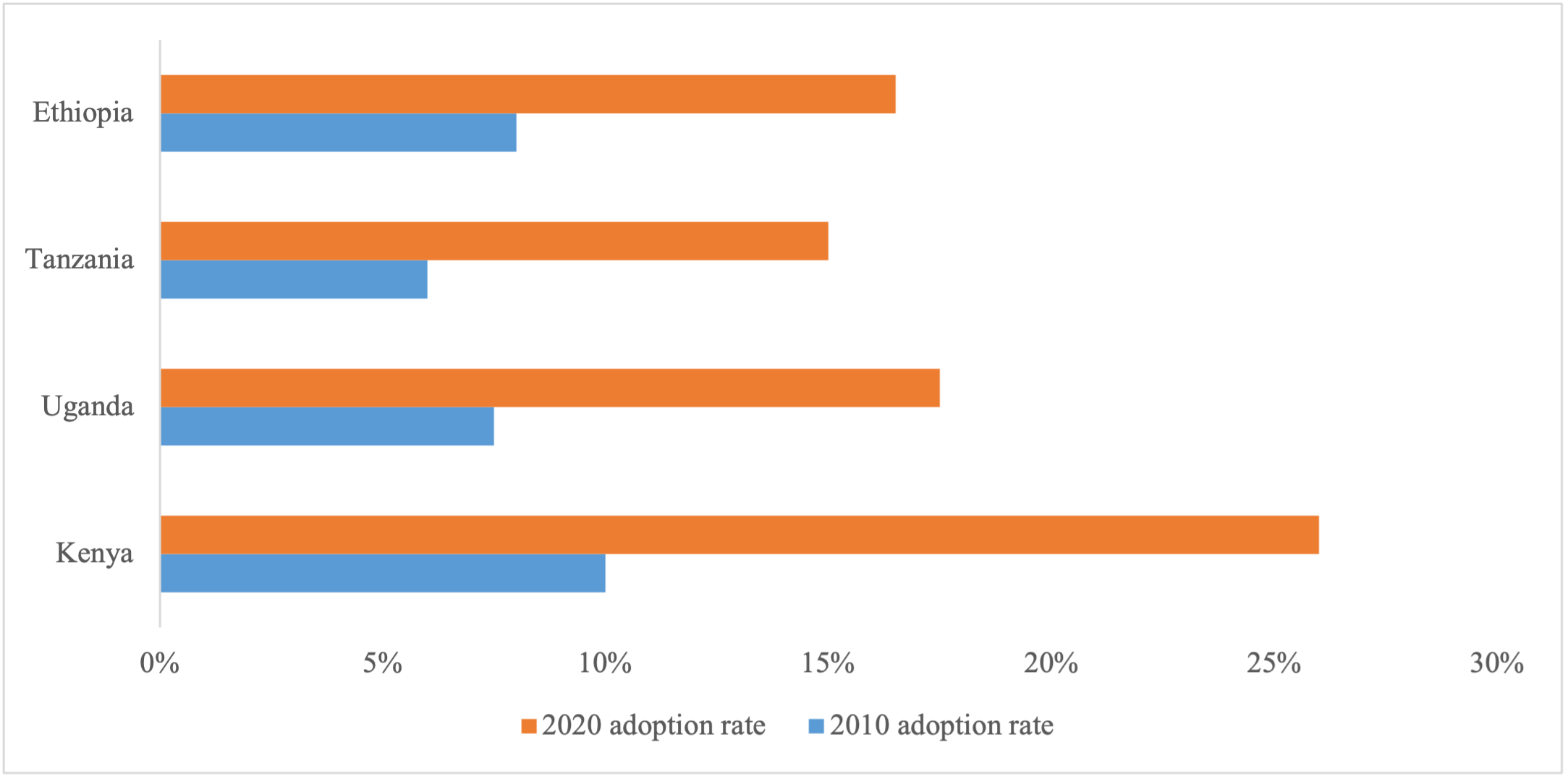
Figure 1 indicates that there was a significant increase in the adoption of drought-resistant maize across East Africa between 2010 and 2020. Kenya recorded the highest adoption, rising from 10% to 26%, followed by Uganda from 7.5% to 17.5%, Ethiopia from 8% to 16.5%, and Tanzania from 6% to 15%. These findings underscore the growing acceptance of drought-tolerant maize varieties as farmers increasingly respond to climate variability and recurrent droughts. However, adoption remained below 30% in all countries by 2020, suggesting a need for additional investments in agricultural policy to enhance seed accessibility, extension services and farmer awareness to accelerate adoption across the region.
| Country | 1990 | 2000 | 2010 | 2020 |
|---|---|---|---|---|
| Kenya | 3.80% | 12.50% | 27.50% | 42.50% |
| Tanzania | 3.10% | 12.50% | 19.00% | 37.50% |
| Uganda | 1.20% | 2.90% | 7.60% | 15.00% |
| Ethiopia | 1.70% | 1.90% | 3.40% | 7.90% |
Table 3 reveals a gradual increase in the adoption of improved pigeon pea varieties across Eastern Africa between 1990 and 2020, although adoption remained comparatively low relative to other improved crops. Kenya recorded the highest adoption rate in 2020 at 42.5%, followed by Tanzania (37.5%), Uganda (15.0%), and Ethiopia (7.9%). Over the 30-year period, adoption of this crop increased by 38.7 percentage points in Kenya, 34.4 in Tanzania, 13.8 in Uganda, and 6.2 in Ethiopia. The regional average adoption rose from 2.5% in 1990 to 25.7% in 2020, representing a 23.2-percentage-point increase.
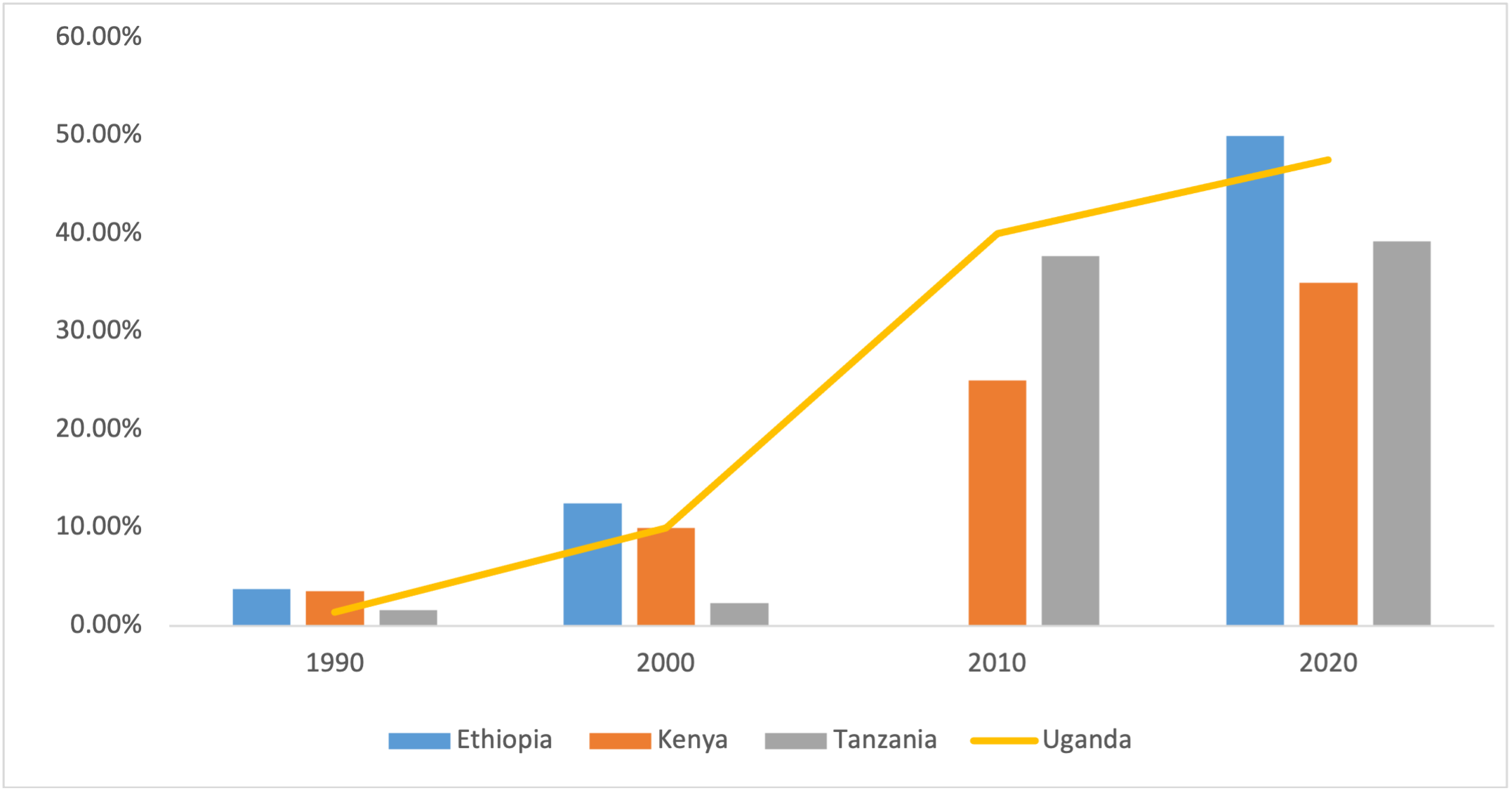
Figure 2 shows that Eastern Africa experienced a substantial increase in the rate of adoption of improved sorghum varieties between 1990 and 2020. Ethiopia recorded the highest adoption rate in 2020 at 50.0%, followed by Uganda (47.5%), Tanzania (39.2%), and Kenya (35.0%). Over the three decades, adoption increased by 46.3 percentage points in Ethiopia, 46.1 in Uganda, 37.6 in Tanzania, and 31.5 in Kenya. The regional average adoption rose from 2.6% in 1990 to 42.9% in 2020, representing a 40.3-percentage-point increase, signifying a widespread diffusion of improved sorghum varieties in Eastern Africa, especially after 2000.
| Country | 2010 | 2020 |
|---|---|---|
| Kenya | 3.2% | 15% |
| Tanzania | 0.7% | 7.3% |
| Uganda | 0.4% | 6.9% |
| Ethiopia | 0.3% | 0.7% |
Table 4 indicates that there was a low but increasing rate of adoption of improved pearl millet varieties across Eastern Africa between 2010 and 2020. Kenya recorded the highest adoption rate, increasing from 3.2% to 15.0%, a gain of 11.8 percentage points. Tanzania followed with adoption rising from 0.7% to 7.3% (6.6 percentage points), while Uganda increased from 0.4% to 6.9% (6.5 percentage points). Ethiopia consistently exhibited the lowest adoption, recording only a marginal increase from 0.3% to 0.7% (0.4 percentage points). Overall, the regional average adoption increased from 1.2% in 2010 to 7.5% in 2020, representing a 6.3-percentage-point improvement, though the adoption of this crop remained considerably lower than that of other improved crop varieties in the region.
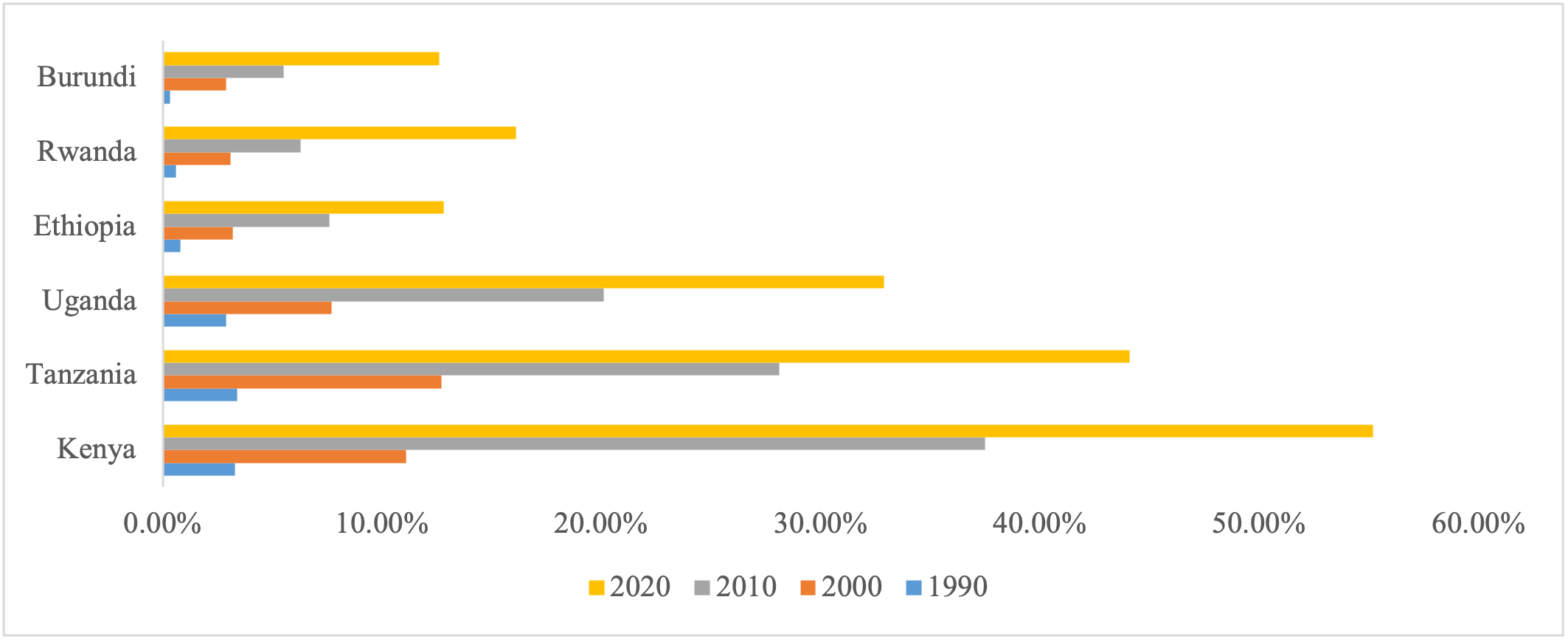
Figure 3 shows a consistent increase in the adoption of improved cowpea varieties across Eastern Africa between 1990 and 2020. Kenya recorded the highest adoption rate in 2020 at 55.2%, followed by Tanzania (44.1%), Uganda (32.9%), Rwanda (16.1%), Ethiopia (12.8%), and Burundi (12.6%). Over the 30-year period, adoption increased by 51.9 percentage points in Kenya, 40.7 in Tanzania, 30.0 in Uganda, 15.5 in Rwanda, 12.0 in Ethiopia, and 12.3 in Burundi. Overall, the regional average adoption rose from 1.9% in 1990 to 28.9% in 2020, representing a 27.0-percentage-point increase, demonstrating substantial but uneven diffusion of improved cowpea varieties across the region.
| Country | 1990s | 2000s | 2010s |
|---|---|---|---|
| Uganda | 3.00% | 9.00% | 15.30% |
| Tanzania | 4.60% | 19.00% | 15.10% |
| Kenya | 0.60% | 3.80% | 7.10% |
| Rwanda | 1.70% | 6.80% | 13.30% |
| Burundi | 0.60% | 3.10% | 15.20% |
| Ethiopia | 0.30% | 0.80% | 2.40% |
Table 5 shows a gradual increase in the adoption of improved banana varieties across Eastern Africa from the 1990s to the 2010s, although adoption levels remained relatively low. Uganda recorded the highest adoption rate in the 2010s at 15.3%, closely followed by Burundi (15.2%) and Tanzania (15.1%), while Rwanda reached 13.3%. Kenya and Ethiopia reported lower adoption rates of 7.1% and 2.4% respectively. Over the study period, adoption increased by 12.3 percentage points in Uganda, 10.6 in Tanzania, 14.6 in Burundi, 11.6 in Rwanda, 6.5 in Kenya, and 2.1 in Ethiopia. The collective regional mean adoption rose from 1.8% in the 1990s to 11.4% in the 2010s, representing a 9.6-percentage-point increase, indicating steady but uneven diffusion of improved banana varieties across the region.
4. Discussion
The food crops grown in each East African country are shaped by climatic conditions and local preferences, with maize, cassava, sorghum, millet, bananas, sweet potatoes and pulses standing out as the primary staples. The findings of this study demonstrate a sustained upward trajectory in the adoption of improved crop varieties across Eastern Africa over the past three decades, reflecting growing investments in agricultural research, seed systems and climate-smart agriculture. The evidence shows that adoption patterns varied considerably across crops and countries, suggesting that crop technology diffusion is impacted by multiple factors, including crop characteristics, demand, institutional support, agro-ecological suitability, and farmers’ socioeconomic conditions. According to Dong, Wang and Han (2022), the observed heterogeneity aligns with crop technology adoption theory, which emphasises that adoption is a function of the availability of improved varieties, access to extension services, quality seed, credit, markets, and complementary production inputs.
Among the crops examined, improved beans and cassava exhibited the highest adoption levels. Regional average adoption of improved beans increased from 14.7% in 1990 to 66.9% in 2020, while improved cassava rose from 13.2% to 60.8% over the same period. Rwanda (77.1%) and Kenya (73.1%) recorded the highest bean adoption rates, whereas Tanzania (78.5%) and Uganda (78.2%) led in cassava adoption. These findings suggest that staple crops with established value chains, strong consumer demand, and sustained public-sector breeding programmes tend to experience faster diffusion than less-commercialised crops.
Moderate adoption was observed for improved sorghum and cowpea varieties. Regional sorghum adoption increased from 2.6% in 1990 to 42.9% in 2020, while cowpea adoption rose from 1.9% to 28.9%. Ethiopia and Uganda emerged as leaders in sorghum adoption, whereas Kenya maintained the highest cowpea adoption throughout the study period. These trends indicate increasing recognition of drought-tolerant cereals and legumes as essential components of climate adaptation strategies, particularly in semi-arid regions where rainfall variability continues to intensify.
Conversely, pigeon peas, bananas, drought-resistant maize and pearl millet exhibited comparatively lower adoption despite steady growth. Regional pigeon pea adoption reached only 25.7% by 2020, improved banana adoption increased from 1.8% in the 1990s to 11.4% in the 2010s, drought-resistant maize averaged 18.8% in 2020, and pearl millet remained the least adopted crop at only 7.5%. These relatively low adoption levels may reflect limited access to certified seed, weaker extension coverage, inadequate market incentives, and lower policy prioritisation compared with major staple crops.
Country-level patterns further reveal substantial disparities in innovation uptake. Kenya consistently recorded relatively high adoption for drought-resistant maize, cowpeas, pigeon peas and pearl millet, while Uganda and Tanzania dominated cassava adoption, Rwanda excelled in improved beans, and Ethiopia recorded the highest sorghum adoption despite comparatively lower uptake of several other improved crops. These differences underscore the importance of national agricultural policies, investment in breeding programmes, the effectiveness of extension systems, and agroecological suitability in shaping adoption outcomes.
Overall, the evidence points to significant progress in the diffusion of improved crop technologies across Eastern Africa, with adoption increasing across all crops and countries examined. Nevertheless, the persistence of substantial cross-country and cross-crop disparities indicates that scaling climate-resilient agriculture will require strengthened seed systems, improved extension services, enhanced access to finance and input markets, and policies tailored to local farming systems. Addressing these constraints will be critical for accelerating technology adoption, improving agricultural productivity, strengthening climate resilience, and enhancing long-term food and nutrition security throughout the region.
5. Conclusion
This study examined the rates of adoption of popular staples in Eastern Africa. The findings demonstrate a rising adoption of improved crop varieties across Eastern Africa over the past three decades, reflecting continued investments in agricultural research, improved seed systems, and climate-smart agricultural interventions. Adoption trends indicate that staple crops like beans and cassava have experienced the highest levels of uptake, while sorghum and cowpeas have shown moderate growth. In contrast, pigeon peas, bananas, drought-resistant maize, and pearl millet continue to exhibit relatively low adoption despite steady improvements. The findings further reveal considerable cross-country variation, with Kenya, Uganda, Tanzania, Rwanda and Ethiopia emerging as leaders in different crop production, highlighting the influence of national policies, agro-ecological conditions, market development, and institutional support in increasing farmer confidence in some improved crop varieties. Nevertheless, persistent disparities in the uptake of these crops across Eastern African countries underscore the need for strengthened extension services, improved access to certified seed, better market integration, and supportive policy frameworks to accelerate superior crop strain diffusion and achieve sustainable agricultural transformation across Eastern Africa.
- Abdullahi, A. M., Kalengyo, R. B., & Warsame, A. A. (2024). The unmet demand of food security in East Africa: Review of the triple challenges of climate change, economic crises, and conflicts. Discover Sustainability, 5, 244. https://doi.org/10.1007/s43621-024-00381-5
- Abera, B., Duraisamy, R., Birhanu, T., Gurbo, B., & Salelign, K. (2025). Development of nutrient-rich injera using amaranthus leaf/grain and teff flours: A study on nutritional value, sensory characteristics, and storage stability. International Journal of Food Science, 2025, 2877941. https://doi.org/10.1155/ijfo/2877941
- Adhikari, U., Nejadhashemi, A. P., & Woznicki, S. A. (2025). Climate change and eastern Africa: A review of impact on major crops. Food and Energy Security, 4(2), 110–132. https://doi.org/10.1002/fes3.61
- Bioversity International. (2017). Mainstreaming agrobiodiversity in sustainable food systems: Scientific foundations for an investment strategy. Bioversity International.
- CGIAR. (2020). Small and medium-sized enterprise champions promoting climate resilient agriculture in Eastern Africa (CCAFS Info Note). CGIAR Research Program on Climate Change, Agriculture and Food Security.
- Chaudhary, S., Chadha, M., Tyagi, B., & Singh, K. (2024). Contribution of sorghum and finger millets for sustainable food and nutritional security. In M. Thakur (Ed.), Sustainable Food Systems (Vol. I, World Sustainability Series). Springer. https://doi.org/10.1007/978-3-031-47122-3_14
- Dong, H., Wang, H., & Han, J. (2022). Understanding ecological agricultural technology adoption in China using an integrated technology acceptance model theory of planned behavior model. Frontiers in Environmental Science, 10, 927668. https://doi.org/10.3389/fenvs.2022.927668
- Ekpa, O., Palacios-Rojas, N., Kruseman, G., Fogliano, V., & Linnemann, A. R. (2019). Sub-Saharan African maize-based foods – Processing practices, challenges and opportunities. Food Reviews International, 35(7), 609–639. https://doi.org/10.1080/87559129.2019.1588290
- FAO. (2016). Strengthening capacity for climate change adaptation through sustainable land and water management in Eastern Africa. Food and Agriculture Organization of the United Nations.
- Fisher, M., Abate, T., Lunduka, R. W., Asnake, W., Alemayehu, Y., & Madulu, R. B. (2015). Drought tolerant maize for farmer adaptation to drought in sub-Saharan Africa: Determinants of adoption in eastern and southern Africa. Climatic Change, 133, 283–299. https://doi.org/10.1007/s10584-015-1459-2
- Glatzel, K., Maina, C. C., Nyishimirente, A., Klemm, J., & Qaim, M. (2025). Leveraging the opportunities of neglected and underutilized crops for nutrition and climate resilience (No. 245). ZEF Working Paper Series.
- Kakunze, A. C., Tsatsenko, N. A., Mbonihankuye, C., & Tsatsenko, L. V. (2025). Food and non-food usage of banana plant in Burundi: A narrative review. In I. Samoylenko & T. Rajabov (Eds.), Lecture Notes in Networks and Systems (pp. 166–177). Springer. https://doi.org/10.1007/978-3-031-98127-2_17
- Kilonzo, S. M., & Ojebode, A. (2023). Research methods for public policy. In E. R. Aiyede & B. Muganda (Eds.), Public Policy and Research in Africa. Palgrave Macmillan. https://doi.org/10.1007/978-3-030-99724-3_4
- NARO. (2019). Strategic plan 2019/2020–2028/2029: Research for agricultural transformation in Uganda. National Agricultural Research Organisation.
- Ortiz, R. (2017). IITA: 50 years after, transforming Africa’s agriculture and nourishing rural development.
- Recha, C. W. (2019). Regional variations and conditions for agriculture in Kenya. Current Politics and Economics of Africa, 12(1), 87–130. https://doi.org/10.4236/gep.2025.138012
- Simane, B., Berhane, K., Samet, J., Oguge, O., Atuyambe, L., Shah, M., Kumie, A., & Jack, D. (2026). Food security outlook for Eastern Africa by 2050: Climate change impacts and population-driven demand gaps. Current Environmental Health Reports, 13(1), 8. https://doi.org/10.1007/s40572-026-00528-8
- World Bank. (2020). Adaptive risk management and climate-smart agriculture in Sub-Saharan Africa. World Bank Group.
Not provided.
The author received no specific funding for this work.
None declared.
All claims expressed in this article are solely those of the author and do not necessarily represent those of the publisher, editors, reviewers, or affiliated institutions. Any product, service, or claim that may be evaluated in this article is not guaranteed or endorsed by the publisher.

Creative Commons License
This work is licensed under a Creative Commons Attribution 4.0 International License.
Copyright © 2026 The Author(s). Published by HRL Journal Service.