


This article examines how Ukara Island religiosity generates a coherent environmental ethic through the integration of traditional beliefs, moral valuation, and environmental conservation. Drawing on a qualitative case study involving focus group discussions, key‑informant interviews, and artefact analysis, the study reconstructs five interrelated domains of Ukara Island religious life: clan‑spirit cosmology, the authority of traditional specialists, vital‑force interpretations of illness, elder‑mediated knowledge transmission, and the ecological roles of Christian and Islamic institutions. Salience‑weighted thematic matrices demonstrate that traditional religion agents such as clan gods, witches, healers, and ancestors anchor axiological commitments to life, land, and moral order, which in turn produce deontic constraints expressed through taboos, rituals, sanctions, and stewardship practices. The findings align with contemporary African eco‑philosophy, which views vital force, relational ontology, and sacred ecologies as foundational to environmental ethics. The study contributes a fine‑grained model of how African religiosity structures ecological responsibility in a biocultural landscape.
1. Introduction
Across contemporary African scholarship, environmental degradation is increasingly understood not merely as a biophysical crisis but as a crisis of values, cosmology and relational ethics. A substantial corpus of recent research argues that African Indigenous Religions possess sophisticated eco-philosophical systems in which spiritual beings, ancestors, vital force and sacred landscapes constitute the traditional religion foundations of environmental stewardship (Nche & Michael, 2024). This perspective challenges dominant Western framings of ecological governance by foregrounding Indigenous epistemologies in which human, spiritual and ecological domains are inseparably entangled. The sacredness of rivers, groves, hills and species, widely documented across the continent, reflects what Amanze (2024) describes as an all-pervasive ontology in which the natural world is treated as an extension of divine presence and ancestral authority. Within these cosmological systems, the boundaries between spiritual and ecological order collapse, giving rise to moral obligations towards land, water and biodiversity.
Recent eco-theological studies deepen this view. Juma (2025), drawing on Afro-ecofeminist perspectives, argues that African ecological ethics emerge from relational beliefs in which divine agency and earthly flourishing co-depend, producing a sacred ecology grounded in reciprocity and restraint. Similar arguments arise within ethnographic work across West and Southern Africa, where sacred forests, taboo zones and ancestral shrines operate as effective environmental governance regimes due to community adherence to spiritual sanctions and ritual obligations (Sinthumule, 2024). This growing body of scholarship underscores the limitations of technocratic approaches to conservation that neglect the traditional beliefs and moral grammars through which African societies interpret ecological processes, misfortune and climate variability.
Philosophical debates have similarly expanded the analytical purchase of African religious beliefs for environmental ethics. Vital-force theory, relational ontology, Ubuntu-based environmental ethics and decolonial ecological epistemologies have been revisited as intellectual resources through which to articulate non-anthropocentric, relational and community-centred ecological duties (Lyakurwa, 2025). These recent contributions insist that African religious beliefs are not a set of archaic propositions but a living framework that continues to shape environmental reasoning, healing practices, ritual systems and land-use decisions. Such traditional commitments are increasingly recognised as critical for understanding how communities across Africa interpret crop disease, drought, livestock mortality and environmental imbalance, not only as ecological events, but as disruptions within the relational network of humans, spirits, ancestors and the land (Boamah Asante et al., 2025).
Yet, despite this rich scholarship, there remains limited fine-grained empirical work demonstrating how African religious beliefs are translated into concrete ecological norms, taboos, rituals and institutional practices in specific local contexts. Much of the current literature highlights the conservation effects of sacred forests, taboo systems and ritual governance (Okoronkwo, 2025) but lacks detailed analysis of the traditional beliefs and justifications communities themselves advance to anchor these obligations. Moreover, scholars increasingly call for studies that map the traditional beliefs → axiology → deontology chain with ethnographic precision, to demonstrate how African spiritual concepts, such as ancestors, spirits and vital force, directly shape behavioural constraints relating to land, forests, water and extraction. Such work is vital for strengthening value-inclusive approaches to conservation and environmental governance, particularly in biocultural landscapes such as the Lake Victoria Basin, where environmental pressures intersect with strong Indigenous religious systems (Stork & Öhlmann, 2024).
Ukara Island, located in the eastern part of Lake Victoria, presents a compelling context in which to examine these dynamics. The Ukara people maintain a dense religious universe composed of clan spirits, ancestral forces, witches, healers, rainmakers, sacred trees, tabooed landscapes and ritual obligations that structure moral conduct and ecological responsibility. As the findings of this study show, these traditional beliefs and commitments are not symbolic residues but active frameworks through which Ukara Island evaluates rainfall, crop vitality, illness, misfortune and land-use ethics. Clan spirits regulate agricultural cycles, witches’ geographies produce inadvertent conservation effects, vital-force interpretations shape responses to ecological disturbances, elders mediate ecological knowledge, and religious institutions co-produce new stewardship practices. These intertwined domains, detailed in Tables 4.1–4.5, demonstrate that Ukara religiosity constitutes a living moral ecology in which cosmology, obligation and environmental governance are inseparably fused.
The objective of this article is therefore threefold: (i) to reconstruct the traditional belief foundations of Ukara religiosity, including clan-spirit cosmology, vital-force ontology and spiritual agency; (ii) to analyse how these traditional commitments generate axiological valuations of land, life, sacred sites and ecological stability; and (iii) to demonstrate how such values translate into deontic constraints, taboos, rituals, sanctions, healing practices and institutional roles that collectively form a coherent ecological ethic on Ukara Island.
2. Literature Review
African religiosity remains a central locus for understanding how traditional beliefs shape ecological ethics across the continent. Recent scholarship (2020–2025) demonstrates that Indigenous spiritual worldviews continue to organise human–environment relations through divine authority, ancestral governance, vital-force beliefs, ritual obligations and moral pedagogy. The following review synthesises these debates into four conceptual domains aligned with the analytical concerns of this study.
2.1 Religious Agency and Environmental Conservation
Contemporary African scholarship maintains that belief in a Supreme Being continues to ground ecological consciousness by framing nature within a sacred moral order. Studies on African Indigenous Religions (AIR) emphasise that communities perceive forests, water bodies and landscapes as extensions of divine presence, thereby cultivating a responsibility toward environmental restraint (Nche & Michael, 2024). This relational ontology does not simply imagine God as a detached transcendent being but rather as an active participant in ecological balance. Recent theological work by Juma (2025) demonstrates that African eco-spiritualities operate through relational interdependence, where the divine, the earth and human life form a unified moral ecosystem. Similarly, Amanze (2024) argues that African conceptions of sacredness collapse the binary between the spiritual and the material, grounding environmental obligations in theological anthropology.
A parallel strand of literature emphasises the significance of ancestors and spirits as mediators of ecological order. Research on sacred landscapes across Nigeria, Ghana and South Africa shows that ancestral beings are understood to govern moral behaviour through sanctions associated with environmental misuse. Okoronkwo’s (2025) socio-rhetorical study of sacred spaces demonstrates that ancestral authority enforces strict protection around sacred groves, creating what he describes as “eco-theological systems” where moral and ecological orders converge. Likewise, systematic reviews of sacred forests indicate that communities ascribe ecological misfortunes such as drought or soil infertility to ancestral displeasure, thereby reinforcing conservation practices rooted in spiritual accountability (Sinthumule, 2024).
These recent contributions reaffirm the claim that African cosmology is fundamentally relational: divine agency and ancestral oversight create a moral universe in which environmental stewardship is both a religious obligation and a means of sustaining cosmic harmony. This framing parallels the traditional belief structure observed among the people of Ukara, where clan spirits regulate rainfall, fertility and agricultural wellbeing.
2.2 Ecology and African Religious Belief
Vital-force traditional beliefs remain one of the most influential philosophical lenses for understanding African ecological thought. Contemporary scholarship does not treat vital force as an essentialist relic of mid-century ethnophilosophy, but as a dynamic, relational ontology through which communities interpret life, wellbeing and ecological continuity. Nche and Michael (2024) reaffirm that African notions of life emphasise interconnected vitality among humans, animals, plants, spirits and land, creating a framework in which environmental degradation directly threatens communal flourishing.
Philosophical debates have renewed critical attention to the ethical implications of vital-force thinking. Lyakurwa (2025), while challenging simplistic applications of Ubuntu or ukama, argues that African life-centred ontologies offer a robust challenge to anthropocentric environmental ethics by foregrounding interdependence, relational dignity and ecological responsibility. Ecofeminist theological research by Juma (2025) extends this argument by showing how African women embody and transmit life-preserving ecological knowledge through water stewardship, seed preservation and care practices grounded in traditional understandings of vitality.
Recent empirical work further demonstrates how Indigenous pharmacologies articulate vital-force principles in environmental practice. Boamah Asante et al. (2025) show that the Kwahu people conceptualise land and water bodies as living entities whose vitality demands ritual rest days, totemic protection and ecological restraint. Ogunkolu and Ajibade (2025) similarly find that Nigerian Indigenous medicine systems, such as herbal formulations for crops and livestock, anchor illness explanations in vital-force disruption and ecological imbalance. These studies illustrate how traditional conceptions of life continue to inform concrete responses to disease, drought and environmental stress. Together, contemporary debates reaffirm that traditional beliefs provide a fertile ethical resource for ecological reasoning, linking cosmology directly to environmental practice.
2.3 Ritual Systems, Sacred Ecologies and Spiritual Governance
Recent scholarship shows a resurgence of interest in ritual as a site where African religious communities translate cosmology into normative ecological praxis. Studies of sacred forests and groves demonstrate that ritual prohibitions, such as restrictions on tree cutting, hunting or entering sacred zones, operate as Indigenous environmental governance systems (Sinthumule, 2024). These restrictions often rely on traditional sanctions rather than physical enforcement, producing high-compliance conservation outcomes.
Okoronkwo’s (2025) analysis of eco-theological sacred spaces highlights how rituals reaffirm communal identity and environmental responsibility by linking land, ancestors and the divine within a single moral economy. Similarly, Zayzay (2026) argues that Kwa cosmologies embed stewardship obligations within ritual cycles, festivals and taboos that regulate extraction and maintain ecological balance. Yet ritual systems are not uniformly benign; as Ogunkolu and Ajibade (2025) show, some ritual practices, particularly involving animal sacrifices or resource harvesting, can produce ecological pressure.
Traditional specialists also figure prominently in emerging literature as key mediators of ecological decision-making. Studies show that rainmakers, healers and diviners shape community responses to climate variability and environmental misfortune, blending spiritual insight with ecological knowledge (Juma, 2025). Boamah Asante et al. (2025) reveal that fear of witches (abalosi) can indirectly contribute to conservation, as landscapes associated with malevolent powers, such as fig trees or hills, remain untouched due to spiritual dread.
Recent decolonial scholarship also points to ritual performance and oral traditions as epistemic practices that embed ecological memory and land ethics within embodied forms of knowledge (Ohenhen et al., 2025). These studies suggest that ritual governance constitutes a sophisticated ethical regime, one that aligns spiritual belief, environmental stewardship and communal responsibility.
2.4 Moral Authority, Pedagogy and Religious Institutions
The role of elders in shaping ecological ethics has been a strong theme in recent African scholarship. Osei and Asantewa (2025) argue that elders act as custodians of Indigenous ecological knowledge, adjudicating land matters, regulating extraction and mediating conflicts around water sources and farming boundaries. Their legitimacy derives from moral stature, spiritual authority and linguistic competence in Indigenous languages that encode ecological concepts. Research by Juma (2025) highlights the pedagogical role of elders, particularly women, who transmit ecological knowledge through daily practice and ritual instruction.
Parallel studies show that religious institutions, such as churches, mosques and faith-based NGOs, play an increasingly significant role in sustainability efforts. Stork and Öhlmann’s (2024) edited volume documents how African churches incorporate ecological themes into sermons, liturgies and development programmes, fostering stewardship at congregational levels. Additionally, Khomba (2025) argues that Ubuntu-based ethics offer a philosophical foundation for environmental restoration, promoting interconnectedness between humans, community and nature.
Scholars increasingly recognise that religious pluralism enriches rather than undermines Indigenous ecological ethics. Mogaji (2025) contends that Ubuntu can decolonise environmental cognition by shifting communities away from anthropocentric biases toward holistic ecological consciousness. Meanwhile, case studies across Africa show that Christian and Islamic leaders integrate Indigenous taboos, sacred-site reverence and communal practices into their teachings, creating hybrid moral ecologies responsive to contemporary climate and development pressures.
Across the four domains reviewed, divine and ancestral agency, vital-force traditional beliefs, ritual governance and moral pedagogy, recent scholarship affirms that African religiosity provides a robust ethical framework for environmental stewardship. Scholars increasingly reject the view that African traditions are archaic or incompatible with modern sustainability, instead emphasising their capacity to generate relational, communal and spiritually grounded environmental ethics suited to contemporary ecological challenges. This literature demonstrates that traditional belief categories remain deeply embedded in ecological practice, reinforcing the ecological logic observed among the people of Ukara.
3. Methodology
3.1 Research Design
This study employed a qualitative case study design with an ethnographic orientation to examine how Ukara religiosity constitutes a moral belief and practical framework for environmental stewardship on Ukara Island. The choice of an ethnographic case study was dictated by the nature of the phenomena under investigation: the activities of clan spirits such as Kambura; the ritual authority exercised by the Abasilanga fire god; the work of rainmakers; the nocturnal assemblies of witches (abalosi); the use of indigenous pharmacology such as libungu; and the ritual significance attached to sacred natural sites including fig trees, rocks and water catchments. These are not abstract doctrines but lived, spatially situated, orally transmitted and ritually enacted systems of meaning.
Their intelligibility emerges only within the social contexts in which they are practised, narrated and contested. The ethnographic orientation therefore allowed extended engagement with communal narratives, ritualised behaviour, intersubjective explanations of misfortune, and material environments that Ukara Island understands as animated by spiritual force.
Ukara Island provided a single bounded field site comprising eight inhabited villages: Bukiko, Bukungu, Bwisya, Chibasi, Chifule, Kome, Nyamanga and Nyang’ombe. These villages were purposively included because each maintains lineage-based ritual expertise, sacred ecological sites, and distinct configurations of clan spirits and traditional specialists.
The study was theoretically guided by the vital-force tradition in African philosophy, particularly Tempels’ assertion that causality among Bantu peoples is relational and spiritually mediated, with illness, prosperity, environmental fertility and social harmony understood as functions of the dynamic exchange of force. This heuristic did not predetermine findings but served as a sensitising lens for interpreting how participants themselves linked disease, crop failure, human misfortune and ecological disruption to disturbances within the hierarchy of spiritual agents, ancestors, clan gods and the living.
3.2 Participants and Sampling
Participants were selected using purposive and role-based sampling to ensure the inclusion of those recognised by their communities as custodians or interpreters of Ukara Island religious knowledge. The sampling universe consisted of elders, traditional specialists and religious leaders whose voices and experiences appear directly in the findings. Elders were nominated by village chairs and councils of seniors based on demonstrated knowledge of clan traditions, ritual procedures, sacred landscapes and the cosmological explanations underlying misfortune, illness and environmental imbalance.
Traditional specialists included herbalists (abafumu), protective ritualists (abaige), rainmakers, custodians of clan deities, and individuals reputed to possess destructive capacities (abalosi). Their inclusion was essential because the findings consistently show that these specialists mediate the community’s understanding of illness, calamity, fertility, sacred space and moral transgression. Religious leaders from African Traditional Religion, Christianity and Islam were selected to capture theological interpretations of rain-seeking, healing, environmental misfortune and moral causality as they appear in contemporary life on Ukara Island.
Across the eight villages, eight focus group discussions were conducted, each with six to eight elders. The FGDs were held between November and December 2024 in communal courtyards, village office verandas, or shaded compounds near ritual sites whose significance was under discussion. Twelve key informant interviews were held with healers, rainmakers, custodians of clan spirits, Christian clergy and Muslim sheikhs. These interviews occurred in November 2024 and January 2025 at locations chosen by informants, including homesteads, ritual shelters and religious offices. Sampling continued until conceptual saturation was reached, indicated by recurrent references to clan deities, witchcraft-related misfortune, sacred trees, herbal pharmacology, water-source taboos and ritual cleansing.
3.3 Data Collection Procedures
Data collection employed three primary strategies: focus group discussions, key informant interviews, and participant observation, all complemented by the review of cultural artefacts and locally referenced documents. These strategies were selected not for methodological convenience but because each speaks to a different dimension of Ukara religiosity as reflected in the findings.
Focus group discussions elicited shared interpretations of clan spirits, sacred landscapes, taboos governing water sources and trees, the moral logic of witchcraft accusations, and the social consequences of illness. For example, during FGDs in Bwisya, elders described the Abagabe clan’s stewardship over Kambura, a deity believed to protect agricultural abundance. In Kome, elders reconstructed in detail the preparation and application of libungu, the herbal compound used for crops, animals and sometimes human ailments. FGDs in Chibasi and Nyang’ombe focused on the activities of witches, explaining why large fig trees remain preserved out of fear of nocturnal gatherings of abalosi. These discussions were semi-structured but flexible, allowing elders to narrate events, proverbs, myths and personal experiences.
Key informant interviews were conducted to obtain deeper explanatory accounts of phenomena only alluded to in group settings. Rainmakers explained the ritual steps involved in rain-seeking and the circumstances under which communities consulted them instead of Christian or Islamic clergy. Herbalists provided ingredient lists, preparation processes and symbolic meanings associated with libungu. Custodians of clan gods described lineage-specific rituals, such as offerings to the fire god used to punish wrongdoers or to Kambura for agricultural protection. Christian priests and Muslim sheikhs described how congregants combine church or mosque prayers with clandestine visits to abafumu, demonstrating the dual reliance on formal religion and traditional beliefs.
Participant observation played a critical role in corroborating narratives and connecting them to environmental materiality. The researcher visited sites referenced during discussions, including fig trees believed to host witches, sacred rocks such as Bulebeka and Mkwaya, abandoned cattle dips linked to declining trust in modern veterinary medicine, and water catchments protected by strict taboos.
Observations included attention to behavioural practices such as villagers deliberately avoiding certain trees, speaking in lowered tones near specific rocks, or enforcing restrictions around wells that revealed how traditional beliefs are embodied in daily ecological conduct. In some instances, the material environment itself displayed the effects of these practices, such as the intact vegetation surrounding ritual sites or the absence of cut trees in areas associated with clan spirits or witches.
Document and artefact review supplemented these observations. The researcher examined objects participants referenced directly, such as ritual stones, libungu mixtures, and material boundaries marking sacred spaces. Local bylaws and records were inspected where elders cited them in relation to water-source protection or burial prohibitions. Photographs taken during fieldwork of sites such as the cattle dip in Bukiko, the fig tree in Ukara, and the sacred rocks informed the subsequent analytic process by providing spatial and visual context for oral accounts.
3.4 Data Analysis
All audio recordings were transcribed verbatim, with key terms in Kikara preserved to maintain conceptual fidelity. Transcripts, field notes and photographs were coded and analysed in NVivo 14, following Braun and Clarke’s six-phase thematic analysis. However, this was not a mechanical procedure. Coding proceeded inductively, guided by the traditional beliefs’ vocabulary that emerged naturally from participant accounts. Early codes included “clan spirit protection,” “fire deity punishment,” “witchcraft misfortune,” “rainmaking rituals,” “libungu formulation,” “sacred tree avoidance,” “water source taboo enforcement,” “ancestral disapproval,” “herbal pharmacology,” and “vital force disturbance.”
As analysis developed, these descriptive codes were elevated into interpretive categories corresponding to the themes now found in the results. For instance, repeated references to the role of clan spirits in agriculture, morality and misfortune coalesced into the theme of “Presence of Clan Spirits.” Accounts of witches meeting under fig trees, harming rivals, or causing sickness through spiritual force formed the backbone of the theme “Traditional Specialists.” Narratives of illness interpreted through spiritual causality, crop diseases linked to imbalance, and the widespread use of libungu were consolidated under “Respect for Life and the Dying.” Each theme emerged not from abstract classification but from patterned regularities in how participants narrated causation, power, responsibility and ecological restraint.
Wherever possible, analytic memos were written to document the interpretive steps. For example, a memo following an FGD in Nyang’ombe noted that although abalosi were framed as malevolent, their presence led to the preservation of large trees, illustrating a mechanism of “fear-based conservation.” Another memo from Kome observed that the decline in the use of the cattle dip reflected not a technological failure but traditional beliefs and preferences, marking a thematic link between traditional medicine and environmental management. The iterative comparison of memos, transcripts and codes ensured that the final themes were analytically robust and grounded in the data.
3.5 Ethical Considerations
Ethical practice was central due to the sensitivity of witchcraft narratives, clan-based rituals and sacred ecological sites. Informed consent was obtained verbally and in writing, with participants assured of confidentiality and pseudonymisation. Ritual sites were visited only with explicit permission, photography was limited or prohibited where required, and discussions involving accusations of witchcraft or illness causality were handled with discretion to avoid community tension. Data were stored securely, and the researcher engaged in ongoing reflexivity to mitigate interpretive bias and to honour local epistemologies while maintaining scholarly integrity.
4. Findings
4.1 Presence of Clan Spirits
Participants described clan spirits as foundational traditional authorities governing prosperity, moral conduct and ecological balance. Clan gods, unlike distant deities, were portrayed as relational forces intimately tied to lineage identity and environmental wellbeing.
| Theme | Keywords | Supporting verbatim | % of mentions |
|---|---|---|---|
| Agricultural protection and fertility | Kambura; harvest; pests; protection | “The Abagabe clan uses Kambura to guard against pests and crop diseases; without this god the land refuses to yield.” (FGD, Bwisya) | 29.4 |
| Retributive justice and moral sanctions | fire god; wrongdoing; punishment | “The fire god of the Abasilanga can punish a thief from any distance; no wrongdoing hides from it.” (KII, R10) | 21.7 |
| Herbal knowledge and healing authority | Abamulela; herbs; medicine; healing | “The Abamulela know the medicines for plants, animals and people; the whole island trusts their formulations.” (FGD, Nyamanga) | 19.9 |
| Rainmaking and atmospheric mediation | rainmaker; drought; seasons | “When seasons fail, we seek the Abatimba; they read the sky and know the ways of rain.” (FGD, Kome) | 16.1 |
| Lineage unity and ritual continuity | ancestors; clan; ritual; belonging | “Clan gods keep us united; the rituals connect us with our ancestors and those who will come after.” (FGD, Nyamanga) | 12.9 |
The strong salience of agricultural and moral themes (29.4% and 21.7%) indicates that clan spirits are perceived as custodians of both ecological and ethical order. Their authority is invoked not merely in rituals but in concrete decisions about crop protection, conflict resolution and environmental stewardship. Knowledge-bearing clans such as Abamulela and Abatimba form specialised nodes in the cosmology, demonstrating that ecological intelligence (herbalism, rainfall interpretation) is inseparable from spiritual vocation. These patterns confirm Tempels’ view that traditional force is relational and active, structuring collective responses to both natural and moral disturbances.
4.2 Traditional Religious Leaders
Participants distinguished between benevolent and malevolent specialists whose powers shape the distribution of wellbeing, misfortune and ecological caution. These figures, witches, healers, rainmakers and protective ritualists, constitute a dynamic field of spiritual expertise.
| Theme | Keywords | Supporting verbatim | % of mentions |
|---|---|---|---|
| Witchcraft and malevolent agency | abalosi; harm; jealousy; misfortune | “Abalosi meet under big trees to plan misfortune against those they envy.” (FGD, Chibasi) | 28.5 |
| Protective healing and ritual balance | abafumu; healing; wind; calm | “If the winds threaten fishing, only the healer can calm them; he restores peace.” (FGD, Kome) | 22.1 |
| Fear-based conservation of sacred trees | fig tree; witches; avoidance | “That fig tree still stands because everyone fears the witches who gather there at night.” (FGD, Chibasi) | 18.7 |
| Rainmaking as religious negotiation | mvua; drought; Mass; prayers | “During droughts we go to the rainmaker; Christians also ask the priest to offer Mass for rain.” (KII, Nyamanga parish) | 16.3 |
| Spiritual security and psychological stability | protection; confidence; community | “The presence of abafumu and abaige gives people courage; they know evil can be confronted.” (FGD, Bukiko) | 14.4 |
The prominence of witchcraft discourse reflects a cosmology in which misfortune is personalised and morally interpretable. Yet the role of healers and protective specialists demonstrates a counterbalancing moral economy oriented toward restoring harmony. Rainmaking illustrates adaptive pluralism, with Muslims, Catholics and ATR practitioners engaging different ritual pathways to secure rain.
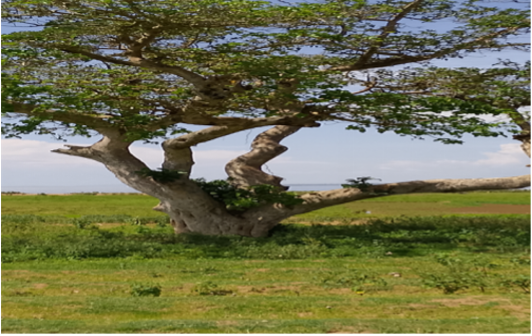
Importantly, fear of witches’ gathering sites produces unintended conservation outcomes: large fig trees and certain hills remain undisturbed due to traditional dread. This finding confirms that spiritual geographies and environmental protection are deeply entangled in the life of Ukara Island.
4.3 Respect for Life and Interpretations of Illness
Participants framed life as sacred and dynamically interconnected with spiritual, environmental and social forces. Illness, whether human, animal or ecological, was interpreted as a rupture in the flow of vital force.
| Theme | Keywords | Verbatim | % of mentions |
|---|---|---|---|
| Vital force imbalance and spiritual causation | misfortune; harmony; life-force | “Disease shows that life-force has been disturbed; something in the community is not right.” (FGD, Chabasi) | 30.2 |
| Indigenous medicine and ecological continuity | libungu; herbs; livestock; crops | “Libungu cures animals and crops; people trust it more than the cattle dip.” (FGD, Kome) | 23.9 |
| Environmental decline as moral warning | drought; crop disease; calamity | “Even with modern methods, crops fail; spiritual vigilance must protect the land.” (FGD, Chabasi) | 18.7 |
| Holistic illness interpretation | suffering; threat; spiritual imbalance | “Illness is not only physical; it signals something spiritual has gone wrong.” (FGD, Bukungu) | 14.6 |
| Plural healing pathways | church; mosque; healer; prayer | “People use any path that gives life, church, mosque, healer, whatever works.” (KII, R10) | 12.6 |
The data confirm that Ukara Island interprets disease through a relational ontology in which vitality, morality and ecological conditions are inseparable. Libungu’s high salience (23.9%) and the observed decline of modern infrastructures such as cattle dips illustrate the enduring authority of indigenous pharmacology. A photograph taken during fieldwork depicting a cattle dip in Bukiko Village, constructed in the 1970s, shows the structure now standing non-operational. Its decline in use is widely attributed to continued reliance on libungu, a traditional veterinary medicine used by many villagers to promote life.
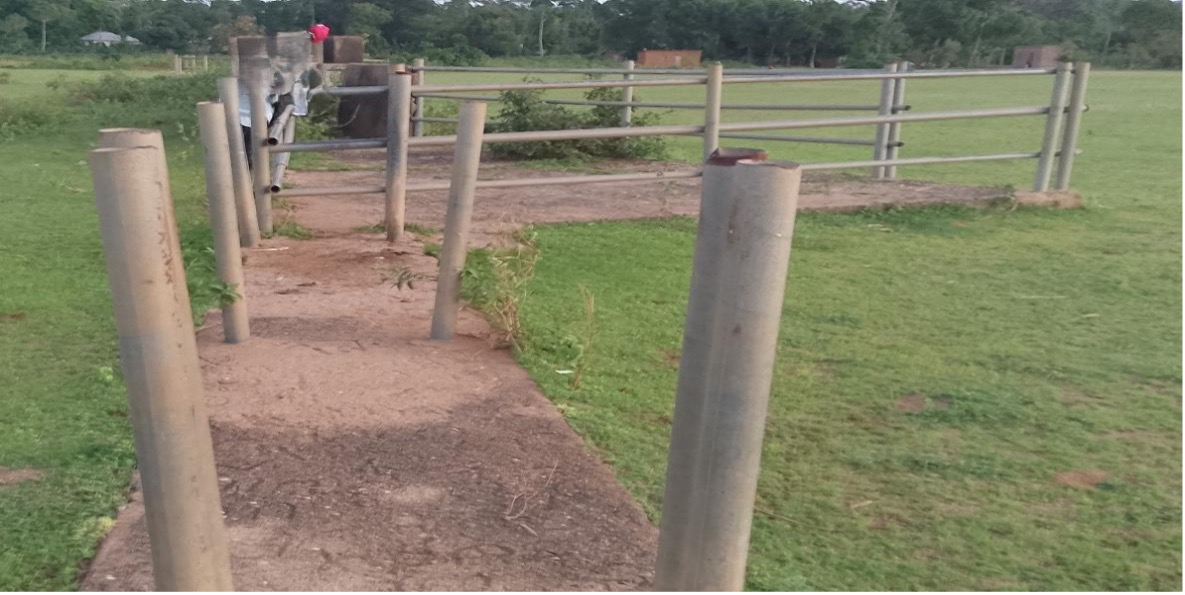
Environmental disturbances, such as crop failure, drought and livestock disease, are read as signals of spiritual imbalance rather than purely agronomic failures. Healing itself is plural and pragmatic, reflecting a traditional belief in which all sources of life, whether ATR, Christian or Islamic, derive their efficacy from a shared spiritual order.
4.4 Respect for Elders
Participants consistently emphasised elders as the primary custodians of moral formation, ritual knowledge, ecological wisdom and social stability. Elders function as the living archive through which Ukara religiosity is reproduced across generations.
| Theme | Keywords | Verbatim | % of mentions |
|---|---|---|---|
| Intergenerational knowledge transmission | customs; myths; taboos; totems | “Elders teach in the home, in the fields, and at gatherings; knowledge is passed on daily.” (FGD, Kome) | 31.2 |
| Moral formation and character building | discipline; integrity; responsibility | “Elders shape conscience long before school or state laws; they form the foundation of moral life.” (FGD, Nyamanga) | 22.6 |
| Environmental stewardship and land regulation | land; grazing; seasons; boundaries | “Elders guide planting seasons, regulate grazing and protect water sources.” (FGD, Nyang’ombe) | 18.1 |
| Linguistic preservation and cultural identity | Kikara; storytelling; proverbs | “Elders are living libraries; they preserve Kikara and all the knowledge carried in it.” (KII, R6) | 15.4 |
| Spiritual authority and religious orientation | prayer; blessing; family religion | “Families with elders show strong religiosity; elders decide the family’s spiritual direction.” (FGD, Kome) | 12.7 |
Elders emerge as the most significant socio-religious institution after clan spirits. The strong emphasis on intergenerational transmission (31.2%) demonstrates that religiosity is lived rather than taught abstractly. Moral formation, linguistic preservation and environmental regulation are embedded in everyday guidance. Elders’ authority in land allocation, conflict mediation and ritual guardianship shows that environmental governance on Ukara is inseparable from traditional leadership. Their spiritual status manifests in prayer, moral instruction and ritual authority, reinforcing their legitimacy in sustaining communal wellbeing and ecological balance.
4.5 Religious Institutions
Christianity and Islam, though relatively recent in Ukara’s religious history, have been incorporated into a wider moral ecology rather than replacing indigenous cosmology. Participants highlighted the role of churches, mosques and faith-based organisations in promoting environmental care, social cohesion and women’s empowerment.
| Theme | Keywords | Verbatim | % of mentions |
|---|---|---|---|
| Faith-based environmental initiatives | tree planting; conservation; development | “The Catholic Church plants modern trees around the village; they show that caring for nature is God’s work.” (FGD, Nyamanga) | 34.1 |
| Women’s empowerment and moral reform | women’s groups; savings; dignity; health | “Church groups teach women to avoid harmful rituals and support them with savings and income projects.” (KII, R3) | 27.6 |
| Moral discipline and communal uplift | hygiene; seminars; wellbeing | “Church seminar teachings help families keep both body and spirit healthy.” (FGD, Bukiko) | 21.3 |
| Plural engagement with indigenous ethics | coexistence; respect; complementarity | “Even Christians respect the ways of their forefathers; both paths serve God.” (Synthesis) | 17.0 |
Religious institutions have become important agents of ecological action and social transformation. Their tree-planting programmes demonstrate that environmental care is now articulated through Christian and Islamic ethics as well as indigenous cosmology. Women’s groups, savings schemes and health seminars reflect an expanding moral economy aimed at reinforcing dignity and wellbeing. Yet these institutions do not displace Ukara’s traditional beliefs. Instead, they are incorporated into an adaptive pluralism in which churches and mosques complement, rather than replace, ancestral values, rituals and ecological sensibilities.
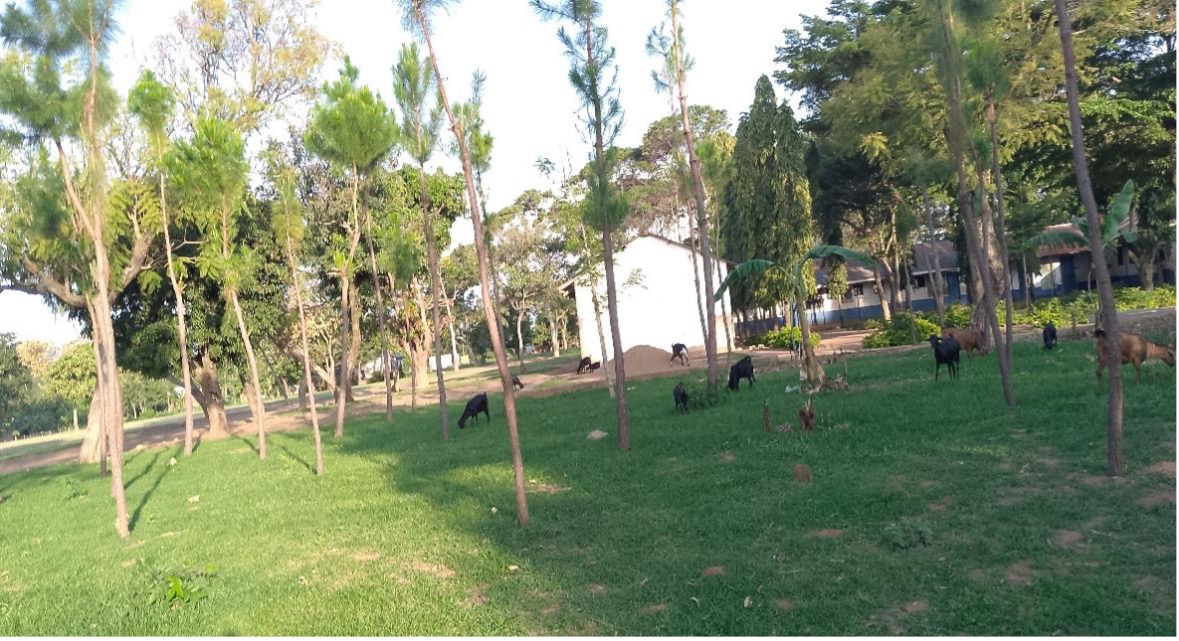
Across all domains, clan spirits, ritual specialists, illness logic, elders and religious institutions, Ukara religiosity emerges as a comprehensive moral ecology linking traditional beliefs to environmental ethics. Clan spirits regulate agricultural cycles and moral conduct; specialists interpret misfortune and mediate vital force; illness functions as a diagnostic of spiritual equilibrium; elders reproduce knowledge and regulate land; and churches and mosques contribute new avenues for stewardship. Together, these domains reveal a socially embedded, spiritually grounded environmental ethic that integrates cosmology, moral obligation and ecological practice in a coherent and dynamic system.
5. Discussion
5.1 Validating the Claim: From Traditional Beliefs to Environmental Conservation
The findings strongly validate the article’s central claim that Ukara religiosity constitutes a coherent moral ecology linking traditional commitments to ecological duty. Table 4.1 shows that clan spirits such as Kambura (29.4%) and the Abasilanga fire god (21.7%) regulate agricultural success and moral order, illustrating how traditional agents govern environmental outcomes. This resonates with contemporary African relational theologies that treat divine and ancestral forces as active participants in ecological balance (Nche & Michael, 2024; Amanze, 2024). Ritual specialists further reinforce this structure. Table 4.2 shows witches (28.5%) and healers (22.1%) mediating misfortune and restoring harmony through ritual means, a pattern consistent with studies arguing that African spiritual authority functions as environmental governance (Okoronkwo, 2025; Ogunkolu & Ajibade, 2025).
Fear-based conservation, illustrated by Figure 4.1, where fig trees remain untouched due to witchcraft associations, mirrors wider findings on sacred-site conservation across Africa (Sinthumule, 2024; Zayzay, 2026). In parallel, Table 4.3 confirms that illness is interpreted through vital-force beliefs (30.2%), where spiritual imbalance explains ecological decline, aligning with work on African environmentally related traditional beliefs (Lyakurwa, 2025; Boamah Asante et al., 2025). Libungu’s widespread use (23.9%) despite modern alternatives shows how traditional interpretations continue to guide practical environmental behaviour.
Elders’ authority, shown in Table 4.4, reinforces cosmology through pedagogy, land regulation and linguistic preservation, echoing studies of African leadership as custodians of ecological ethics (Osei & Asantewa, 2025; Stork & Öhlmann, 2024). Religious institutions similarly complement Indigenous ethics. Table 4.5 reveals strong involvement in tree planting (34.1%), moral reform and women’s empowerment, confirming broader scholarship that Christian and Islamic organisations are now crucial actors in African ecological ethics (Khomba, 2025; Mogaji, 2025). Together, these findings substantiate the traditional beliefs → axiology → deontology chain by showing that these beliefs motivate environmental duties, relational values inform ecological meaning, and ritual or institutional mechanisms enforce compliance.
5.2 Convergences and Tensions with Contemporary Literature
The Ukara Island case aligns closely with continental scholarship asserting that African religiosity grounds ecological ethics through relational ontology and spiritual accountability (Nche & Michael, 2024; Juma, 2025). The strong association between clan-spirit agency and ecological wellbeing (Table 4.1) illustrates the relational worldview in which morality and environment reinforce one another, a structure repeatedly emphasised in African eco-spirituality literature.
Sacred-site dynamics (Tables 4.1 and 4.2, Figure 4.1) converge with systematic reviews of sacred natural sites demonstrating conservation benefits through taboo-based protection (Sinthumule, 2024). Yet Ukara Island adds nuance through fear-based conservation, where witches’ meeting sites remain intact without formal custodianship, an important variation on the custodial models documented in Nigeria and Ethiopia (Okoronkwo, 2025; Zayzay, 2026).
Vital-force interpretations of illness (Table 4.3) align with emerging philosophical work that views African ecological beliefs as central to environmental thought (Lyakurwa, 2025). The Ukara Island case highlights both the resilience of such traditional frameworks and tensions raised in the literature: while Indigenous medicine sustains ecological knowledge, it can also complicate integration with modern systems, echoing ongoing debates about epistemic pluralism (Stork & Öhlmann, 2024).
Findings on elders (Table 4.4) converge strongly with Ghanaian and South African research showing that traditional leadership ensures ecological continuity (Osei & Asantewa, 2025). Yet generational shifts may threaten custodianship, mirroring concerns in the sacred-site literature regarding youth disengagement (Zayzay, 2026). Finally, Ukara Island exhibits a more harmonious integration of Christianity and Islam with Indigenous ethics (Table 4.5) than some regions where missionary religions undermined sacred practices. This aligns with recent studies highlighting increasing complementarity between formal religious institutions and Indigenous ecological worldviews (Khomba, 2025; Mogaji, 2025).
5.3 Theoretical Contribution and Novelty
Various implications for environmental governance in Ukara and the Lake Victoria Basin include the recognition of sacred landscapes as Other Effective Area-Based Conservation Measures (OECMs), highlighting the need to integrate sacred ecologies into national policy. Environmental reasoning rooted in vital-force cosmology mandates knowledge-integration strategies that respect Indigenous cultural frameworks. The central role of elders indicates that successful initiatives require traditional leaders’ involvement in land-use planning, supported by patterns seen in Ghana and South Africa. Additionally, religious institutions emerge as key actors in ecological mobilisation through tree planting and moral reform efforts. Collectively, these findings advocate for a biocultural governance model combining spiritual legitimacy, Indigenous knowledge, traditional leadership and faith-based organisations. The article’s claims are validated through evidence showcasing the role of clan spirits in regulating behaviour, suggesting a coherent system of relational ethics between cosmology, morality and ecological practices within African environmental philosophy.
This study contributes to African philosophy and environmental ethics by providing a fine-grained, empirical demonstration of how traditional belief categories produce environmental duties, operationalised through ritual systems, social authority and ecological practices. The salience matrices (Tables 4.1–4.5) provide rigorous empirical grounding for philosophical claims often articulated abstractly in the literature.
Clan-spirit beliefs (Table 4.1) illustrate relational causality at work, the heart of the African tradition described by scholars such as Nche and Michael (2024) and Juma (2025). Fear-based ecological restraint (Table 4.2) provides a novel contribution, offering empirical evidence that spiritual dread can generate conservation outcomes even without formal custodianship, refining existing sacred-site theories. Vital-force illness ecology (Table 4.3) further operationalises African beliefs by showing how ecological degradation is moralised and treated as relational disruption, extending work by Lyakurwa (2025).
6. Conclusion
6.1 Summary
The study demonstrates that Ukara Island religiosity constitutes a coherent moral ecology in which traditional beliefs, spiritual authority, ritual practices and social institutions converge to generate clear ecological obligations. Clan spirits, ritual specialists, vital-force interpretations of illness, the pedagogical role of elders, and the environmental initiatives of religious institutions collectively reveal a relational worldview in which environmental care is inseparable from spiritual order and communal wellbeing, as reflected across the thematic matrices and reinforced by contemporary African eco-philosophical literature.
6.2 Limitations and Future Directions
Although the study provides a fine-grained analysis of Ukara Island’s traditional beliefs and ecological ethics, it does not directly measure biophysical conservation outcomes, echoing ongoing scholarly concerns about the need for comparative ecological assessments of sacred sites across Africa. Furthermore, the effectiveness of sanction-based stewardship depends on sustained belief, which may be challenged by demographic shifts, religious change and socioeconomic pressures noted in recent regional studies. Future research should therefore integrate ecological monitoring of sacred landscapes with institutional ethnography to evaluate how ritual authority, plural religiosity and Indigenous ecological knowledge co-produce environmental outcomes over time.
- Amanze, J. N. (2024). African approaches to the protection and conservation of the environment: The role of African Traditional Religions. Religion & Development, 2(3), 445–468. https://doi.org/10.30965/27507955-20230031
- Boamah Asante, D., Adom, D., Asante, A., & Gyamera, V. (2025). Combating the global environmental crisis using Indigenous ecological knowledge: The case of the Kwahu traditional area, Ghana. Frontiers in Human Dynamics, 7, Article 1457544. https://doi.org/10.3389/fhumd.2025.1457544
- Juma, D. C. (2025). African eco-spiritualities and climate justice: Afro-ecofeminism perspectives on Genesis 2:4–17. HTS Teologiese Studies/Theological Studies, 81(1), a10449. https://doi.org/10.4102/hts.v81i1.10449
- Khomba, J. K. K. (2025). Towards environmental restoration and sustainability: Embracing the African Ubuntu philosophy. Strathmore Law Journal, 8(1), 109–127. https://doi.org/10.52907/slj.v8i1.536
- Lyakurwa, M. F. (2025). Building African foundations for environmental ethics: Why Ubuntu and ukama fail. Utafiti, 20(1), 20–40. https://doi.org/10.1163/22148932-bja10057
- Mogaji, R. I. (2025). An Ubuntu remedy for cognitive decolonization of environmental degradation. Shanlax International Journal of Arts, Science and Humanities, 12(4), 43–52. https://doi.org/10.34293/sijash.v12i4.8722
- Nche, G. C., & Michael, B. O. (2024). Perspectives on African Indigenous Religion and the natural environment: Beings, interconnectedness, communities and knowledge systems. Phronimon, 25(1). https://doi.org/10.25159/2413-3086/14621
- Ogunkolu, A. B., & Ajibade, L. T. (2025). Indigenous ritual practices and their ecological implications for sustainable development in Nigeria. Journal of Cultures & Ideas, 3(1). https://journal.ias-ife.com/index.php/journal/article/view/71
- Ohenhen, S. T., Abakporo, P. C., Ohenhen, M. A., & Egbe, F. E. (2025). Decolonizing materiality in ecological networks in the Global South: Indigenous performative epistemologies. The Polish Journal of Aesthetics, 74(1), 183–199. https://doi.org/10.19205/74.25.10
- Okoronkwo, M. E. (2025). Sacred spaces as eco-theological systems: A socio-historical and socio-rhetorical analysis of African Traditional Religion. Icheke Journal of Humanities. https://ichekejournal.com/wp-content/uploads/2025/10/18.-Sacred-Spaces-as-Eco-Theological-Systems.pdf
- Osei, B. K., & Asantewa, J. (2025). Traditional leadership, Indigenous knowledge and environmental conservation in Ghana: A content analysis. Open Journal of Social Sciences, 13(6), 136–156. https://doi.org/10.4236/jss.2025.136009
- Sinthumule, N. I. (2024). Sacred forests as repositories of local biodiversity in Africa: A systematic review. Forest Science and Technology, 20(4), 337–348. https://doi.org/10.1080/21580103.2024.2397522
- Stork, J., & Öhlmann, P. (Eds.). (2024). Religious communities and ecological sustainability in Southern Africa and beyond. Globethics Publications. https://doi.org/10.58863/20.500.12424/4306831
- Zayzay, M. F. (2026). Environmental stewardship and sacred landscapes in Kwa cosmology. Addaiyan Journal of Arts, Humanities and Social Sciences, 8(2). https://doi.org/10.36099/ajahss8.2.6
Not provided.
The author received no specific funding for this work.
None declared.
All claims expressed in this article are solely those of the author and do not necessarily represent those of the publisher, editors, reviewers, or affiliated institutions. Any product, service, or claim that may be evaluated in this article is not guaranteed or endorsed by the publisher.

Creative Commons License
This work is licensed under a Creative Commons Attribution 4.0 International License.
Copyright © 2026 The Author(s). Published by HRL Journal Service.